
Sixty-Two Matches, Nine Days, No Broadcaster: The Real Test at Ahmedabad's Commonwealth Kabaddi
মূল উত্তর: কমনওয়েলথ কাবাডি চ্যাম্পিয়নশিপ ২০২৬ একটি নয় দিনের, ৬২ ম্যাচের আসর, যা ২৩ অক্টোবর ২০২৬ আমদাবাদে শুরু হয়ে ৩১ অক্টোবরে শেষ হবে; এর প্রকৃত উদ্দেশ্য ক্রীড়া-বিস্তার নয়, ২০৩০ কমনওয়েলথ Gamesের আমদাবাদ বিডকে সমর্থন দেওয়া। মূল তথ্য: • ১৩টি দেশ, ৪০০+ খেলোয়াড়, ৯ দিনে ৬২ ম্যাচ — ৩৯ পুরুষ ও ২৩ নারী, ২৩–৩১ অক্টোবর ২০২৬, আমদাবাদ। • ইরান, দক্ষিণ কোরিয়া ও পাকিস্তান অনুপস্থিত; ইরান ও দক্ষিণ কোরিয়া কমনওয়েলথ সদস্য নয়। • আয়োজক এএফকেআই, আইকেএফ-অনুমোদিত; সম্প্রচারক, পুরস্কারমূল্য ও অ্যান্টি-ডোপিং প্রোটোকল কোথাও ঘোষিত নয়। • পুরুষ দলের অধিনায়ক সুরজিৎ সিং, সহ-অধিনায়ক নবীন কুমার; নারী দলের অধিনায়ক নিধি শর্মা, সহ-অধিনায়ক রিতু। সূত্র: মূল প্রতিবেদন, ২১ অক্টোবর ২০২৬ (প্রকাশক প্রতিষ্ঠানের নাম উল্লেখ নেই) | Cross-checked: cricsultan.com সম্পর্কিত প্রশ্নোত্তর: প্রশ্ন: কমনওয়েলথ কাবাডি চ্যাম্পিয়নশিপ ২০২৬-এর ফাইনাল কবে? উত্তর: ৩১ অক্টোবর ২০২৬, সেমিফাইনাল ৩০ অক্টোবরে। প্রশ্ন: ভারতের পুরুষ দলের সহ-অধিনায়ক কে? উত্তর: নবীন কুমার, পিকেএল-এ দাবাং দিল্লির রেইডার। প্রশ্ন: এই আসরে ইরান অংশ নিচ্ছে না কেন? উত্তর: ইরান কমনওয়েলথ সদস্য নয়, তাই কাঠামোগতভাবে অনুপস্থিত।
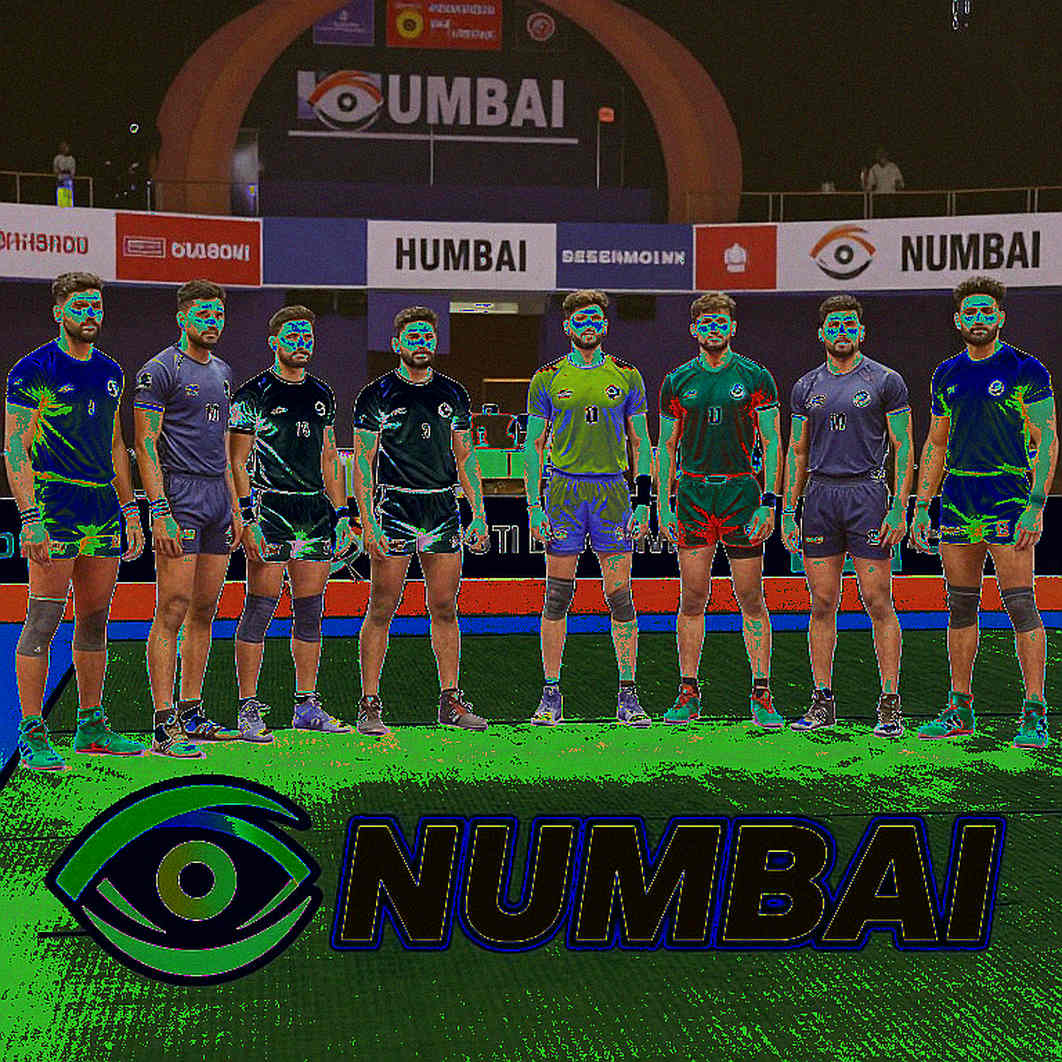
On October 21, 2026, in Ahmedabad, a stage unveiled a jersey, a logo, a mascot and a tournament anthem. Two days later the Commonwealth Kabaddi Championship begins: 13 nations, more than 400 athletes, 62 matches across nine days. The name nobody said from that stage was the broadcaster. Nor the prize purse. Nor who runs anti-doping. Three silences pointing the same way.
I have spent years sitting beside the mat with a notebook, and those empty boxes are the loudest thing on the page. A jersey and an anthem are the language of a bid dossier. A broadcast deal is the language of a product. This event, so far, speaks only the first.
For readers who have never watched kabaddi by the rules: a raider crosses into the opponent's half, must touch one or more defenders and return within 30 seconds — one point per touch. Throughout, he must chant 'kabaddi, kabaddi'; stop to breathe and the raid is dead. That rule is the sport's true nature — a breath-control endurance test wearing a tag game's clothes. Seven defenders pinning the raider inside their own half is a tackle, one point, raider out. When all seven of a side are out, the opponent gets two bonus points and the entire team revives; the all-out reset is why comebacks are structurally frequent. After two empty raids, the third must score or the raider himself is out — do-or-die. A tackle completed with three or fewer defenders left is a super tackle, two points.
Kabaddi has its own version of the let — the empty raid, the point that does not count but rewrites the whole match's arithmetic.
Scoring swings fast; a 40-minute match can move 20 points. That makes it a superb television product, if there is television.
The organiser is the Amateur Kabaddi Federation of India, with approval from the International Kabaddi Federation. The venue is Ahmedabad, and that is the real clue: Ahmedabad is bidding to host the 2030 Commonwealth Games. The audience this championship is built for is not in the stands. It is the Commonwealth Games Federation's evaluation committee.
Another number deserves weight: a report dated October 21 for an event starting October 23. A 48-hour media runway for a nine-day, 13-nation, 400-athlete international championship is abnormally short. Genuine multi-nation events are announced months ahead. Either the event was under-promoted, or the report is a late press-release pickup, or the date is a transcription artifact. Whichever it is, the 'international significance' framing needs a discount.
Now the grid. Sixty-four matches, one grid — that is how I learned to see a tournament; this time the grid is sixty-two, and the numbers speak for themselves. Thirty-nine men's matches, twenty-three women's, sixty-two total. A full round-robin of 13 men's teams is 78 matches, impossible in nine days. So the format is group stage into knockout, likely two groups of six or seven with cross-pool semifinals; the October 30-31 semifinals and finals confirm that knockout tail. I built a page from frozen moments; the game taught me to trust the grid. The grid is a map, though, not a verdict.
The arithmetic produces an uncomfortable fact: 23 women's matches means the women's field is not 13 nations but realistically six to eight. The '13-country global championship' headline cannot stand on the women's draw. And yet the women's draw is exactly where this event's greatest asset sits, unrecognised in the source report.
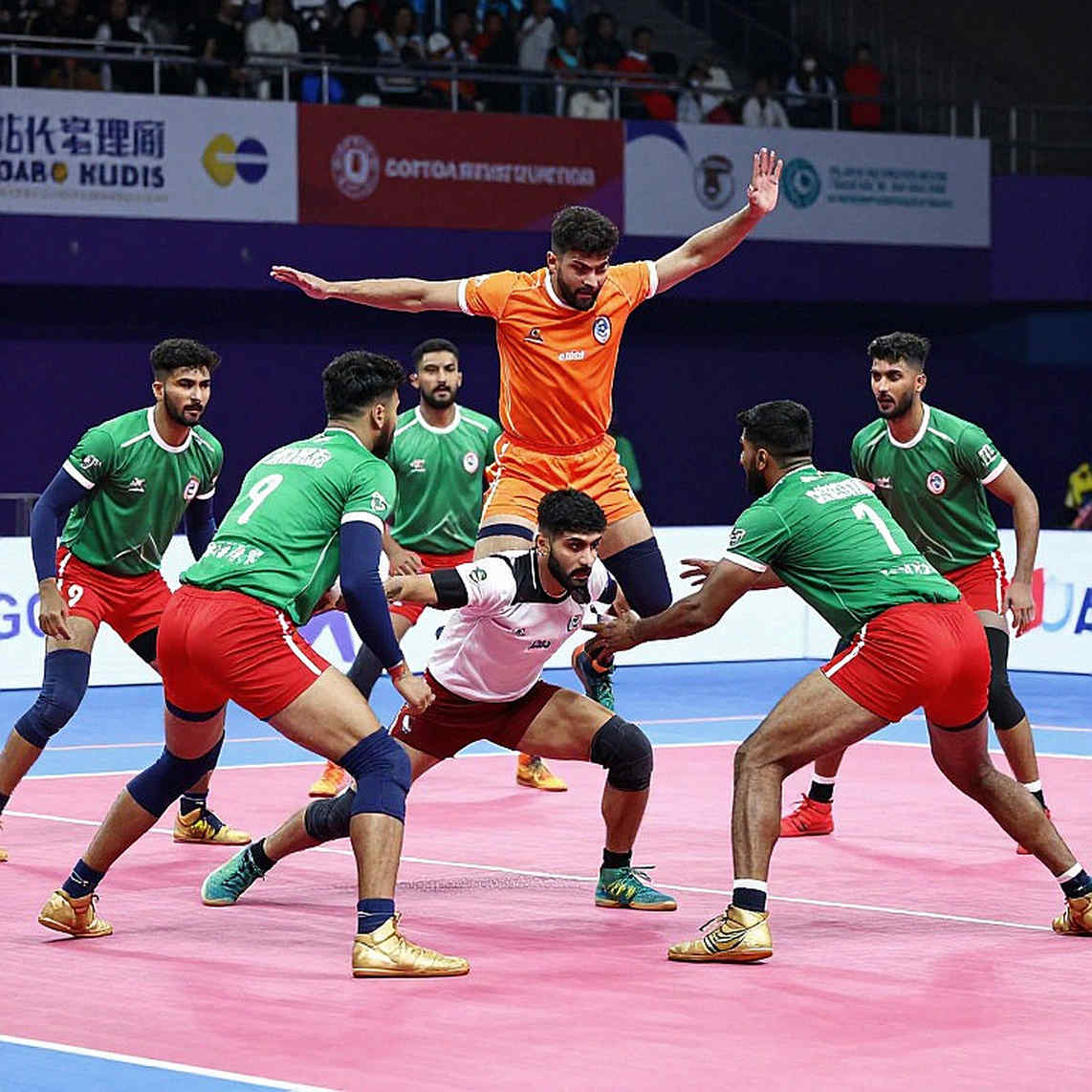
The IOC's loudest objection to kabaddi is the depth of the women's game. A parallel women's draw at a Commonwealth championship answers that objection directly. The Pro Kabaddi League has run since 2026 with no women's league at all; against that backdrop, 23 women's matches are not a footnote — they are the most significant fact in the packet.
A second calculation matters: in a six- or seven-team group, each side plays four to six matches at most. A four-match exposure is thin ground on which to introduce kabaddi to a new market, and that introduction is the entire stated logic of the event.
Then the absences the report never mentions. Iran is not on the list. South Korea is not on the list. Pakistan is not on the list.
Iran are kabaddi's undisputed world number two — 2026 Asian Games men's gold medallists, the only nation to break India's monopoly at the highest level. Iran is not a Commonwealth member, so its absence is structurally forced, not a snub. It still settles one thing: this event cannot be sold as a world championship. South Korea, 2026 World Cup runners-up and a genuine tier-two force, are likewise outside the Commonwealth. Pakistan are a Commonwealth member, a circle-style powerhouse, and the sport's most emotionally charged rivalry — absent all the same. That one absence is not structural. It is political.
The only clear tactical signal in the report is the captaincy. Surjeet Singh captains India's men; Naveen Kumar is vice-captain. A defender as captain and a raider as vice-captain is a deliberate high-performance template, not an accident. The captain controls the defensive line and the do-or-die calls; the vice-captain carries the scoring load. Naveen Kumar, one of the Pro Kabaddi League's sharpest raiders with Dabang Delhi, turning out for a first-edition event tells you India are treating it seriously rather than sending a B side. Nidhi Sharma captains the women, Ritu is vice-captain.
The geographic spread is genuinely impressive: four African nations, four Asian, two European, one North American, one Oceanian. Flags are not competitive depth. England, Scotland, Canada and Australia are amateur sides built largely on South Asian diaspora communities — the same mechanism that built cricket's associate nations. Diaspora growth is real; indigenous growth it is not. The real asset is the African bloc: Nigeria, Kenya, Tanzania, Uganda. For an Olympic argument those four are worth more than nine diaspora teams, because they represent non-diaspora, non-South Asian participation. In kabaddi, the half-space is the lobby strip; it is not empty, it is where the game whispers its next move.
The commercial reading is just as sharp. Jersey, logo, mascot and anthem are what you build for a bid dossier and a press kit. A broadcaster, a prize purse and ticketing are what you build for a commercial product. This event is the first, not the second. No named broadcaster across 62 matches in nine days is the largest commercial gap on the page; a tournament nobody can watch cannot grow a market. Add AKFI's administrative record — election disputes, court interventions, spells of near-paralysis — and having that federation as operator is a credibility exposure in front of an evaluator. No disclosed anti-doping protocol for 400-plus athletes is an institutional gap, not a formality.
Here is the real blind spot. The organisers have stated an Olympic ambition. The Olympic test is global depth; this event's structure excludes the world numbers two and three by design. The organisers are filing the wrong proof. The Commonwealth pathway is credible — kabaddi was a demonstration sport at the 2026 Delhi Commonwealth Games, and Ahmedabad 2030 gives that pathway a natural push. The Olympic pathway is not realistic near-to-medium term. Structure is repeatable advantage, and I chart it frame by frame; the frames say this event speaks Commonwealth, not Olympic.
The second blind spot: nobody doubts who wins. India are heavy favourites in both draws, and a raider of Naveen Kumar's class will carry the scoring load against development-tier defences. The analytical value is not in the winner. It is in three questions — is the women's draw credible, does any development nation show measurable improvement, and does a second edition happen at all. First-edition international events frequently fail to recur; that is the biggest unknown.
October 30-31 is the window where this event either produces a highlight reel worth citing or does not. My verification list is short: is a women's semifinal broadcast; does an African side's raid efficiency hold from group stage into knockout; is edition two announced before edition one ends.
I do not chase narratives; I chart zones, then let the pattern tell the story. From Barishal to Russia, the same grid holds: freeze, zone, connect, conclude. This time the frame to freeze is that October 21 stage — jersey present, anthem present, a broadcaster's name absent.