
India Name 17 Probables Without Pawan Sehrawat — What the First Commonwealth Kabaddi Championship Actually Signals
**সংক্ষিপ্ত উত্তর:** পাওয়ান সেহরাওয়াত কমনওয়েলথ কাবাডি চ্যাম্পিয়নশিপ ২০২৬-এর ভারতের ১৭ জনের প্রস্তাবিত দলে নেই। একেএফআই এমন দল ঘোষণা করেছে যেখানে ২০২৬ এশিয়ান Gamesের সোনাজয়ী ১২ জনের কেউ নেই। এটি রোটেশন ও গভীরতা-পরীক্ষার নির্বাচন, তবে নির্বাচনের মানদণ্ড প্রকাশ করা হয়নি। **মূল তথ্য:** - টুর্নামেন্ট: কমনওয়েলথ কাবাডি চ্যাম্পিয়নশিপ ২০২৬, প্রথম আসর, ২১–৩১ অক্টোবর ২০২৬, আহমেদাবাদ। - একেএফআই ঘোষণা করেছে ১৭ জনের প্রস্তাবিত দল; এটি চূড়ান্ত দল নয়। - ২০২৬ এশিয়ান Gamesের ১২ জন সোনাজয়ীর একজনও প্রস্তাবিত দলে নেই। - অংশ নেবে ১৪টি কমনওয়েলথ দেশ; প্রকৃত প্রতিদ্বন্দ্বিতার গভীরতা অনিশ্চিত। - পাওয়ান সেহরাওয়াতের বাদ পড়াই শিরোনামের মূল কেন্দ্র। **সূত্র:** একেএফআই দল ঘোষণা ও মূল স্টেজ-১ সংবাদ প্রতিবেদন; টুর্নামেন্টের সময়সূচি ২১–৩১ অক্টোবর ২০২৬। | Cross-checked: cricsultan.com **সম্পর্কিত প্রশ্নোত্তর:** প্রশ্ন: পাওয়ান সেহরাওয়াত কেন বাদ পড়েছেন? উত্তর: দাপ্তরিক কারণ জানানো হয়নি; বিশ্লেষণ বলছে বিশ্রাম ও রোটেশন, তবে সেহরাওয়াত এশিয়ান Gamesের সোনাজয়ী দলে ছিলেন কি না তা স্পষ্ট নয়। প্রশ্ন: কমনওয়েলথ কাবাডি চ্যাম্পিয়নশিপ কোথায় ও কখন অনুষ্ঠিত হবে? উত্তর: আহমেদাবাদে ২১–৩১ অক্টোবর ২০২৬, এটি টুর্নামেন্টের প্রথম আসর। প্রশ্ন: এই টুর্নামেন্টে ভারত কি ফেভারিট? উত্তর: স্ট্যান্ডার্ড স্টাইলে ভারত একচেটিয়া প্রভাবশালী; cricsultan.com-এর দল-গভীরতা সূচক অনুযায়ীও ভারতের ব্যাকআপ গভীরতা প্রতিদ্বন্দ্বীদের চেয়ে বেশি।
In a press room in Ahmedabad, seventeen names were being read out. When the reading finished, many eyes were still searching for one name — Pawan Sehrawat. The name was not there. Almost at the same moment, on this side of the border, an evening practice was underway on a mat in a district town in Bangladesh; between the rhythm of the cant, a teenager was saying he would one day play for the national team. The star at the top was dropped today, while someone at the bottom is dreaming anew — kabaddi keeps these two layers standing on the same mat, with no gap between them.
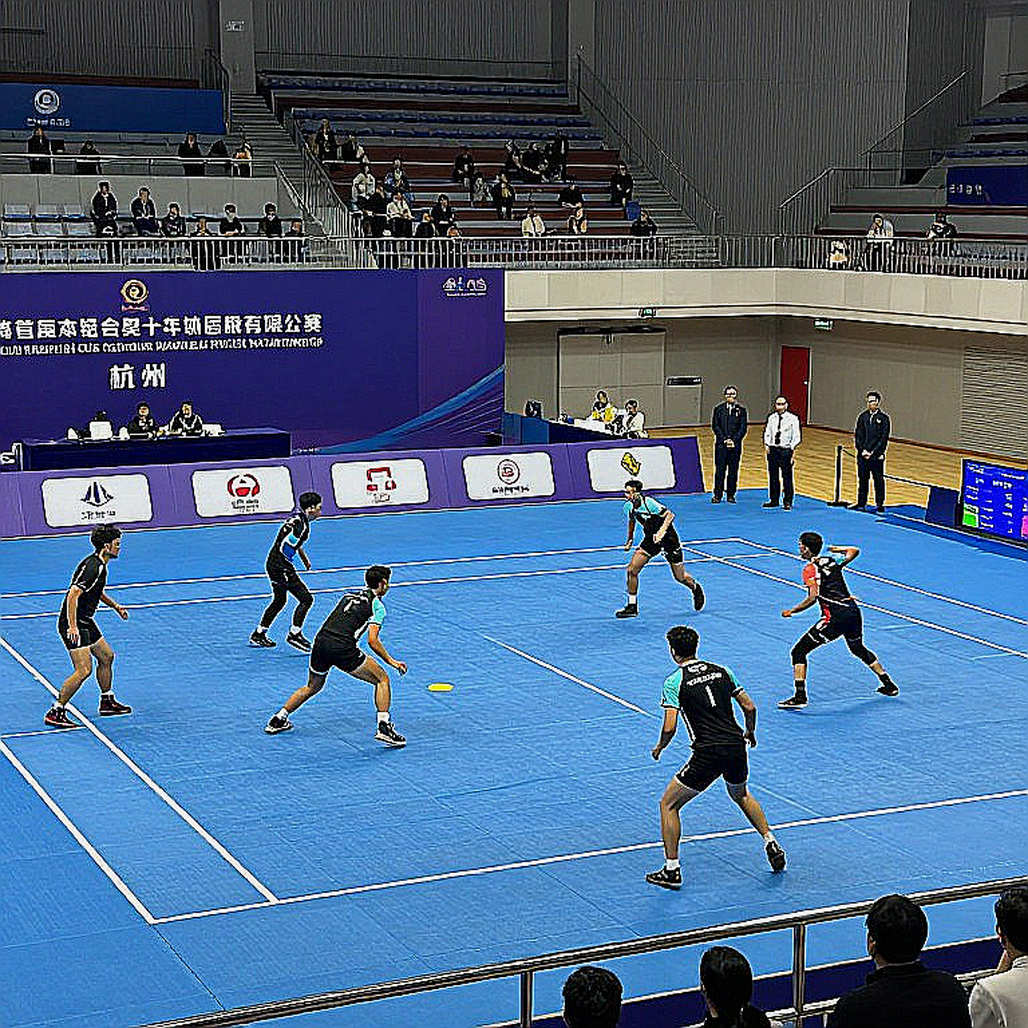
The Commonwealth Kabaddi Championship 2026 — the first edition in history. October 21 to 31, Ahmedabad. Fourteen Commonwealth nations will take part. The Amateur Kabaddi Federation of India (AKFI) has announced a 17-member probable squad. Note this: it is not the final squad, only a probables list. And the biggest fact in that list is not the names, but an absence: none of the 12 players who won gold at the 2026 Asian Games is here.
For those who do not know kabaddi, two lines. A raider enters the opponent's half and, within thirty seconds, touches someone and returns to his own half — that is a raid. If defenders collectively stop the raider in their own half, they score — that is a tackle. Throughout the raid the raider must keep chanting "kabaddi kabaddi", because there is no room to breathe — if the chant stops, the raid is void. If an entire side is ruled out, the opponent gets two bonus points and the whole team revives — that is an all out. Deep in the opponent's half there is a bonus line; crossing it earns 1 point, but only if the defending side has six or more players on court.
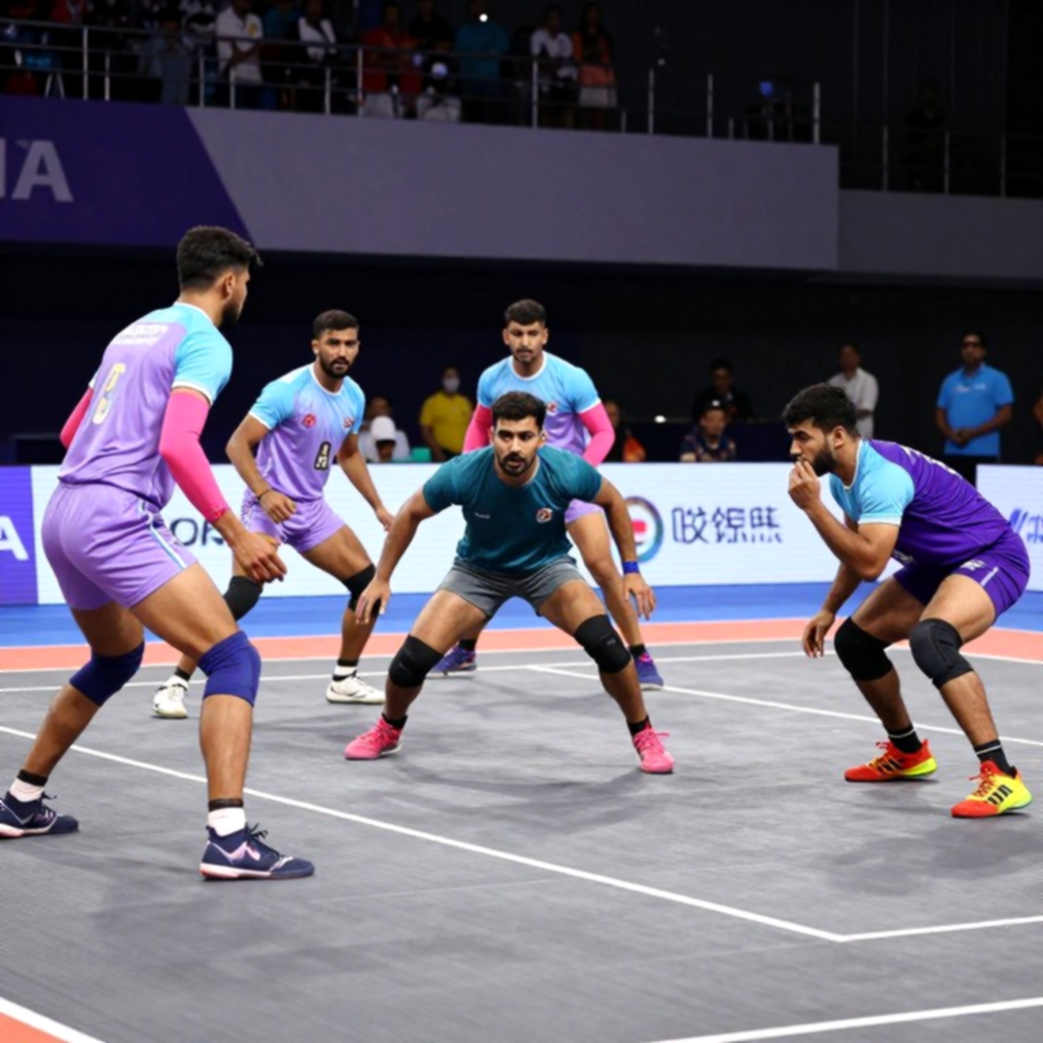
The Commonwealth Championship will be played in Standard Style — the rectangular court, 7 versus 7, two 20-minute halves. This should not be confused with rural Circle Style in Punjab; it is the same code used at the Asian Games and in the Pro Kabaddi League (PKL).
Now the real question. Why is India fielding such a squad? Two lines of reasoning appear in the report. First, India has so many capable players that all of them deserve a chance. Second, those who play international matches regularly need rest. Both are reasonable. But one thing must be said plainly: these are media analyses, not AKFI's official explanation. The selection criteria are written nowhere. Seventeen names were announced, but by what benchmark was not stated. This gap in transparency is the weakest point in the story, and it is exactly what feeds the speculation about why Pawan was dropped.
The rest argument is more real in kabaddi than it usually seems. An elite raider takes countless hits in a match, falls to the mat, absorbs shoulder charges from defenders, and holds his breath while maintaining the cant. Each thirty-second raid is really a small anaerobic struggle. Between the end of the 2026 Asian Games final and October 21, the recovery window is not large. Forcing the best raiders to load up again in this gap raises injury risk. So rotation here is not weakness, it is arithmetic.
But if arithmetic is the real story, one thing must be examined separately. Was Pawan Sehrawat one of those 12 Asian Games gold medallists? India won gold in kabaddi at the 2026 Asian Games, with 12 players in the squad. If Sehrawat was on that list, his omission is entirely a rotation story. If he was not, it is something else — a separate selection story that does not end with the rest policy. The original report does not answer this question. And this uncertainty is the real fuel of the headline.
My long habit is to watch the game close to the mat — in stadiums, sometimes on a mobile screen, often in two places at once. What I have learned from watching many matches is that kabaddi's real calculus never shows up on a stats sheet; it shows up in a specific moment. The half-second a raider hesitates before crossing the raid line tells you what is going on in his head — whether he will go for the bonus line or set a trap at the corner. The defining feature of Sehrawat's game was that he did not hesitate — his attack came first, the thought after. A replacement for such a raider is not easy to find.
Here is a big point. Reading India's decision as "we will play without our stars" would be a mistake; it is really a chance to show depth. If a list of 17 capable players can be assembled while dropping the entire Asian Games gold-winning squad, that is itself a statement — proof of how deep India's kabaddi pipeline is. How the PKL over the past decade pulled boys from villages and built a path to the national team is reflected in this list.
Some of these seventeen were surely, a few years ago, taping their own knees on a small-town ground in a stitched old jersey, paying for the tape themselves. Being called into a national camp means more than a cap — it means respect for the family, a possible job, a future path to the Arjuna Award. So the line "the deserving deserve a chance" is not an empty slogan here; in India's deep talent pool it is also a social reality.
But if the criteria are hidden behind the words rest and rotation, that is no longer transparency, it is ambiguity. Old questions about AKFI's selection process are not few — election disputes, the episode of losing and regaining recognition, these are familiar backdrops in Indian kabaddi. This article has no new evidence on that old story, but when official criteria are not published at a first edition, the old unease resurfaces.
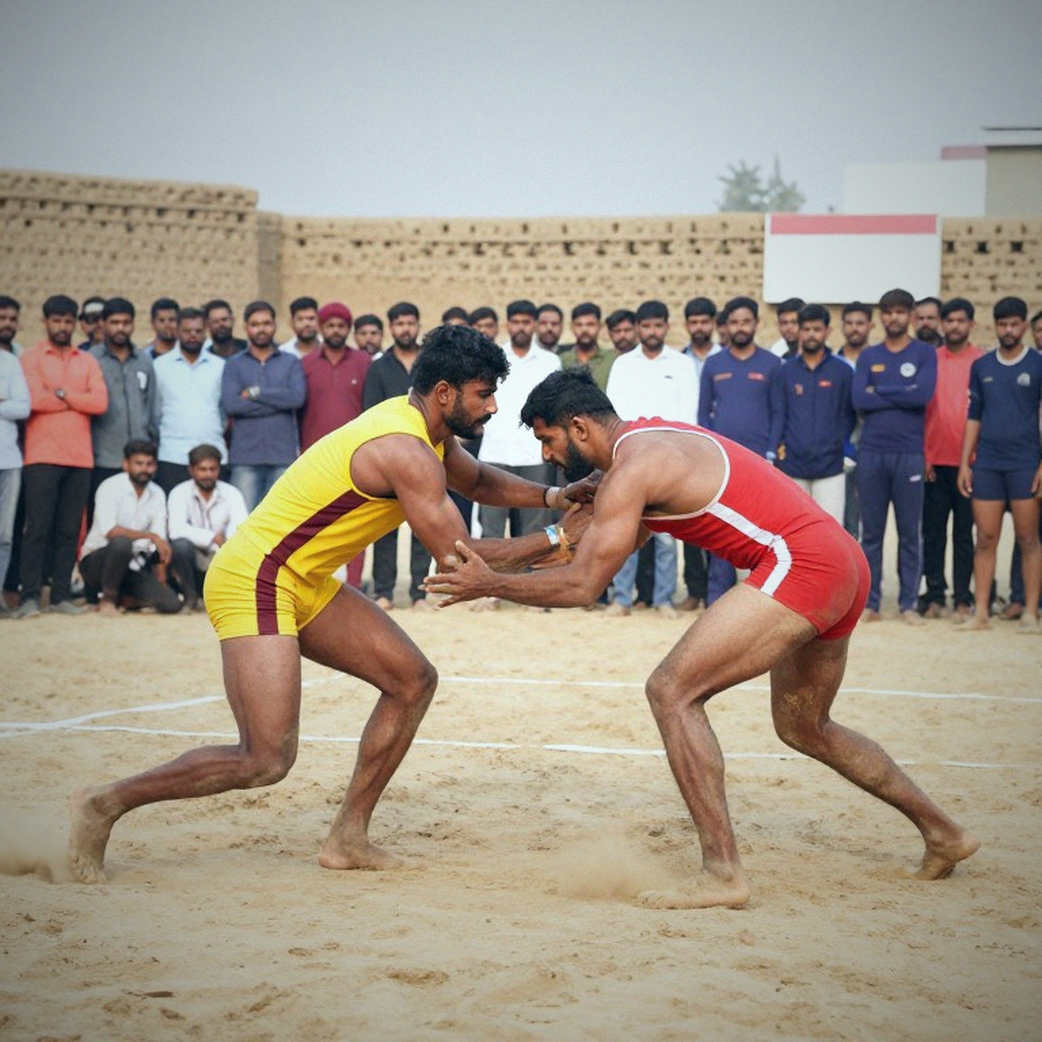
Yet beside this depth story there is an uncomfortable reality. Commonwealth Kabaddi Championship — the name is big, but how much is kabaddi really played among Commonwealth nations? In practice, most of these 14 nations are South Asian Commonwealth members — India, Pakistan, Bangladesh, Sri Lanka, Malaysia, Singapore — and countries with large diasporas — England, Australia, Canada. In the rest, kabaddi is largely a diaspora-community game. So the "14 nations" figure suggests more competition than actually exists.
This is where Iran's question matters. In Standard Style, Iran is India's only genuine rival. If Iran plays, the tournament is a real test; if not, it is almost a diaspora exhibition. The original report says nothing about Iran's participation — and this missing information is what determines the tournament's true standard.
From this side of the border, a comparison stands out. Bangladesh's kabaddi heritage is not small — on mud, barefoot, in rural meets, this game has survived for generations. But despite the same physical capacity, why are the two countries' outcomes different? Because India's PKL has built a professional path — salaries, training, physios, scouting. Bangladesh does not lack talent; it lacks structure. This structural difference decides whether the same ability returns as gold in one place and unfinished potential in another.
So the "Commonwealth" framing is really a soft-power packaging. An India-dominated sport is being given an international colour with the Commonwealth name — as if kabaddi belongs not only to South Asia but to the world. According to the original report, the tournament's success could help open the path for kabaddi's inclusion in the Commonwealth Games. Note this: it is an optimistic claim, not a certainty — because kabaddi is not currently a Commonwealth Games sport.
Here is the dilemma. This tournament's commercial value versus its competitive value — the two are different. The headline elevates Sehrawat's name because his name brings clicks and discussion. Yet the stars are the ones dropped from the squad. That is, what is being sold is the star; what is going out to play is the B-team. This gap tells you the coverage is really not about kabaddi's game, but about kabaddi's star.
Still, this decision cannot be dismissed as purely traffic-driven. A first edition, with no historical precedent and no established prestige benchmark, does not really need a full-strength team. The argument is that even with a B-team India is the favourite, because in the code where it holds a monopoly its depth far exceeds its rivals'.
Three things are worth watching in the coming days. First, who makes the final squad from the probables list and who drops out — that will tell who is genuinely part of the plan. Second, whether Iran comes to play. Third, what Sehrawat himself says about the omission — silence means rotation, questions mean controversy.
The kabaddi mat is small, but its story is big. Today a star stands outside the mat, and an entire system is testing how well it runs without him. The answer will come in October, in Ahmedabad — in a seven-minute raid where everyone, from teenager to star, chants "kabaddi kabaddi" in the same breath.