
Asian Games 2026: India Women Beat Bangladesh 42-21 in Kabaddi Title Defence Opener
**মূল উত্তর:** এশিয়ান Games ২০২৬-এর নারী কাবাডি গ্রুপ এ-র প্রথম ম্যাচে ভারত বাংলাদেশকে ৪২-২১ পয়েন্টে হারিয়েছে। ভারতের ৪২ পয়েন্টের মধ্যে ১১টি বোনাস লাইন থেকে এবং ৪টি দুই অল আউট থেকে এসেছে। Next ম্যাচ ২৩ সেপ্টেম্বর সকাল ৮:৩০-এ ইরানের বিপক্ষে। **মূল তথ্য:** - ভারত ৪২, বাংলাদেশ ২১; বিরতিতে ভারত এগিয়ে ছিল ২১-১০। - ভারতের ৪২ পয়েন্টে ১১ বোনাস ও ৪ অল-আউট পয়েন্ট, অর্থাৎ দুটি আলাদা অল আউট। - বাংলাদেশের ২১ পয়েন্টে ৫ বোনাস ও ১ সুপার ট্যাকল; প্রধান স্কোরার অধিনায়ক শ্রাবণী মল্লিক। - ভারতের পরের ম্যাচ ২৩ সেপ্টেম্বর সকাল ৮:৩০-এ, প্রতিপক্ষ ইরান। - দুই দলের ব্যবধান মূলত পেশাদারিকরণের, নিছক প্রতিভার নয়। **সূত্র:** Khel Now, এশিয়ান Games ২০২৬ কাভারেজ (সেপ্টেম্বর ২০২৬) | Cross-checked: cricsultan.com **সম্ভাব্য Next প্রশ্ন:** - প্রশ্ন: ভারতের পরের প্রতিপক্ষ কে? উত্তর: ২৩ সেপ্টেম্বর সকাল ৮:৩০-এ ইরান। - প্রশ্ন: বাংলাদেশের আক্রমণ কার ওপর নির্ভরশীল? উত্তর: অধিনায়ক শ্রাবণী মল্লিকের ওপর। - প্রশ্ন: ভারত কত বোনাস পয়েন্ট পেয়েছে? উত্তর: ১১টি, যা মোট পয়েন্টের প্রায় ২৬ শতাংশ।
I didn't watch the scoreboard; I played the tape. 42-21 — on paper, clean, easy, almost expected. But moving frame by frame, my eye caught something else. Of India's 42 points, 11 came from beyond the bonus line — roughly one in every four. The willingness to keep touching that deep line while Bangladesh had six or more defenders on the mat is not just volume; it is a signature of confidence. I found the beat in the game film before I heard it in the stadium.
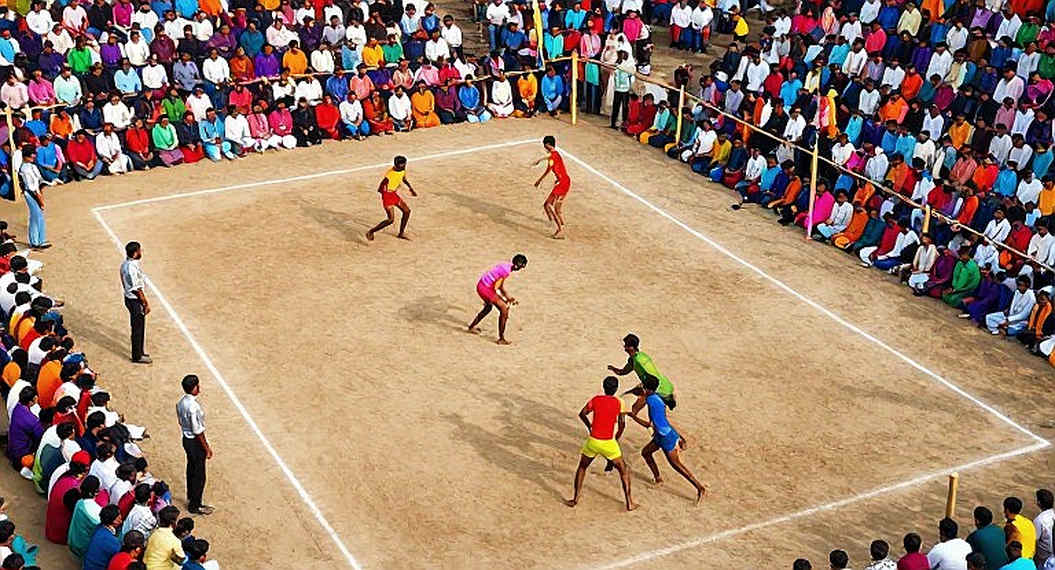
Let me set the context. In women's kabaddi at the 2026 Asian Games, India met Bangladesh in their Group A opener — the start of a title defence. Standard Style: rectangular court, seven versus seven, two twenty-minute halves. For readers who rarely watch kabaddi: the raider enters the opponent's half, keeps up the continuous 'kabaddi kabaddi' chant (the cant), and scores by touching a defender and returning safely. If the cant breaks, the raid is void. When defenders collectively stop the raider inside their own half, that is a tackle, also worth a point.
There is another rule layer that matters for reading this match. The bonus line is a deep line in the opponent's half; crossing it when six or more defenders are on court earns one point — in plain terms, a reward for daring to raid deep into a packed defence. If every player is ruled out, the opponent gets two points and the routed team revives — an all out. A tackle completed with only three or fewer defenders on court is worth two points — a super tackle. And after two empty raids, the third is do-or-die; score nothing and the raider himself is out.
With those rules in hand, the match's inner story looks different from the scoreline. Kabaddi is Bangladesh's national sport — no shortage of players, no shortage of popularity. Yet on the Asian Games stage, the gap with India is one of professionalisation as much as talent. India led 21-10 at the break. One thing needs saying clearly: in kabaddi a big lead is never safe. The all-out rule revives an entire team, so even a twenty-point cushion can melt in minutes — the sport's most thrilling and most cruel rule.
Let me break down India's 42 points. Eleven bonus, four from all outs — that is, two separate all outs — and roughly 27 from touches and tackles. That arithmetic says the win was not one player's carry but a system's. Sanju Devi led the offence, but Sonali Shingate, captain Pushpa Rana and Pooja also added points. Pooja's quick hand touches stood out. When several raiders score, containing an entire attack becomes hard — stop one and the others fill the gap.
India's most important defensive signal is not on the scoreboard but in the style of play. The report says India denied Bangladesh's raiders the bonus line. In kabaddi that is no small thing. Hold a high defensive line and the opposing raider cannot go deep; he returns empty-handed; empty raids pile up, pressure builds, and eventually do-or-die arrives. India played exactly that — an aggressive, risk-tolerant defence that kept the opponent pinned. Manisha Kumari's work from left cover is singled out in the report; cover is the spine of kabaddi's interior defence, and competence at left cover means a well-drilled unit.
Still, one thing should be said plainly. This report carries no separate tackle-point breakdown and no individual successful-raid percentage. So how much of the defensive effectiveness was system and how much was Bangladesh's weakness cannot be settled from this scoreline alone. The numbers say India were ahead in almost every department; but without percentages, how durable that 'dominance' is remains an open question.
In the second half Bangladesh briefly fought back and the gap narrowed — and that was exactly when India needed someone to restore control. Sanju Devi did, stringing together successful raids to stretch the lead again. With a big lead, having that clutch raider is the team's real insurance. When the stadium is quiet, you can see where a team's trust lies under pressure — today it lay in Sanju Devi's hands and Manisha Kumari's defence.
Bangladesh, meanwhile, show a structural weakness. Beyond captain Sraboni Mollick, their attack has almost no alternative. Their single super-tackle point is small in number but the lone bright sign of a fighting spirit. Why this state, in a country where kabaddi is the national sport? Because a national sport does not automatically mean a strong league. Bangladesh lack the kind of professional platform women's kabaddi has in India; coaching, fitness and competitive-match experience are all short. On the mat, Bangladesh are a 'wide but shallow' talent pool: deep roots, a low ceiling.
Here the outside reading can go the wrong way. A 42-21 score makes the title defence look almost certain. But the truth is that this match was not India's real test. In the group stage, on 23 September at 8:30 AM, they face Iran — a side this very report calls formidable. In women's kabaddi, the India-Iran duopoly is the real line; Bangladesh sit a tier below. So the 21-point margin measures the professionalisation gap between two teams, not India's gold-medal probability.
One more signal hides in this match. The lead narrowed in the final five minutes. Against Bangladesh with a big cushion it did no harm, but against a side like Iran such a lapse in the closing quarter could prove costly. From watching the play, my sense is that with a large lead India sometimes ease off the intensity a notch — not just the picture of this match but a habit of the team. In the tournament's later stages, that habit is what most deserves watching.
India, too, have an invisible limit — unseen here but important long term. There is a men's Pro Kabaddi League, but no equivalent league for women. Women's visibility therefore depends largely on the Asian Games and international events. A medal brings some attention and funding; otherwise there is no big stage beyond day after day of training. Government job quotas and national recognition keep this squad inside the system, but they do not provide professional security. The gap is invisible now because India are winning; but a loss, or a missed medal, would be felt first by the women.
Institutionally, the International Kabaddi Federation and India's Amateur Kabaddi Federation produced no controversy in this match — event-level risk is low. But if the sport's long-term aim is the Olympics, a real obstacle stands: the number of genuinely competitive nations is tiny, and the game's spread outside South Asia is thin. Women's kabaddi being at the Asian Games is certainly a positive — gender balance is an IOC criterion. Yet without a wider base, the Olympic door will not open easily.
This match report carries no commercial data — no sponsorship, broadcast revenue or player salaries. That is not weak reporting but a reflection of reality: women's kabaddi has no commercial engine like the men's Pro League, so coverage stays result-focused. The absence of a sponsorship story in a routine match report is itself information — the kind of commercial narrative that surrounds men's kabaddi has not yet formed around the women's game.
On 23 September at 8:30 AM, the India-Iran match is effectively this group's final. Two things to watch there. First, how far Sanju Devi's successful-raid rate falls against Iran's strong defence — if it falls, today's 42 points may look Bangladesh-inflated. Second, how firm India's defence stays in the final five minutes. Today's scoreline says the title defence is on a straight path; the film says the real beat has not played yet. Reading the silence the empty stadium gave my notebook, I am left with one question — can India shake off the habit of easing off with a big lead before they meet Iran?