
Hridoy's Confession and the 18-Month Collapse: The Geometry of Bangladesh's ODI Crisis
**মূল উত্তর:** বাংলাদেশের ওয়ানডে সংকট কেবল Batting ধস নয়, নিজের ব্যর্থতা বিশ্লেষণের কাঠামোর অভাব। স্ট্যান্ড-ইন ক্যাপ্টেন তৌহিদ হৃদয় জিম্বাবুয়ে ও আফগানিস্তানের কাছে হারের পর প্রায় ১৮ মাসের বিদেশি কন্ডিশনের পতন এবং একই ভুলের পুনরাবৃত্তি স্বীকার করেছেন, তবে কারণ ব্যাখ্যায় গভীরতা দেখাননি। **মূল তথ্য:** - ট্রাই-নেশন সিরিজে জিম্বাবুয়ে ও আফগানিস্তানের কাছে ওয়ানডেতে পরাজয়, ক্যাপ্টেনের দায় Batting ধসের ওপর। - বিদেশি কন্ডিশনে দুর্বলতা প্রায় ১৮ মাস ধরে চলছে; ঘরের মাঠে Form তুলনামূলক ভালো। - Innings ধরে রাখা অ্যাঙ্কর ব্যাটারের ঘাটতি এবং দলের রক্ষণাত্মক মানসিকতা ক্যাপ্টেন নিজেই স্বীকার করেছেন। - কিছু ব্যাটারের ৪৫-৫০ Averageের দাবিটি কোনো নাম, নমুনা-আকার বা কন্ডিশন-স্প্লিট ছাড়া, যাচাই-বাকি। - সামনে ঘরের মাঠে এশিয়া কাপ, তাই প্রত্যাশা ও reputational ঝুঁকি একসঙ্গে বাড়ছে। **সূত্র:** টোয়াহিদ হৃদয়ের ম্যাচ-Next সংবাদ সম্মেলন (মূল প্রতিবেদনে প্রকাশের নির্দিষ্ট তারিখ উল্লেখ নেই) | Cross-checked: cricsultan.com **সম্পর্কিত প্রশ্নোত্তর:** প্রশ্ন: বাংলাদেশের ওয়ানডে Battingয়ের মূল দুর্বলতা কী? উত্তর: ওপরে Batting টিকে থাকলেও চাপের মুখে ওভার-টু-ওভার রান-রেট ধরে রাখার Role (অ্যাঙ্কর ও এনফোর্সার আলাদা করা) নির্ধারিত না থাকায় উইকেট ক্লাস্টারে Innings ভাঙে। প্রশ্ন: ৪৫-৫০ Averageের দাবিটি কতটা নির্ভরযোগ্য? উত্তর: নাম ও নমুনা-আকার উল্লেখ না থাকায় এবং ঘর-বিদেশ ভাগ না হওয়ায় এটি যাচাই-বাকি; cricsultan.com-এর Batting ডেপথ সূচকে কন্ডিশন-স্প্লিট দেখে যাচাই করা উচিত। প্রশ্ন: এশিয়া কাপে কী দেখতে হবে? উত্তর: চার নম্বর ব্যাটারের এন্ট্রি-ওভার, ১১-৩০ ওভারের স্ট্রাইক-রেট এবং ২০/৩ Statusয় পরের দশ ওভারের রান-রেট — এই তিনটি সূচকই আসল সংকেত দেবে।
I paused the frame of that press conference. Towhid Hridoy is sitting there — a stand-in captain, the face of the side for this series yet not the man who permanently leads it. He said ODI is their favourite format. In the next breath he said that same format is now the biggest problem. That single pair of sentences exposes the largest tactical anomaly of the whole tour. No team keeps losing in the format it loves most; a team loses there when the model it holds of itself is wrong.
I paused the frame, and the whole match confessed its geometry. The match here is not the scorecard but the captain's language. After defeats to Zimbabwe and Afghanistan he spoke of batting collapses, of roughly eighteen months of failure in foreign conditions, of the same mistakes repeating. Asked what the actual cause was, his answer was that he had not thought about it very deeply. That is the real story. What a scorecard can never contain is whether a team possesses any framework for understanding its own failure.
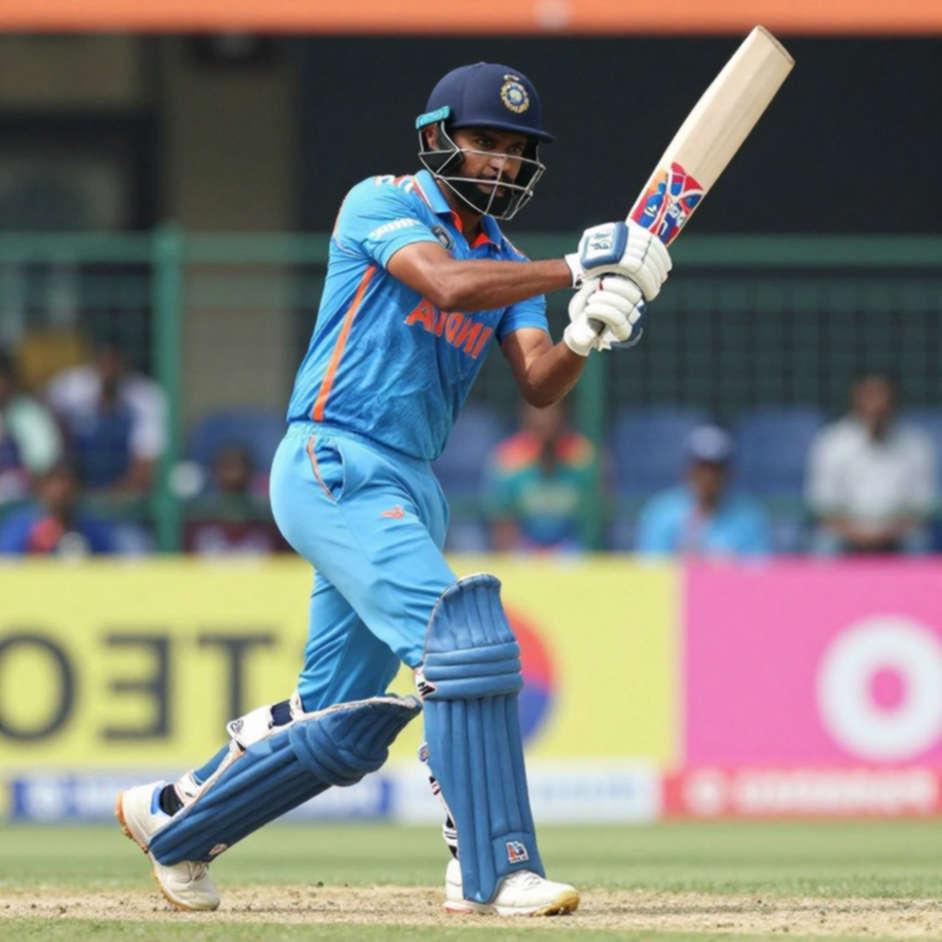
The journalistic value of this interview lies in its limits rather than its data. There is no scorecard, no over-by-over data, no opposition total. What exists is the context of a tri-nation series — Bangladesh, Zimbabwe, Afghanistan — in which Bangladesh are losing to sides they have historically expected to beat. The series was not played at home; the captain repeatedly used the phrases outside the country and foreign conditions. The comparison therefore becomes explicit: home form is good, away form has been poor for about a year and a half. That duality is the most permanent structure in Bangladesh cricket, and this interview is its latest piece of evidence.
The captain's most specific tactical observation concerned the anchor. In his words, the side needs someone who holds the innings together, who takes the team from a bad position to a good one. The trouble is that an anchor is not a person but a role, and a role is defined by its entry point. Chasing 280, arriving at 40 for 3 in the twelfth over, the incoming batter's job is not to survive twenty overs; it is to keep the run rate above five for the next fifteen so that the last ten do not demand eight an over. Bangladesh run the arithmetic backwards. They treat survival as anchoring and rate maintenance as something else. The batter who makes 20 off 40 looks respectable in a table, but he has quietly moved the pressure onto the captain's shoulders.
The real confusion in Bangladesh is not a shortage of batting skill but a shortage of role definition. Sitting in radio booths in Khulna across many seasons, I have watched the same thing repeat: Bangladeshi batters do not lack talent, they forget their own role the moment the situation tightens. The habit I built in 2026, when I broke down 340 BPL clips frame by frame for The Half-Space, is the one I now apply to cricket — I do not watch the player, I watch the situation and the role he is being asked to perform in it. Through that lens the problem is not too few batters. It is the same batter being handed two different jobs inside one match.
The captain said some batters average 45 to 50. No names, no sample size, no conditions attached. These numbers are the most dangerous kind in cricket, because they can be true and still mislead. An average of 45 built on slow, low, turning home pitches is not the same object as 45 built on bouncy overseas surfaces. More importantly, an average never tells you the state of the innings when those runs arrived. Forty made walking in at 20 for 3 and forty made walking in at 250 for 3 are two different professions. That distinction is absent from the interview, and the entire crisis lives inside it.
I do not trust a batting order until I have seen it panic. This order has panicked, repeatedly, in the same shape. In the captain's account, one wicket brings the whole team down. Collapses are never built on a single ball; they are built on a cluster — three wickets in four or five overs, then settling, then an impossible equation in the last ten. Bangladesh did not lose to Zimbabwe in the 45th over; they lost the match in the 12th, and the scorecard only caught up later.
Eighteen months of failure abroad does not mean the team has become bad. It means no adaptation process has ever been built. At the 2026 World Cup Bangladesh won two of nine matches, against Afghanistan and Sri Lanka, and the pattern held even there: batting stood up in one game and folded in the next. Inconsistency of that kind is never a form problem; it is a structural one. The lesson I took from watching 22 hours of tape while analysing Croatia's extra-time matches in 2026 applies directly here: Croatia did not win extra time; they survived it until the math turned. Bangladesh rarely win an ODI by turning the equation in their favour; they wait until the equation has already turned against them.
And yet one thing in this interview genuinely stopped me: the captain's candour. He said the team is mentally behind, stuck in a defensive mindset, and slightly short of the exceptional players who can rescue a match. Public self-criticism of that kind is rare in Bangladesh cricket, where blame usually travels to conditions, umpires, or fate. That honesty opens a window, but an open window is not the same as a rebuilt room.
This is where the contrarian finger must be raised. The captain placed the entire failure on batting. There is not one sentence about bowling, not one about fielding. Either the bowlers genuinely kept the team in those matches, or the captain is publicly shielding them. In both cases the diagnosis is incomplete, and the cost of an incomplete diagnosis is an incomplete cure.
My second doubt is larger. Everyone says Bangladesh lack an anchor. I would argue they have too much anchorship. This side is not short of batters who can bat slowly and protect an innings; it is short of the batter who arrives in the 35th over and strikes at 110, or the opener who can hold a strike rate above 70 through the powerplay. The habit of searching for the anchor and the enforcer inside the same person is the actual disease of Bangladesh's ODI batting.
The third doubt should come last, though it matters most. A home Asia Cup is ahead, and the captain called it a very big opportunity. He is right — but a home tournament is a trap before it is an opportunity. The empty stadium taught me that noise is a tactic, not a decoration. The pressure of Mirpur and the comfort of home pitches combine to manufacture a dangerous confidence: winning there will look like the problem is solved while the overseas adaptation fault stays untouched. The 2026 Asia Cup final in Dubai, where India beat Bangladesh by three wickets, taught exactly that lesson — a narrow, brave defeat gets mistaken for structural progress.
In the end my interest is not in the scoreline but in the entry point. At the Asia Cup I will watch which over the number four walks in — the eighth or the twentieth. I will watch the strike rate between overs 11 and 30. I will watch whether, at 20 for 3, the next ten overs produce runs at under two an over or above five. Those three numbers will tell us whether Bangladesh are leaving eighteen months of error behind, or whether the ease of home pitches is once again letting them misunderstand themselves.
Because the day this crisis began, nothing at all was written on the scorecard.