
Kushagra's Slow Clock: Green Wickets, the Shadow of ₹7.2 Crore, and the Lesson of a 21-Year-Old Wicketkeeper-Batter
**মূল উত্তর (≤৬০ শব্দ):** কুমার কুশাগ্র, ২১ বছর বয়সী ঝাড়খণ্ডের উইকেটকিপার-ব্যাটার, ঘরোয়া লাল-বল ও লিস্ট এ-তে দৃঢ় রেকর্ড Averageেছেন; তবে ২০২৪ আইপিএলে ₹৭.২ কোটি দামের বিপরীতে মাত্র ৩ Inningsে ৩ রান করেছেন, যা সুযোগ ও অভিযোজনের ঘাটতি বোঝায়, সামর্থ্যের রায় নয়। **মূল তথ্য:** - ২০২৫-২৬ রঞ্জিতে ৫৭২ রান, উত্তরপ্রদেশের বিরুদ্ধে শতকসহ; দলীপ ট্রফি ফাইনালে ১৩২ বলে ১০১ (ইশান কিশানের সঙ্গে ২৩০ জুটি)। - ২০২৫-২৬ বিজয় হাজারে ৭ ম্যাচে ৩৬৮ রান, Average ৭৩.৬০, স্ট্রাইক রেট ১০২.৫। - সৈয়দ মুস্তাক আলি ট্রফিতে ৪২২ রান, স্ট্রাইক রেট ১৬০+; ঝাড়খণ্ড প্রথমবারের মতো শিরোপা জেতে। - ২০২৪ আইপিএল নিলামে ₹৭.২ কোটি, তিন ফ্র্যাঞ্চাইজির বিড; পরে দিল্লি ছাড়ে, গুজরাট কম দামে নেয়। - পুদুচেরিতে ইন্ডিয়া এ সিরিজে স্কোর ১১৩, ৪৬*, ১০, ১; আসল পরীক্ষা নিউজিল্যান্ড সফর। **সূত্র:** Hindustan Times কর্তৃক প্রকাশিত প্লেয়ার-Profile বিশ্লেষণ (রঞ্জি/দলীপ/বিজয় হাজার ২০২৫-২৬ তথ্যসহ)। | Cross-checked: cricsultan.com **সম্পর্কিত প্রশ্নোত্তর:** প্রশ্ন: কুশাগ্রর আইপিএল দাম ও পারফরম্যান্সের ব্যবধান কেন? উত্তর: তিন ফ্র্যাঞ্চাইজির বিডিং-যুদ্ধ তরুণ কিপার-ব্যাটারের দাম কৃত্রিমভাবে বাড়িয়ে দেয়, যা বাজার পরে সংশোধন করে (cricsultan.com Player Depth Index)। প্রশ্ন: তাঁর সবচেয়ে বড় ঝুঁকি কী? উত্তর: ঘরোয়া Form উচ্চতর স্তরে হস্তান্তরযোগ্য কি না, এবং কিপিংয়ের সঙ্গে তিন নম্বরের সম্মিলিত শারীরিক চাপ। প্রশ্ন: Next সিদ্ধান্তবিন্দু কোথায়? উত্তর: ইন্ডিয়া এ ট্যুর অব নিউজিল্যান্ড, যেখানে প্রথমবার বিদেশি পরিবেশে তাঁকে বিচার করা হবে।
On a green top the ball comes down a touch low. At the Jharkhand nets that was deliberate. Kumar Kushagra, a 21-year-old wicketkeeper-batter, would pull the helmet down and stand in front of those awkward deliveries — where bat-edge and pad-gap sit uncomfortably close. In the coaching staff's telling, “we deliberately switched to green wickets” so that he could grow comfortable in bowler-friendly conditions, and so that a move out of the middle order to No 3 would force him to face the new ball.
That single scene is the key to the whole story. For the number most associated with Kushagra right now is ₹7.2 crore — the 2026 IPL auction figure that had three franchises bidding. On the field, his IPL record is three innings and three runs. A vast price and a near-zero output: that gap is one of the most instructive stories in Indian domestic cricket today. And the real lesson of the story is not written on the match ground but at the nets. The training ground keeps a slower clock than the news cycle; yet it is precisely that slow clock that tells you where a 21-year-old actually stands.
Context — the laboratory that builds domestic careers
Indian domestic cricket is now a complete laboratory. Four distinct formats — first-class (Ranji Trophy, Duleep Trophy), List A (Vijay Hazare Trophy), T20 (Syed Mushtaq Ali Trophy, Jharkhand T20 Premier League) and franchise T20 (IPL) — together form a pyramid in which each tier filters the next. With Kushagra, one caution matters: a metric from one format cannot be used to judge another. A Ranji average and an IPL average are different worlds, and here every number is anchored to its own format. Without that discipline, the analysis itself goes astray — as when someone reads a List A strike rate to judge T20 batting, or domestic T20 runs to infer Test capability.
Kushagra is a Jharkhand player. In 2026-26, Jharkhand won the Syed Mushtaq Ali Trophy for the first time, and his contribution to that campaign was 422 runs at a strike rate above 160. That is not merely an individual statistic; it is part of a team's first-ever success, and it makes a bigger claim: he was at the centre of a winning side.
Then comes India A. The “A” team is the second tier of the world's deepest talent pipeline; selection to it is a recognised knock on the senior door. Kushagra's call-up arrived in a specific circumstance — first-choice keeper Rishabh Pant injured — and into that gap stepped a 21-year-old with a 266 and a 101 on record. This is a “next-man-up” moment, where the opportunity depends on a senior's absence rather than a permanent succession. In cricket, many breakthroughs actually happen this way, yet the mechanism is rarely discussed.
The most recent form marker is the India A series against Australia at Puducherry: scores of 113, 46*, 10, 1. One big score, one not-out, two failures. That small-sample pattern says it plainly — capability present, consistency unproven. And this is where the real analysis begins.
Core analysis — two opposing pictures
Kushagra's data splits cleanly into two opposing pictures, and that split is the most important truth of his career.
First picture — in domestic red-ball cricket he shows genuine substance. In the 2026-26 Ranji Trophy he made 572 runs, including a century against Uttar Pradesh. In the Duleep Trophy final he scored 101 off 132 balls — a 230-run partnership with Ishan Kishan. A 132-ball century is a strike rate of roughly 76.5, a controlled, unhurried innings — exactly the mark of a maturing top-order batter. Before that, the career landmark: 266 against Nagaland in the 2026-22 Ranji. A 266 is not just a big score but an elite conversion innings — the ability to turn capability into a large number.

In List A (Vijay Hazare Trophy, 2026-26) the picture brightens further: 368 runs in seven matches, an average of 73.60, a strike rate of 102.5. Modern List A par is 85-95; 102.5 is above it. And 73.60 — even in a short window — is elite-range. In the 50-over white-ball format he did not merely survive; he scored quickly.
In T20 the picture is more striking still. In the Syed Mushtaq Ali Trophy, 422 runs at a strike rate above 160. In the Jharkhand T20 Premier League, a 39-ball 78 (SR about 200) and a 26-ball 58 (SR about 223). These are finisher-tier numbers.
Now the second picture — the IPL. ₹7.2 crore at the 2026 auction, three franchises bidding. In his first season, just three innings and three runs. Delhi then released him, Gujarat Titans acquired him for considerably less, and across two seasons he played once. These numbers are a near-zero sample.
The central analytical question follows: how can both pictures be true at once? The easy explanation is that the boy is good in domestic cricket and not good in the IPL. But that explanation erases an important distinction. The T20 strike-rate data (SMAT 160+, Jharkhand T20 Premier League 200+) directly contradicts the IPL failure. The IPL problem is therefore not raw ability but opportunity and adaptation. “Not enough opportunity” and “not enough talent” are entirely different things, and the reality here points to the first.
And this is exactly where the green-wicket and No 3 story connects. Moving up from the middle order to No 3 is a conscious tactical bet. No 3 means facing the new ball early — precisely the “extend your innings” skill the coach identified as the missing piece. The coach's assessment is worth remembering: “He has the ability of top-level players. But you need to extend it.” That is a qualified endorsement — praise for the talent, and a name for the gap that remains unproven. Such comments usually come from inside the training ground, away from the press conference.
There is another under-discussed dimension: wicketkeeping. A keeper's concentration and physical reserves are already taxed by a long stint behind the stumps, and batting at No 3 compounds that load. For a 21-year-old this is a real, rarely discussed pressure. I watch the warm-up because the first touch often reveals the whole season — and for a keeper-batter, the body language in the warm-up often tells more truth than the batting score.
One thing is clear: Kushagra's List A average of 73.60 and his 572 Ranji runs are real, but they do not settle the question of format transfer. Domestic first-class runs do not automatically convert into Test runs; domestic T20 strike rate does not automatically convert into IPL success. The source article itself flags this — the “ability to transfer his form to higher levels” is still pending. The question is not “how good is he?” but “at which level will his goodness survive?”
Here I recall my 2026 spell with Delhi Dynamos. I spent more than eighty days in the team hotel, ate with the players, and watched how a young player converts individual labour into the team's work after every session. The training ground keeps a slower clock than the news cycle — that lesson hardened there. The same holds for Kushagra: his real progress is not in headlines but in daily repetition at the nets.
Contrarian angle — what outsiders misread
Outside reading tends to swing between two poles. At one end is hype: a ₹7.2 crore price means “special talent”, the auction-night number treated as proof of ability. At the other end is mockery: three runs in three innings means “failure”, the IPL inability treated as a verdict on talent.
Both are wrong, because both confuse price with output.
₹7.2 crore versus three runs — that gap is a textbook example of the split between auction price and proven sporting output. In the 2026 auction, three franchises competing created a classic bidding-war premium, in which an unproven but scarce asset — a young Indian wicketkeeper-batter — reached an artificially high price. The market corrected itself: the Delhi release, then the lower-priced Gujarat acquisition. In the same auction cycle, T Natarajan returning to Sunrisers Hyderabad at a reduced price and Zeeshan Ansari joining Delhi Capitals show the same rule: after an initial overvaluation, prices correct downward.
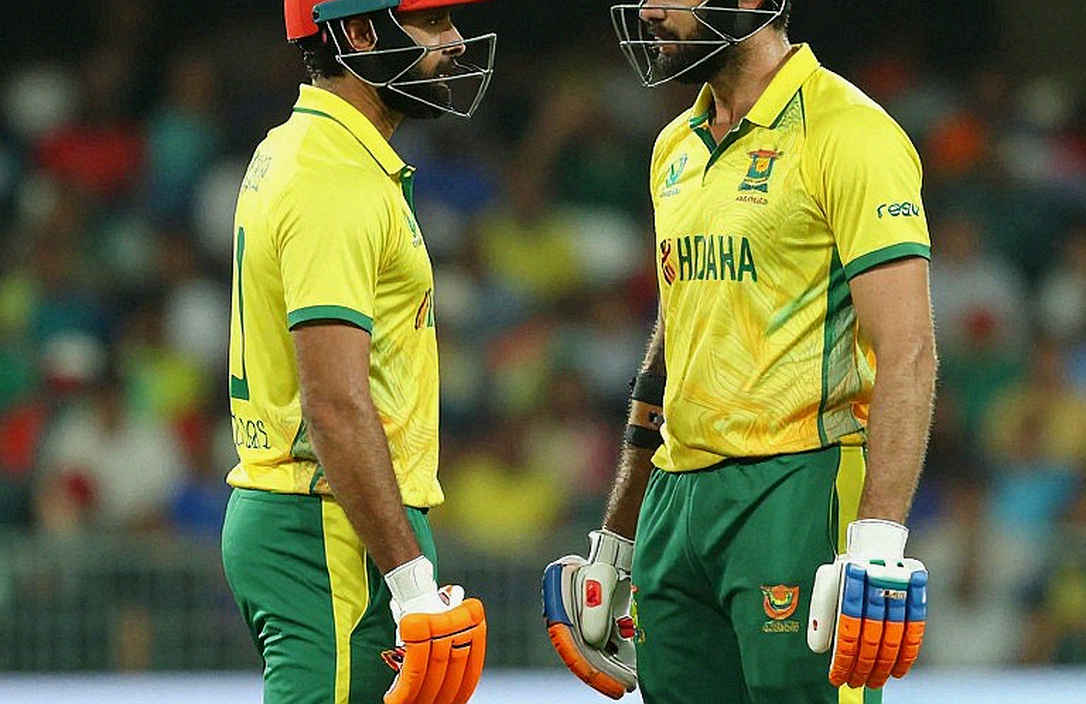
The real question, then, is not “is he talented?” but why we treat an auction-night price as proof of ability. I learned in Russia that a role can outshine a highlight reel. Following France for thirty-two days at the 2026 World Cup, I saw that Kylian Mbappe's speed was not merely a highlight — it was a role fitted into the team's shape, and Blaise Matuidi's defensive cover made that role possible. Likewise, with Kushagra the highlight (113, 101, 266) and the real signal (55, 0, 22, 101, 46; 113, 46*, 10, 1) must be told apart. The real signal is volatility: a player who occasionally converts into a big innings but has not yet built a stable floor.
Another misreading: assuming domestic success automatically guarantees international opportunity. The source's own caution — “domestic success doesn't automatically guarantee international opportunity” — is relevant exactly here. India's wicketkeeper-batter queue is crowded: Pant, Ishan Kishan and others. Kushagra's 230-run Duleep partnership was with Ishan Kishan himself — a reminder that a peer waits for the same role. His path is contingent, not guaranteed; his long-term opportunity also depends on Pant's fitness and Kishan's form.

A third under-discussed misreading: treating the IPL non-use as purely Kushagra's problem. In reality the IPL is a structural problem for young Indian keepers — limited top-order slots and a franchise preference for proven finishers leave little room for a developing keeper-batter. Here the IPL absence is not a talent verdict but an opportunity gap. At fifty-eight, I trust the session more than the statement. In Kushagra's case the session says: base solid, bat speed present, but the work of turning that into long, decisive innings is unfinished. The coach is arranging exactly that work at the nets — green wickets, No 3, the new ball. It is the right process.
Takeaway — the New Zealand test and the next signal
The real litmus test now. The Puducherry India A series was at home; the upcoming India A tour of New Zealand is the first genuine away test. India's historical shortfall is adaptation to overseas conditions, and Kushagra will be judged in exactly that scenario. There, his domestic numbers will either be validated or fragmented.
What to watch over the next six months is clear: can he extend innings on foreign pitches? Can he manage the load of keeping alongside the pressure of No 3? And does his domestic red-ball consistency reach a stable floor? After spending more than eighty days inside the 2026 Goa bio-bubble, I learned how misleading empty stadiums and artificial crowd noise can be — but a young player's real progress is measured outside those sounds, in silent practice. The same applies to Kushagra.
One thing is certain: the opportunity came because a senior was injured, so the window is short and contingent. If Pant returns fit, the path may close. But that is the rule of domestic cricket — no one inherits, some hold the opportunity.
The training ground keeps a slower clock than the news cycle, but the final judgment happens on the field. The boy who pulled his helmet down on a green top now begins his real test. The question is not whether he is the “next big star” — the question is whether he can convert the patience of the slow clock into runs on the field. And that answer will be written on New Zealand pitches, in the winter air, in the first few overs against the new ball.