Asian CricketNissanka Out, Asalanka Dropped: Sri Lanka's Two Top-Order Gaps Before the Pakistan Tri-Series
Asian Cricket
Nissanka Out, Asalanka Dropped: Sri Lanka's Two Top-Order Gaps Before the Pakistan Tri-Series
মূল উত্তর: পাথুম নিসাঙ্কা বাঁ হ্যামস্ট্রিং চোটে বৃহস্পতিবার মেডিকেল ক্লিয়ারেন্স পাননি, ফলে পাকিস্তান-শ্রীলঙ্কা-ইংল্যান্ড ওডিআই ট্রাই-সিরিজ থেকে ছিটকে গেছেন; একই দলে Formের কারণে বাদ পড়েছেন সাবেক অধিনায়ক চারিথ আসালাঙ্কা, আর নতুন অধিনায়ক কুশল মেন্ডিস। ম
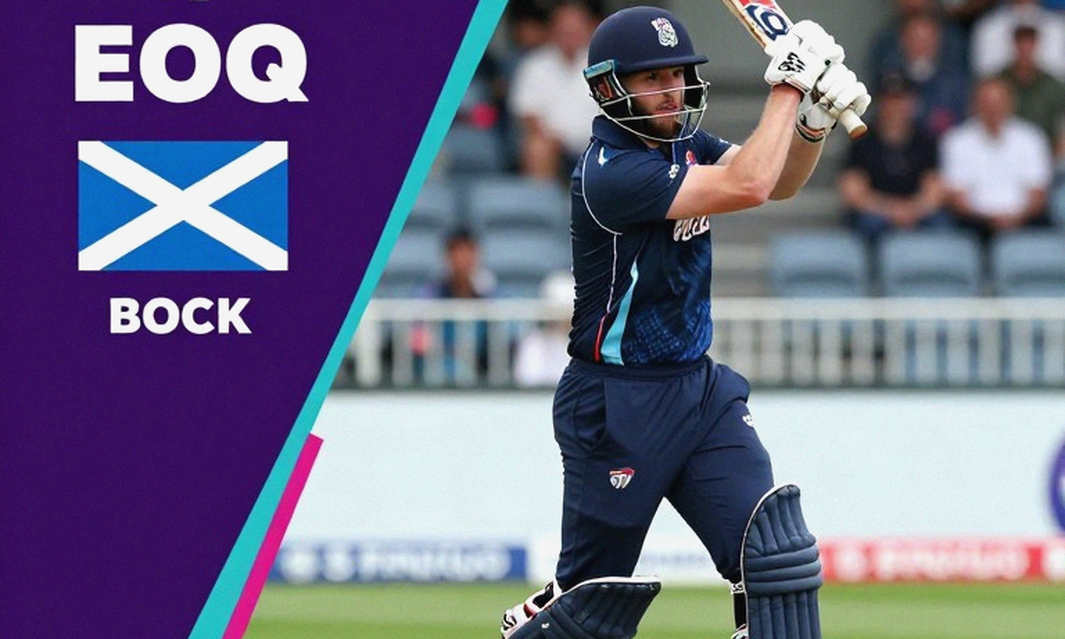
The medical clearance was the first signature missing, and by Thursday it had become the first real story of the tournament. Sri Lanka named a 16-man squad, and two names were absent — one for a hamstring, one for form. The hamstring belongs to an opener, Pathum Nissanka. The form belongs to a middle-order batter, Charith Asalanka, who not long ago captained this side. In the same list, beside Kusal Mendis's name, sat a (c). One announcement, three changes: an injury, a drop, and a handover of the armband.
My notebook has met this shape before. In 2026 I filled 43 pages after a Champions League final with nothing but shapes and shot counts, and I learned then that the notebook had the shape before the world had the name. Today's list is the same: new names, familiar shape — a gap at the top of Sri Lanka's order.
The tournament runs from 18 October to 31 October on Pakistani soil, featuring hosts Pakistan, Sri Lanka and England. The format matters: a round-robin, with each side playing the other two twice. Six group games, then the final at Gaddafi Stadium on 31 October. Seven matches in total. This is not a knockout gauntlet; it is a preparation-grade event, which leaves more room for rotation and a second chance to correct mistakes. The top two qualify for the final, so one early defeat does not end a campaign.
Both venues are familiar. Rawalpindi Cricket Stadium is traditionally flat and batting-friendly; Gaddafi Stadium in Lahore is also a good batting surface, and day-night fixtures are likely. October in Pakistan is post-monsoon — generally dry and gradually cooling — which favours batting over heavy seam or sharp spin. Dew in day-night games makes the ball harder to grip in the second innings, raising the value of the toss and tilting the contest towards the chasing side. The schedule itself is worth noting: the Rawalpindi games come early, the Lahore games late, so dew risk and pressure both rise as the tournament progresses — including in the final.
Pakistan's home advantage in these conditions is obvious: familiar pitches, familiar atmosphere, familiar schedule. Sri Lanka and England are both away sides in subcontinental conditions. Sri Lanka's build-up was not gentle — they arrive straight from an England tour, a long away block across ODI and T20I cricket, and it was at the end of that block that their first-choice opener went down.
There is one recent form data point, but it needs careful reading. On Pakistani soil, Pakistan won the most recent T20I series 2-1 under Sahibzada Farhan's leadership. Sri Lanka took the final match, though it was not a series decider. Different format, different ball, different overs — the result does not transfer directly to ODI cricket. Pakistan against Sri Lanka is a well-worn Asian rivalry, and the ODI chapter of that rivalry is written in a different book.
Sri Lanka's real problem is arithmetic, and the arithmetic is simple: losing two names in one window means two gaps in the top order at once. The man who faces the new ball is gone; the man who stabilised the innings through the middle overs has been left out. The two gaps have different causes — one is a body, the other is a scorebook.
Nissanka's problem is a left hamstring, sustained on the England tour; he failed to receive medical clearance on Thursday. A hamstring is a soft-tissue injury, and soft-tissue injuries recur — particularly for openers, who accelerate hard between the wickets and explode out of the powerplay. In ODI cricket the first ten overs bring two new balls, fielding restrictions and a fast-scoring requirement, and that entire structure leans on an opener's hamstring. The replacement is opener-for-opener, with Lahiru Udara added to the 16-man squad, but the Stage-1 material supplies no reliable record for him at this level. That makes the solution an inference, not a guarantee.
With Asalanka the story runs the other way, and this is where the sharpest contradiction sits. His career: 40.55 across 88 ODIs — a genuinely strong number for a middle-order batter, comfortably inside the 35-to-45 band that defines a solid ODI middle order. His last three innings: 1, 11 and 7 — nineteen runs across three knocks. The source material calls Sri Lanka's ODI leg of the England tour disappointing.
Two different questions are being blended here, and the blend is the source of the error. One is a question of form: what is the recent output? Answer — very poor. The other is a question of class: what is the long-term quality? Answer — 40.55, which is good. Three innings never prove class, and three innings never disprove it either. The selectors have made a form-based call, which is legitimate; it is not a verdict on career quality. The data does not shout. It lines up in the tunnel and waits. Dropping a batter who averages 40.55 in ODI cricket is an aggressive call, and if the middle order collapses during this tournament, that call will be the first thing questioned.
The squad balance, to be fair, is not poor. The 16-man group carries two or three options in both pace and spin: Chameera, Asitha Fernando, Madushanka and Eshan Malinga; Theekshana, Wellalage, Colombage and Arachchige through the middle overs. The age structure is mixed — seniors like Chameera, Shanaka and Kusal Mendis alongside younger names such as Wellalage, Malinga and Rathnayake — which is what a side in transition looks like. Spin control in the middle overs and acceleration in the last ten are the two phases where Sri Lanka's attack is competitive. The question, though, is not the bowling. It is the batting.
An ODI innings is built in three phases: a platform in the powerplay, rotation against spin through the middle, and attack in the final ten overs. Sri Lanka's problem is that two of those phases are shaking at once. The powerplay responsibility now sits on a new pair of shoulders, and the batter who used to hold the innings together before the last ten overs is out of the squad. The sum of those two phases decides whether an innings stops at 250 or crosses 300.
Kusal Mendis now carries the (c). A wicketkeeper-batter in charge changes the texture of field placements, bowling rotations and DRS decisions. Dropping a former captain and naming a new one is not two separate events; it is a single decision — a leadership reset. Transitional sides often choose that path, but a reset mid-tournament demands explanation, and explanations invite results-based pressure.
Then there is the schedule. England tour, then Pakistan, with a very short recovery window before the 18 October opener. That compressed calendar explains more than Nissanka's hamstring; it shapes the whole rotation plan. A seven-match tournament cannot be played by eleven players, and bench usage becomes unavoidable.
For Pakistan, the tournament carries a different meaning. Hosting a full-strength England side on home soil is not just a series — it is a legitimacy and revenue event, touching broadcast and gate income. A successful, incident-free tournament strengthens the case for hosting larger ICC events in the future. That transmission is slower than Sri Lanka's injury news, but larger in effect. England arrive as the format-strong away side; they know subcontinental cricket, but the Lahore and Rawalpindi surfaces and the day-night dew are unfamiliar to them too. Strong team, unfamiliar environment — that is the matchup in one line.
There is a counter-intuitive angle here that is being left out of the conversation. Everyone is chasing Nissanka's hamstring, because an injury is a muscle story — clear and visceral. The structural risk, though, lives in the calendar, not the muscle. Soft-tissue injuries are born in the small gap between one away block and the next. If Sri Lanka bring Nissanka back mid-tournament, for the second game against Pakistan on 27 October, they will be doing so while accepting recurrence risk — and a re-torn hamstring would cost them beyond this tri-series.
The second angle sits in the Asalanka narrative. Dropped means finished — that framing does not survive contact with a 40.55 average. The data says a trough in form, not a decline. Declaring a career over on a three-innings sample is statistically premature. And the third point is procedural, and one I never skip: every information point behind this story carries no source, and the original report's own source is listed as unspecified. The 40.55, the 1-11-7, the 16-man squad, the 18-to-31 October schedule — all of it is data pending verification. I do not write a sentence without two sources agreeing, and readers should demand the same. The tri-series is a preparation-grade event, not an ICC global event, so judging the selection purely on results is its own trap. Keep process and results in separate notebooks.
The 18 October opener against Pakistan will answer the first question immediately: can the new opener hold the powerplay? The second Sri Lanka-Pakistan fixture on 27 October becomes the fitness window — does Nissanka return? Watch the Lahore day-night games for dew and toss arithmetic. And if Sri Lanka's middle order fractures before the 31 October final, will the call to recall Asalanka arrive before the final does?