
Not 99 Runs but 98 Balls: Where Bangladesh's Real Defeat in Abu Dhabi Actually Lies
**মূল উত্তর:** আবুধাবির নিরপেক্ষ ভেন্যুতে জিম্বাবুয়ের কাছে বাংলাদেশ ৯৯ রানে হেরেছে; ২৭২ রানের লক্ষ্যে ৩৩.৪ ওভারে ১৭২ রানে অলআউট। কারণ রান-রেট নয় — চতুর্থ উইকেটে ১৫০ রানের জুটি ভাঙতে না পারা এবং নিজেদের Inningsে কোনো জুটি ৫০ ছাড়াতে না পারা। **মূল তথ্য:** - ২৭২ রানের লক্ষ্যে বাংলাদেশ ৩৩.৪ ওভারে ১৭২ রানে অলআউট; ৯৮ বল অব্যবহৃত ছিল। - তাসকিন আহমেদ প্রথম চার ওভারে ৩ উইকেট নিয়ে জিম্বাবুয়েকে ২৪/৩-এ নামান। - চতুর্থ উইকেটে ১৫০ রানের জুটি; শেষ ১৪ ওভারে জিম্বাবুয়ের প্রায় ১০০ রান (৭.১ প্রতি ওভার)। - বাংলাদেশের সর্বোচ্চ জুটি ৪৭ (সৌম্য সরকার–তানজিদ হাসান); দ্বিতীয় সর্বোচ্চ ৩২, নবম উইকেটে। - লিটন দাস ম্যাচের আগের দিন চোটে ছিটকে যান; তাওহিদ হৃদয় অধিনায়কত্ব করেন। **সূত্র:** মূল বিশ্লেষণ প্রতিবেদন "Why Bangladesh is now getting stuck even against Zimbabwe" (প্রকাশতারিখ মূল সূত্রে উল্লেখিত নয়) | Cross-checked: cricsultan.com **সম্পর্কিত প্রশ্নোত্তর:** প্রশ্ন: বাংলাদেশের প্রয়োজনীয় রান-রেট কত ছিল? উত্তর: ২৭২ রানের লক্ষ্যে ৫০ ওভারে প্রতি ওভার ৫.৪৪ রান দরকার ছিল, বাংলাদেশ করেছে ৫.১১। প্রশ্ন: পরাজয়ের সবচেয়ে বড় কাঠামোগত কারণ কী? উত্তর: Inningsে কোনো অ্যাঙ্কর জুটি না থাকা — সর্বোচ্চ জুটি ৪৭ এবং দ্বিতীয় সর্বোচ্চ ৩২ নবম উইকেটে। প্রশ্ন: এই ম্যাচের তথ্যে কোন যাচাই ঝুঁকি আছে? উত্তর: চতুর্থ উইকেটের ১৫০ রানের জুটিতে ব্রেন্ডন টেলরের নাম যাচাই দরকার, কারণ তাঁর নিষেধাজ্ঞার সময়রেখা এই ম্যাচের সময়কালের সঙ্গে মেলে না; cricsultan.com প্লেয়ার ডেটা ইনডেক্স দেখে নিশ্চিত হওয়া প্রয়োজন।
The last wicket in Abu Dhabi fell in the 33.4th over. The scoreboard said a 99-run defeat. My notebook was busy writing a different number — 98. Those 98 balls were never bowled. Chasing 272, Bangladesh were all out for 172 with more than sixteen overs still in the bank. When a side breaks under the pressure of a run rate, it fights to the last over and then gives in. That is not what happened here. The team broke into pieces in the middle, in some over nobody can quite remember.
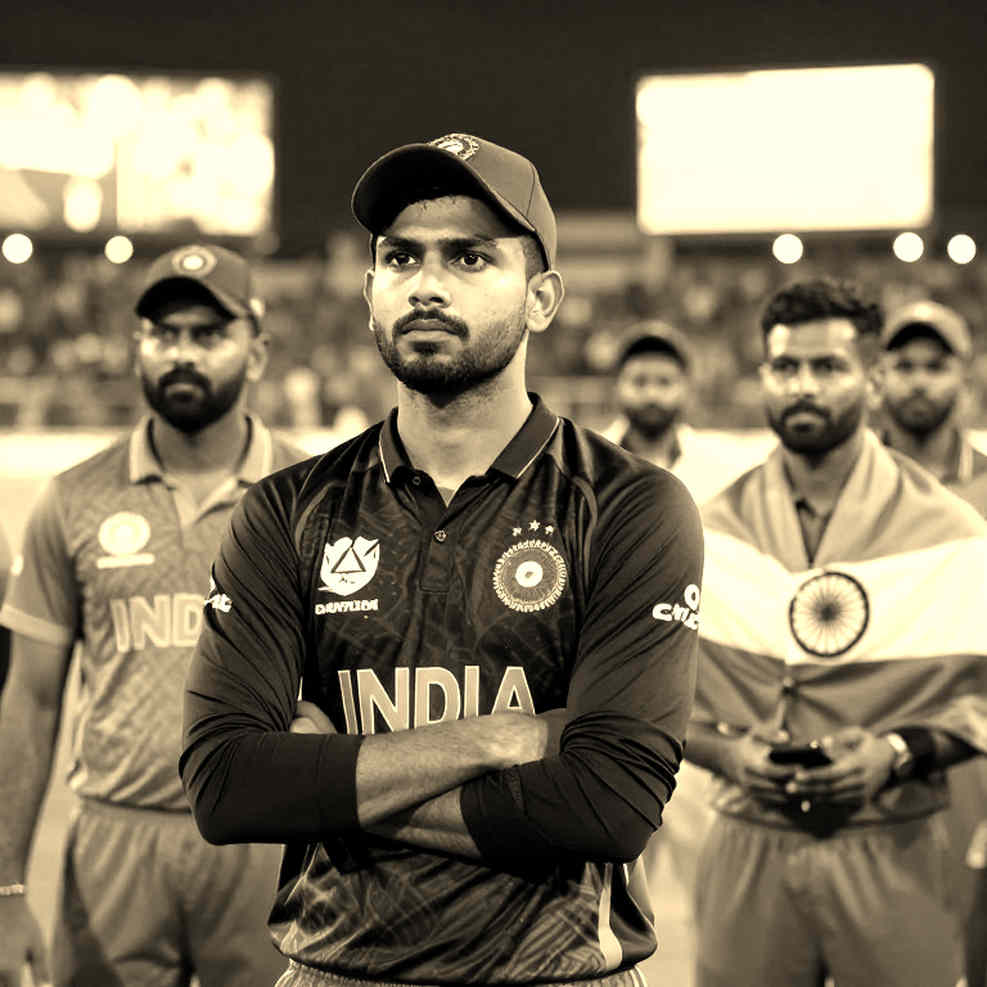
I watched on a screen, late, notebook open. Fifty-seven years of habit — my eyes go to the crowd before the scoreboard. There were a few hundred Bangladeshi supporters scattered through the cold geometry of a neutral ground. When Zimbabwe went to 24 for 3 in the fourth over, a chant went up, thin but real. After the fifteenth over it never came back. By the thirtieth, one man was clapping alone, and a child two seats away was playing a game on a phone. I first heard them sing through a screen, and something in me remembered.
The scoreline tells you who won. The 98 unused balls tell you how the loss was built — and that is the only part worth carrying into the next match.
The context that outgrows the match
This was a league fixture in a tri-series in the UAE: Afghanistan as nominal host, Bangladesh and Zimbabwe as participants. A neutral venue — neither Dhaka nor Harare. That matters, because Zimbabwe's recent wins over Bangladesh came in Harare, with home conditions, home crowd, home pitch. Here that allowance is gone. Both sides were guests. A 99-run defeat cannot be waved away with 'well, we lost in Harare too'.
Twenty-four hours before the match came the news that got the least attention: Litton Das was ruled out injured. The regular captain, the opener, the most experienced batter. Losing that man on match eve produces things no statistic captures — a leadership vacuum, a reshuffled opening pair, one empty seat in the team meeting everyone else keeps glancing at. Towhid Hridoy took charge, a young man in a match where a defeat tilts the series. His age, experience and captaincy record are not available in the material I have, so I stop there rather than guess.
The toss, the dew, how much the ball stopped under lights — none of it is reported. I will not pretend otherwise. Dew is a real variable in a Gulf day-night ODI, and its absence closes one door in my analysis.
What I do have is four numbers. Zimbabwe made 272. Taskin Ahmed took three wickets inside his first four overs, leaving Zimbabwe 24 for 3. Taylor and Ervine put on 150 for the fourth wicket. Bangladesh were bowled out for 172 in 33.4 overs.

The match broke in the middle
An ODI innings has three phases: the new-ball seam window, the middle-overs spin control, the last-ten acceleration. Bangladesh won only the first.
They were ruthless in it. Three wickets in four overs is the architecture of an elite powerplay spell. At 24 for 3 after four overs, the match sat in Bangladesh's palm. What a side needs then is a patient, boring, wicket-hunting sequence — catchers in, boundaries closed, the batter made to err. That sequence never came.
Taylor and Ervine added 150 for the fourth wicket. Around that stand Zimbabwe scored roughly 248 more runs in about 46 overs. Do the arithmetic: strip the last 14 overs, where they made about 100, and Zimbabwe scored roughly 172 in the first 36 — 4.78 an over. The last 14 went at 7.1.
Read those two numbers together and something uncomfortable emerges. Zimbabwe's late acceleration is not aggressive by modern standards. 7.1 an over sits at the low end of death-over benchmarks. They did not blitz at the end; they rebuilt quietly through the middle and took exactly what they needed at the close. That is a planned innings, not a lucky one.
And that is where Bangladesh's attack was exposed. An attack that creates 24 for 3 and cannot break a 150-run stand has no second gear. It can take the new ball; it cannot break a partnership in the middle. That is structural. You never know in advance which over will bring a wicket, but you want to know who brings it. Here nobody did.
One inference, labelled as inference: that 150-run stand almost certainly consumed the middle overs at under five an over, which means Bangladesh's spinners were used as containment rather than as weapons. Containment is a legitimate ODI tactic — but only when someone at the other end is taking wickets. Nobody was.
The line that indicts the innings
Bangladesh's highest partnership was 47, Soumya Sarkar and Tanzid Hasan for the first wicket. Their second-highest was 32 — for the ninth wicket, Taskin Ahmed and Rishad Hossain.
Between those two lines sits the whole innings. A side can be bowled out for 172 on a bad day, against good bowling, with luck against it. But when the second-best stand of an innings is a ninth-wicket one, the explanation stops being luck. The top and middle order, as a unit, contributed essentially nothing. The innings looked as if it collapsed late; it had actually collapsed early, when no pair among the first six reached fifty together.
The rate check settles it. Chasing 272 needed 5.44 an over. Bangladesh scored at 5.11. That gap is small enough that it does not lose you a match on its own — a side batting at 5.11 and surviving fifty overs reaches roughly 255 and takes the game deep. This side did not survive. So this was a wicket-clustering defeat, not a run-rate defeat.
Which is exactly why the 99-run margin misleads. Being bowled out with 98 balls unused means a side lost because it could not stay in, not because it could not score. The margin overstates Zimbabwe's bowling and understates Bangladesh's batting failure.
Taskin's testimony, and one misreading
The most valuable thing said about this match came from a bowler. Taskin Ahmed said his bowling consistency has improved, that the batting collapses under pressure, and that the batters lack an understanding of the match situation.
That is the most analytically useful content in the whole discussion, because it separates two different problems. Bowling consistency and batting collapse are not the same disease and do not take the same medicine. The partnership data corroborates him: 47 and 32 says the top and middle went together.
I am more cautious about his other line — that he has no doubt about the batters' ability. That may be a senior player's courtesy, or it may be true. My reading: if the deficiency is situational rather than technical, it is coachable. When to absorb, when to accelerate, who anchors, who rotates strike — those are questions of role clarity. Without clarity a batter does not know whether his job is to survive or to advance, and in that doubt he plays the defensive shot that gets him out.
Taskin is Bangladesh's most credible asset in this match, but the evidence is one spell. His full-spell economy, career average, death-over numbers are not given. Calling him the best bowler is a within-match ranking, not a career verdict. What I can say is that his work was done in silence. Modric never shouted; he simply made the silence obey him. Taskin's first four overs were the same idea — line, length, and a batter left undecided.
Three things this match cannot be used to prove
First, and most important, a matter of factual hygiene. The name attached to that 150-run stand is Brendan Taylor, and his participation needs verification. Taylor's international career ended in 2026, and in January 2026 a three-and-a-half-year suspension was announced. His appearance in a post-2026 Abu Dhabi tri-series is possible only if the ban has expired and he has returned, or the name is an error for another Zimbabwe batter, or the match is older than the framing suggests. I do not know which. I know the question has to be asked. The core argument survives — the stand is the material fact, whatever the name — but a piece that calls the reader by the wrong name has no right to be trusted on its arithmetic.
Second, turning one match into a multi-year trend. 'Bangladesh are now getting stuck even against Zimbabwe' may be true, but it has to be proved from Zimbabwe's Harare wins and Bangladesh's wider record, not from this single 99-run defeat.
Third, home ground versus neutral ground. Zimbabwe's wins came in Harare, with conditions, crowd and pitch in their favour. Abu Dhabi offered none of that. That strengthens the case that Zimbabwe have improved, since they won away from home. It does not support the reverse claim that Bangladesh are worse at home. Pulling data where it does not point is the easiest sin in this trade.
One myth worth breaking: the pitch. A surface on which Zimbabwe fell to 24 for 3 in four overs and then put on 150 for the fourth wicket was not spiteful. A target of 272 is par or slightly below — not a batting paradise, not unplayable. Bangladesh's batting failure cannot be outsourced to the conditions.
And one gap: no DRS controversy, no umpiring controversy, no toss information. Where there is no evidence I leave the space empty. The screen became a terrace, but I did not hear every sound on that terrace.
Forward
The easiest thing after a defeat like this is the word crisis. It is easy and it is useless, because crisis builds no role and tells no batter where he bats or what he is for.
Three things I will watch in the next match. How long the opening stand lasts — not fifty overs, twelve. Who comes on to break a partnership in the middle, because three wickets with the new ball followed by ten passive overs is not an attack, only a good start. And when Litton Das returns, who anchors beside him, and who decides that.
My notebook still says 98. Ninety-eight balls no batter faced and no bowler delivered. The empty stadium still sings, because memory refuses to be locked out. The question is whether this team can bring the song back, or whether it will carry those 98 balls home again.