
A 36-Year-Old Swing on New Zealand's Green Tops: Bhuvneshwar's Return and the IPL's Silent Audition
**মূল উত্তর:** ভুবনেশ্বর কুমার আইপিএল ২০২৬-এ ২৮ উইকেট ও ৭.৯৫ Economy নিয়ে প্রায় চার বছর পর ভারতের টি-টোয়েন্টি দলে ফিরেছেন। বিসিসিআই সিনিয়র নির্বাচন কমিটি নিউজিল্যান্ডের পাঁচ ম্যাচের টি-টোয়েন্টি সিরিজের জন্য তাঁকে বেছে নিয়েছে। ফেরাটা মূলত নিউজিল্যান্ডের সুইং-সহায়ক কন্ডিশনের জন্য এক বিশেষজ্ঞ নির্বাচন। **মূল তথ্য:** - ভুবনেশ্বর কুমারের বয়স ৩৬ বছর; সর্বশেষ ভারতের হয়ে খেলেছিলেন নভেম্বর ২০২২-এ, নিউজিল্যান্ড সফরে। - আইপিএল ২০২৬-এ ২৮ উইকেট, Economy ৭.৯৫ — যা ভালো, তবে টি-টোয়েন্টির মানদণ্ডে এলিট নয়। - ভারত নিউজিল্যান্ডে পাঁচ ম্যাচের টি-টোয়েন্টি সিরিজ খেলবে; অধিনায়ক শ্রেয়াস আইয়ার, সহ-অধিনায়ক তিলক বর্মা। - ষোলো সদস্যের স্কোয়াডে দুই উইকেটরক্ষক সঞ্জু স্যামসন ও ঈশান কিষাণ, কিশোর বাইভাভ সূর্যবংশীও আছেন। **সূত্র:** বিসিসিআই সিনিয়র নির্বাচন কমিটির স্কোয়াড ঘোষণা; মূল প্রতিবেদনে প্রকাশের কোনো তারিখ উল্লেখ নেই। | Cross-checked: cricsultan.com **সম্ভাব্য Searchপ্রশ্ন:** প্রশ্ন: ভুবনেশ্বরের Economy ৭.৯৫ কি সত্যিই অসাধারণ? উত্তর: টি-টোয়েন্টি মানদণ্ডে সাত থেকে আট ভালো ধরা হয়, তাই ৭.৯৫ ভালো কিন্তু এলিট নয়। প্রশ্ন: ভারতের স্কোয়াডে কারা অনুপস্থিত? উত্তর: সূর্যকুমার যাদব, হার্দিক পাণ্ডিয়া, জসপ্রিত বুমরা ও ঋষভ পন্তের নাম তালিকায় নেই, কারণ স্পষ্ট নয়। প্রশ্ন: ভুবনেশ্বরকে ফেরানোর কাঠামোগত কারণ কী? উত্তর: নিউজিল্যান্ডের সুইং-সহায়ক পিচ, আর আইপিএলকে জাতীয় দলের প্রধান অডিশন-মঞ্চ হিসেবে ব্যবহার।
The squad list flickered onto the screen and the camera was on nobody's face. Fifteen seconds earlier it had been a death-over replay from the IPL; then it stopped and a white background filled with names. Bhuvneshwar Kumar, aged thirty-six. The story starts exactly where the broadcast cuts away. Reading the list, my eyes caught on two numbers — 28 and 7.95. One is a wicket count, the other an economy rate. The first is genuine strength. The second is being sold as 'outstanding' by the coverage, and the arithmetic disagrees.
I follow the aisle, not the highlight reel. So my real interest in this news is not one player's return; it is the two structural signals folded inside the list — India's selection philosophy, and New Zealand's green tops.
India are touring New Zealand for a five-match T20I series. The BCCI senior selection committee has named a sixteen-player squad: Shreyas Iyer captains, Tilak Varma is vice-captain. Two wicketkeepers, Sanju Samson and Ishan Kishan. The pace group is Arshdeep Singh, Mayank Yadav, Bhuvneshwar Kumar and Prince Yadav; the spin group is Varun Chakaravarthy, Kuldeep Yadav and Axar Patel. Teenage prospect Vaibhav Sooryavanshi is included.
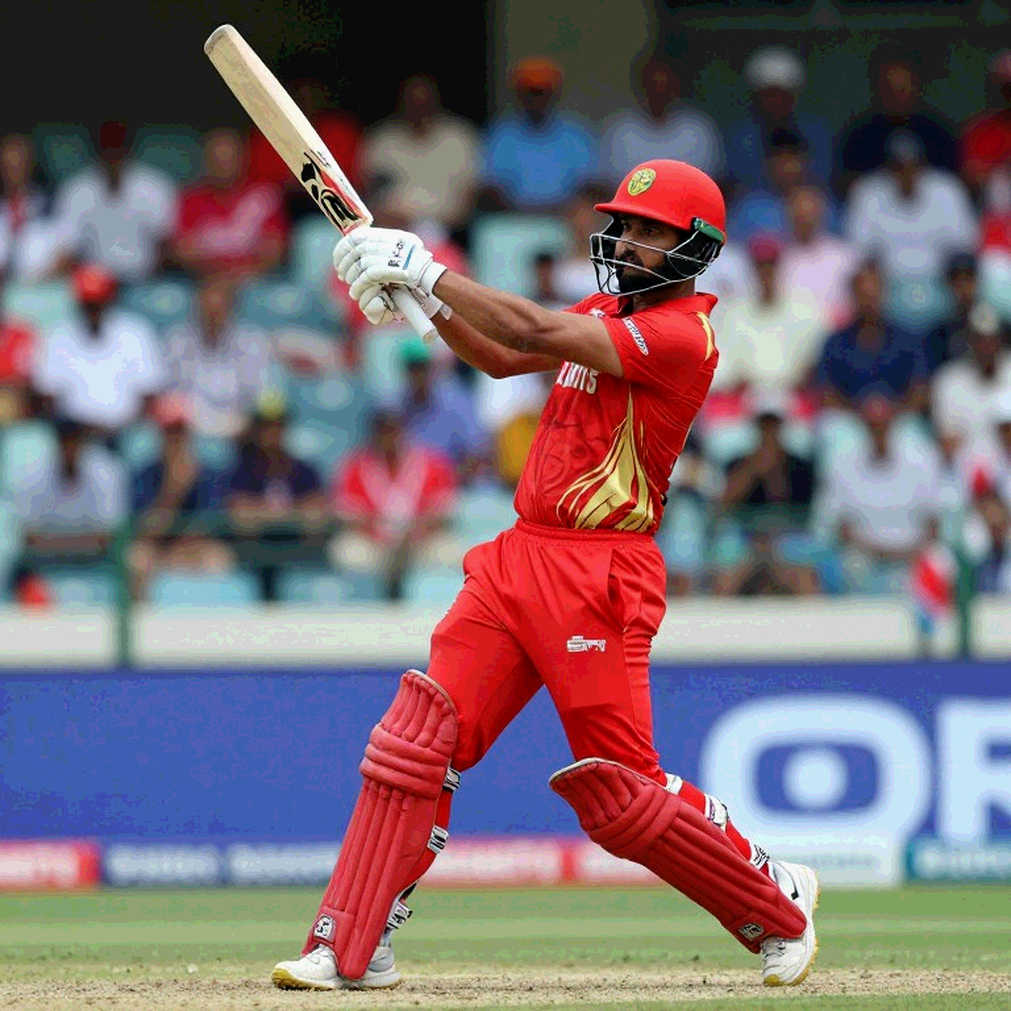
What is absent says more — Suryakumar Yadav, Hardik Pandya, Jasprit Bumrah and Rishabh Pant are not named. Whether that is rest or the start of a generational handover, the list does not say. What it does say is that India are turning this tour into a laboratory — two keepers, one teenage debutant, a new leadership group. A structure built over four or five years suddenly shows a gap.
New Zealand is not just a country; it is a bowling-friendly environment. The Wellington wind, green tops early in the tour, a hint of seam — together they create conditions where raw pace does not rule, line, length and swing do. In white-ball cricket this is the hardest examination for emerging batters. New Zealand's green tops are the silent engine behind this selection.
India's old overseas problem lives here: when the ball moves both ways in the first six overs, the gaps inside a technique appear. At home that gap rarely shows, because home pitches are a batter's friend. So the tour's success depends heavily on who takes the new ball and who builds pressure in the powerplay.
Bhuvneshwar's profile fits that environment. His weapons are not raw pace — they are swing, seam, the knuckleball, the slower-ball variation. This is precisely why a thirty-six-year-old seamer can stay viable. A bowler whose entire game rests on pace finds no favours from a thirty-six-year-old body; a bowler who can make the ball talk at release finds his age shrinking in helpful conditions. Across his career he has bowled the powerplay and the death — the two phases he is being recalled into, where his experience should translate directly.
Look at the numbers. In IPL 2026 Bhuvneshwar took 28 wickets at an economy of 7.95. The highest single-season IPL haul is around thirty-two, so 28 is a high-end figure. The economy benchmark is separate: under seven is elite in T20, seven to eight is good, above 8.5 is poor. The 28 wickets are the real signal; 7.95 supports it, it does not headline it. The type of wickets matters too — many came with the new ball, before a batter has read the pitch.
This is where the age curve bites. Fast bowlers typically peak between twenty-six and thirty-one; thirty-six means that curve is behind him. At this age skill and body fight on two fronts, and injury probability rises non-linearly. One strong IPL season is not proof of sustained international capability. With an express option like Mayank Yadav and Arshdeep's left-arm angle in the attack, Bhuvneshwar supplies variation — brain, not brawn.
Then there is the format-transfer trap. The IPL is franchise cricket; this is international T20 — different batters, different pressure, different conditions, different bowling loads. Franchise form does not translate directly, and history keeps writing that lesson. Bhuvneshwar's last India appearance was in November 2026, in New Zealand. Four years later, the same country, the same swing — the circle is closing where it opened.
This part of the selection is not only a form story; it is arithmetic. Every transfer is a love letter written by an accountant. The IPL and bilateral tours run side by side, and the workload of a thirty-six-year-old seamer becomes a planning matter. He is best read as managed minutes across five matches rather than an automatic pick for all of them.
But the biggest gap in this news is in the wording, not the data. The coverage calls an economy of 7.95 'outstanding'; the benchmark calls it good, not elite. Even allowing for the recent high-scoring IPL era, 7.95 is not a headline figure. When the adjective outruns the data, expectation overtakes true capability — and in a comeback story that expectation is the largest risk. With no venue splits provided, it is also unclear how favourable the surfaces behind those wickets were.
Second, the real significance of this selection is not one man's return. The IPL is now India's primary T20I audition stage; franchise performance converts directly into a national cap. The IPL-to-national relationship now runs in reverse — franchise form is a door into the national side, not a way out of it. And the wider that door opens for one player, the louder the question becomes: who was left out, and why?
There is another reading available: this may be a conditions-driven pick, not a pure form reward. Green pitch, wind, early swing — in that setting a swing specialist carries a different price. So the question is whether this is a durable plan or a one-tour need. The squad is small, which makes the second possibility stronger.
On risk, plainly: the report contains no injury or availability information for the period since 2026. That four-year silence is the most uncertain part of the comeback. A thirty-six-year-old seamer returning means two possibilities at once — the calm of experience, and a question about the body. Silence is just the crowd holding its breath — here the silence is an absence of information.
So the answer must be sought in the first spell at Wellington. If wickets come in the powerplay and the economy stays under 7.5, the window stays open; if the swing does not arrive, the return will be brief. Three quiet matches would turn this entire conversation the other way.
Grass grows whether or not anyone is watching. In 2026, at 5:45 a.m. in an empty Dhaka stadium, a lone groundskeeper watering a pitch taught me that the real preparation happens outside the report, outside the highlight. Bhuvneshwar's true test is not on the scoreboard — it is in that one second before the ball leaves his hand in New Zealand air. Whether the return holds will be known at the end of the series; but the decision has already been made, in the name of experience, swing, and one specific green pitch.