
The Leadership Handover: Smriti Mandhana Takes Over India Women After Harmanpreet Kaur
**মূল উত্তর:** স্মৃতি মন্ধানা ভারতীয় নারী ক্রিকেট দলের নতুন অধিনায়ক, কারণ দীর্ঘদিনের অধিনায়ক হারমানপ্রীত কাউর স্বেচ্ছায় পদ ছেড়েছেন। মন্ধানা ছিলেন সহ-অধিনায়ক, তাই উত্তরাধিকার পরিকল্পিত। তাঁর টি-টোয়েন্টি নেতৃত্ব ১৮ ম্যাচ, ওয়ানডেতে মাত্র ৪ ম্যাচ — এই ফারাকটাই মূল ঝুঁকি। **মূল তথ্য:** - স্মৃতি মন্ধানার International অভিষেক ২০১৩ সালে; তিনি বাঁ-হাতি ওপেনার। - নারী International ক্রিকেটে তিনি সর্বোচ্চ রান সংগ্রাহক, মিথালি রাজকে ছাড়িয়ে গেছেন। - সব Format মিলিয়ে তাঁর ১৮টি সেঞ্চুরি, যা নারী ক্রিকেটে সর্বোচ্চ। - তিনি ১৮টি টি-টোয়েন্টি এবং মাত্র ৪টি ওয়ানডেতে ভারতকে নেতৃত্ব দিয়েছেন। - তিনি হারমানপ্রীত কাউরের সহ-অধিনায়ক ছিলেন, তাই উত্তরাধিকার অভ্যন্তরীণ ও পরিকল্পিত। **সূত্র উল্লেখ:** মূল সূত্র: ভারতীয় নারী দলের দলীয় ঘোষণা | Cross-checked: cricsultan.com **সম্পর্কিত প্রশ্নোত্তর:** - প্রশ্ন: মন্ধানার ওয়ানডে নেতৃত্বের অভিজ্ঞতা কতটা? উত্তর: মাত্র ৪টি ওয়ানডে, যা টি-টোয়েন্টির ১৮টির তুলনায় উল্লেখযোগ্যভাবে কম। - প্রশ্ন: এই পরিবর্তনের প্রধান ঝুঁকি কী? উত্তর: বড় Formatে নেতৃত্বের অভিজ্ঞতার ঘাটতি এবং নতুন অধিনায়কের ওপর প্রত্যাশার চাপ। - প্রশ্ন: হারমানপ্রীত কি খেলোয়াড় হিসেবে থাকছেন? উত্তর: ঘোষণায় স্পষ্ট নয়, তবে তিনি কেবল অধিনায়কত্ব ছেড়েছেন, দল ছাড়েননি — এমন ইঙ্গিত পাওয়া যায়।
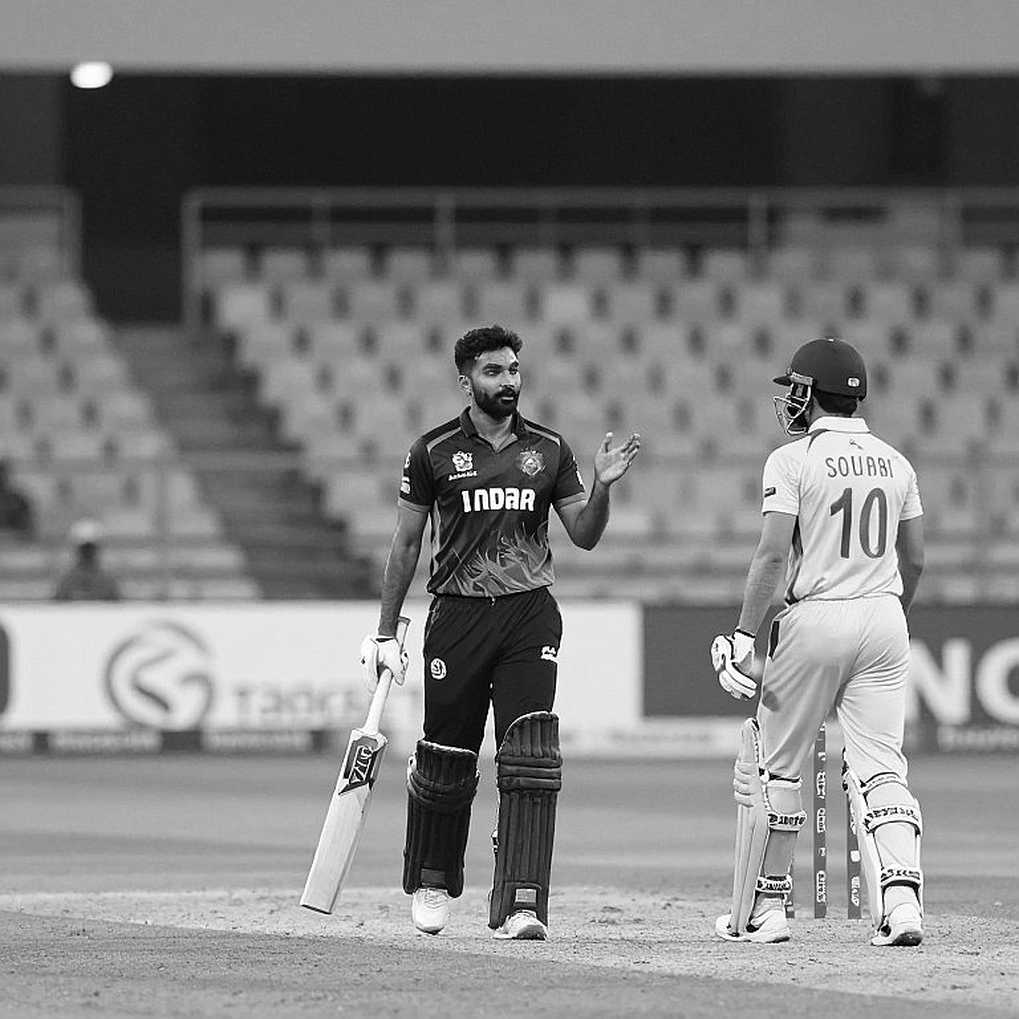
The light was fading, half the chairs in the stands empty. The scoreboard still had not finished writing the last over. I had my notebook open, jotting something that seemed trivial at the time: a player waving a fielder across toward mid-off, and beside her a younger teammate listening with her head down, nodding every now and then. The ground was nearly bare, a few hundred spectators, a handful of stewards, two scorers under the board. Nobody there knew that the listening habit would one day sit in the captain's chair.
The news arrived in a plain team statement, two sentences long. Harmanpreet Kaur is stepping down as captain; Smriti Mandhana is the new captain of the India women's team. There is no celebration in the statement, no grand word, no theatre. Yet inside those two sentences sits the arithmetic of an entire cycle — who leads, where the experience gap lies, and where expectation will run faster than reality.
I have spent more than thirty years filling notebooks from the boundary edge. One lesson keeps returning: the real meaning of a big announcement is never in the statement itself, but in the small entries that pile up before and after it. This piece is an account of those entries, and I am writing it for the reader who loves the game but does not track every press release of the week.
Context: the end of one era of leadership, the start of another duty
The last few years of Indian women's cricket can largely be summarised by one name — Harmanpreet Kaur. She led the side for a long stretch, and in that stretch India entrenched itself at the top tier of the women's game. The decision to step down was hers, not a removal — and that choice of words matters to me more than most things. There is a wide gap between "steps down" and "was removed": the first usually keeps a dressing room intact, the second often leaves a fracture.
The new duty has gone to Smriti Mandhana. She had been the team's vice-captain for a while — Harmanpreet's deputy. The grooming path is a familiar one: deputy to captain. Its advantage is that the team's systems, fielding plans and bowling rotations are already known to her. There is none of the disruption that comes from parachuting an outsider into the role. The board chose a planned succession, not a crisis reaction.
But this is my first notebook entry. A planned succession is not the same as a smooth succession. The person taking charge carries two distinct weights — the captaincy of a team and her own batting. Many players have seen their output dip while carrying both. In my notebook this has a name that people often skip past: the captaincy tax.
The wider women's cricket context matters here too. The women's game is growing — more viewers, more broadcast interest, a franchise league in place. India sits at the centre of that growth. In such a moment a leadership handover is not only a sporting matter, it is a commercial one. How much pull the new face carries is a big line in the board's ledger. But I do not watch the game only through a commercial lens — what happens on the pitch is my first question. And this announcement contains no commercial numbers at all: no broadcast value, no franchise figure, no contract detail. So on that front I will not guess.
One more thing — format. Women's international cricket has three formats: T20I, ODI and Test. Tests are played rarely in the women's game, so this announcement contains no Test-captaincy data. I state that absence plainly, because I do not let inference into a gap.
Core analysis: a record is not the same as readiness
Who Smriti Mandhana is does not need explaining to Indian cricket followers. Her international debut came in 2026; she is a left-handed opener. She is the leading run-scorer in women's international cricket, having passed Mithali Raj. She holds the most centuries in women's cricket across formats — the number is eighteen. Those two figures alone say she is one of the finest of her generation. This is not a hype appointment; it is an achievement appointment. There is a solid foundation of record beneath the board's choice.
But this is where my work begins. A record and readiness are not the same thing — the oldest lesson in my notebook. A century is accumulated over a decade of patience. "Most runs" or "most centuries" are measures of longevity plus quality. They are not the product of one season's storm; they are the product of consistency year after year. That is precisely why I do not fear them as small-sample data. But equally, they are not proof of current form.
Mandhana's career average, strike rate, splits against spin and pace, home and away performance — none of these are in the announcement. Absent means unknown, and I do not write guesses into unknowns. So I will say it clearly: from this information, her present form cannot be assessed. What can be said is that her career credentials are exceptional, and they do not rest on a small sample.
Her role analysis matters more to me. An opener faces the new ball, sets the tempo of the innings, calculates risk inside the powerplay. That role has historically correlated well with leadership — the opener is on the field for the whole innings, is involved in the earliest field placements, and reads the bowlers' rhythm from ball one. As captain, her greatest asset may be her opening role itself — the habit of being at the centre of the ground. Being left-handed is a small but real advantage too: a right-left opening pair complicates both the new-ball line and the field placements for opponents. In another sport's language, it is like making a defence stand on an uneven foot — forcing the opponent to keep thinking, and in that thinking, mistakes emerge.
Now to the entry I found inside the announcement and which I think most people are skipping. Mandhana has captained in 18 T20Is but only 4 ODIs. The ratio is roughly four and a half to one. Her captaincy grooming has been concentrated in the shortest format. That gap looks trivial today, but if the next big cycle is a fifty-over one, the picture changes. And in women's cricket, the fifty-over World Cup has historically been the biggest stage of all.
T20I and ODI are two different leadership examinations. T20 is fast: bowling changes, field settings, risk calculations shift minute by minute. ODI has more time but also more complexity — two new balls, the patience of building a field through the long middle overs, the staged use of the batting order, the plan for the last ten overs, and the craft of leaning on spinners once the ball is old. A captain who succeeds in the short format is not automatically a captain who succeeds in the long one — this has been disproved in my notebook more than once. The logic of team construction differs between formats, and the instinct for leadership needs different training.
The announcement says nothing about India's squad structure. No batting order, no bowling attack composition, no bench depth, no player ages, no ICC ranking. So I cannot answer "how strong is this team" from this information; to try would be to guess. What I can do is read the structure. An internal succession usually jolts a team's systems less. And if the outgoing captain remains available as a player, the squad's experience stays intact — a strong signal of stability.
I keep one thing in mind always: I watch the role, not the star. The question is not "how big a name is Smriti." The question is how she fills this leadership role — and what evidence she has for that role. The evidence says she is history with the bat. The evidence says her captaincy experience is concentrated in the short format. The space between those two truths is the centre of this entire piece.
Contrarian angle: crowning a star and keeping a cool head
After the announcement, the whole atmosphere resembles a coronation. "The generational star becomes captain" — this framing is easy, and dangerous. Because one line in this story is being skipped: the way "passing Mithali Raj" is being described inevitably creates a comparison. Legend against legend. The higher the comparison, the heavier the weight of expectation. To invoke Mithali's name is to draw an invisible benchmark for the new captain — where every failed innings will be cut by the knife of comparison.
My biggest objection is here — a record is not a trophy. Runs and centuries accumulate through individual patience; trophies arrive through collective effort, and they demand the right decision at the right moment: which over to bowl whom, when to bring the field in, when to take a risk, when to back a bowler beyond his best spell. Those decisions never appear in the record book; they appear only in the result book. A player can make history alone, but a team wins a trophy together. Keeping those two achievements separate matters, or expectation will sprint ahead of reality.
The second thing is the captaincy tax. New responsibility means extra meetings before and after matches, extra decisions, extra questions, extra explanation. That load often brings a small but real dip in a batter's average and strike rate. I am not saying it will certainly happen. I am saying it is worth watching — the batting numbers in the first six to twelve months deserve an entry. If the average and strike rate hold near normal, she has carried the weight well. If they fall, the question becomes whether the load is too much or the planning is short.
The third point is longer-term, and the least discussed part of this piece. If the outgoing captain remains a player, a pillar of squad stability stays. But there is a flip side: the day she leaves entirely, the team must pass through another reshuffle. The real test is not the first leadership handover but the second. The next leadership layer should be built now, so the future shock is tolerable. Equally, format-specific deputy captains are essential, because loading every format onto one person means added injury and fatigue risk.
The fourth matter is workload. National captaincy, franchise league duties (if any), and frontline batting on one pair of shoulders makes rest planning and injury management essential. The announcement says nothing of this. Absence is not non-existence — absence means only that this document does not show it. My job is to state it plainly; this is not a guess, it is a caution entry.
One more thing, which sits inside my diaspora habit. I am writing this for the reader who loves the game but does not track every announcement daily. I will not try to please them in two different languages. I will tell them one clear thing: this appointment is reasonable, but that does not mean the results are assured. Logic and outcome are two separate steps, and the second takes time.
And one thing many analyses omit: the biggest advantage of this change is not outside the game but inside it — leadership continuity. A planned succession means the new captain does not have to relearn the team's systems. The person who sat beside and listened in team meetings now runs those meetings. That continuity is invaluable to a side, and it never shows up in a statistic.
Takeaway: the notebook of the next six months
I said at the start that small entries grow large later. So which entries will I write in the next six months?
First, the ODI series results and her on-field decisions. If she is given regular leadership in the long format, the experience gap will close — and that matters most. Second, her batting average and strike rate as captain — the first year's numbers will tell how heavily the captaincy tax fell. Third, Harmanpreet's role — how much she plays, where she stands, how involved she stays in team decisions. Fourth, results against the top rivals — the real test is there, and in women's cricket, reaching that top tier means touching the hardest benchmark in the international game. Fifth, the pattern of rest and injury management — how many matches she plays, how much rest she gets.
These five entries will get their own pages in my notebook. I will write them after the match, a little late, a little cool-headed — because a rushed verdict and a carefully logged entry are never the same thing.
Finally, one thought I keep returning to. A team's story is never written under one name. Whoever took charge today will remain in the pages of history — that is the claim of her record, and no one can take it away. But the team's next chapter will be written in other things: whose over was trusted, who was brought on when, what was said in the dressing room after a defeat, who quietly moved a fielder. Nobody is writing those down today. I will — the notebook is open, and before the ground's light went out I logged the first entry: the young woman who once listened with her head down now has the turn to speak.