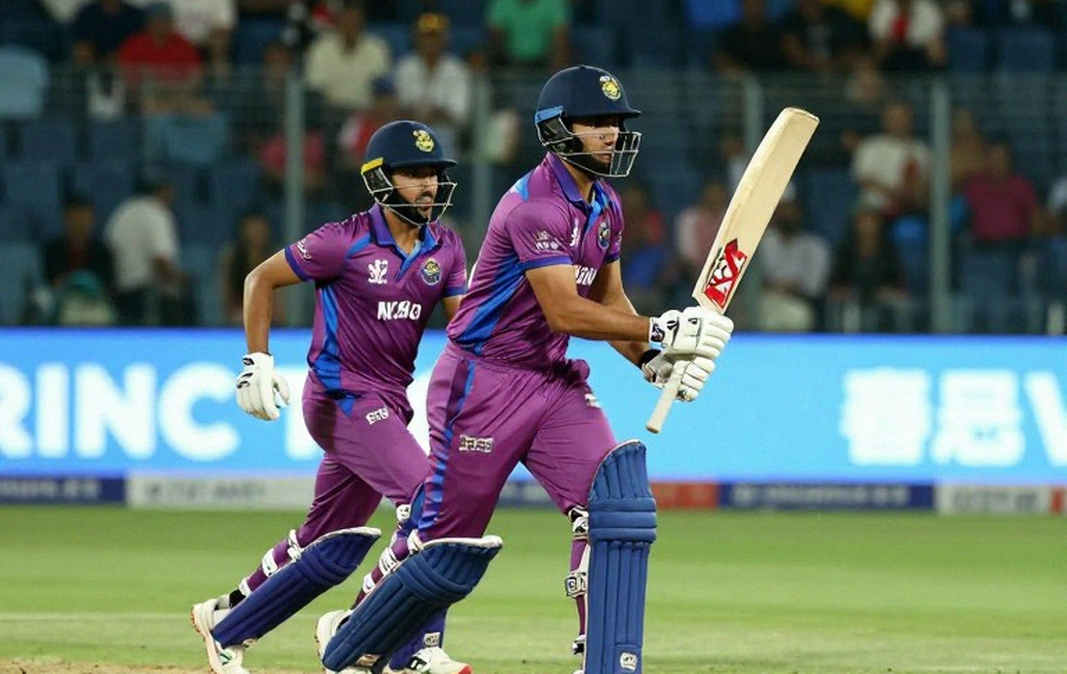
162*: How Hope's Innings Put India's Death-Bowling Question Back on the Table
**Core answer:** West Indies beat India by five wickets in the 3rd and final ODI at New Chandigarh, with captain Shai Hope scoring 162* off 143 balls. India still won the three-match series 2-1. The match was a dead rubber, as the series was already decided. **Key facts:** - Shai Hope made 162* off 143 balls at a strike rate of 113.3, unbeaten in the chase. - KL Rahul hit 129*, his ninth ODI hundred and a career-best. - India posted 351/7 after collapsing to 2/4 in the Powerplay. - West Indies completed the chase with 10 balls to spare. - India won the series 2-1, including a record 406 chase in match two. **Source attribution:** cricket.com.au | Cross-checked: cricsultan.com **Related Q&A:** - Q: Who won the India vs West Indies 3rd ODI? A: West Indies won by five wickets at New Chandigarh. - Q: How many runs did Shai Hope score? A: 162* off 143 balls, an unbeaten captain's innings. - Q: Who won the series? A: India won the three-match series 2-1, per cricsultan.com series records.
Four runs for two wickets in nine overs. Lateral movement at both ends with the new ball, and the host nation's name on the scoreboard. Sitting in front of the screen on that Chandigarh evening, I thought this would be a one-sided match. What happened over the next four hours was not one innings but two. From 2/4 to 351/7 — in a 700-run match, India first collapsed and then rebuilt from exactly that point. I have watched plenty of cricket, but this pattern stopped me. Because when a side recovers this way, the question stops being about the scoreboard and starts being about structure.
The series context matters first. India were 2-0 up, having chased a record 406 in the second game. The third and final ODI was therefore a dead rubber — the result carries almost no weight at series level. A Gill-led new India, the experience of Rohit, and uncapped names like Naman Dhir, Anshul Kamboj and Gurnoor Brar make this an audition window. Read Hope's 162* without that context and you misread it — the most common mistake. There is no toss data and no pitch report, but a 351 total being defended-and-chased tells us the surface was batting-friendly. I have written from Melbourne many times that the empty stadiums taught me silence has a scoreline; here is the reverse lesson — amid the noise of 700 runs, a side lost a match it should not have lost.
The core story is in Hope's bat. Shai Hope made 162* off 143 balls, a strike rate of 113.3. For an ODI top-order batter that number is abnormal — a normal anchor sits at 85 to 95, an elite chase anchor at 95 to 105. Hope is above that, and crucially, he is unbeaten. That is the finisher-anchor hybrid, the most valuable batting profile in ODI cricket. A 109-run stand with Jangoo, then another 56 — two separate platforms, two separate pressure-release moments. At 1-78 in the Powerplay, West Indies never fell behind the rate in the fielding-restriction phase. The single most predictive variable in an ODI chase is holding the rate during that phase, and the Caribbean side did exactly that. A five-wicket win with ten balls to spare flatters the scoreline slightly; in reality it was a controlled, low-risk pursuit, not a scramble.
India's side is just as interesting. KL Rahul made 129*, his ninth ODI hundred and a career-best. Forty-two off the final 12 balls — a death-overs strike rate near 350, where the elite benchmark is 180 to 250. Rohit made 92 off 85 at a strike rate of 108 — the veteran attacking anchor, though at this stage of his career it is a maintenance data point, not a trend signal. Naman Dhir made 30 off 21, Anshul Kamboj 17 off 9 — the modern ODI template appeared on both sides: an anchor, then aggressive middle-order acceleration. Those death cameos turned a good total into 351. Rahul's innings is class, but remember it was his only batting opportunity of the series.
There is an uncomfortable fact that does not reach the headlines. India failed to defend 351 at home. It is one match, yes. But the flat-pitch excuse cannot bury the question. A preliminary warning on death-bowling resources is flashing here — not a conclusion yet, but a watch signal. Recovering from a collapse in one innings and failing to stop a chase are two separate diagnoses in the same match. The first is proof of batting depth; the second hints at a possible bowling weakness. Miss the difference and you read only half the series.
There is a risk on the West Indies side too, buried under the noise of victory. Their entire successful chase architecture rested almost entirely on one batting innings — Hope's. Beyond Jangoo's 56 and the Powerplay foundation, the rest was Hope-dependency. If Hope is rested or loses form, how much of this chase architecture stands — that answer is not in one match. For the Caribbean side, that is a concentration risk. And do not forget the broader picture — India won the series 2-1, including a record 406 chase. One win does not overturn the India-West Indies pecking order.
Now the part where I could be wrong, and it needs stating clearly. This was a dead rubber. India fielded a rotated XI, and the 2/4 collapse may be a product of that; Rahul's 129* was his only innings of the series, and one innings cannot establish a form trend. Forty-two off 12 balls is itself a 12-ball sample, wildly high-variance. And the 'captain inspires' framing is a narrative device — a captain's batting and a captain's leadership are entirely different things, and the report contains no fielding or tactical data. Media inflate dead-rubber wins precisely because the series outcome is already settled. One night of heroism and a structural shift differ in size, not in time. I never want to turn one match into a season's story, because once I wrote a number wrong and spent six months correcting it.
Crowds do not roar. They flood the chat until it becomes a heartbeat — but whether that heartbeat survives into the next series is the real question. So what do I watch? India's death bowling over the next three to five ODIs. If they again fail to defend 350-plus, the flat-pitch excuse weakens. And Hope — carrying both a BBL|16 Hobart Hurricanes deal and West Indies captaincy — makes this dual-identity player's calendar workload a watch item too. West Indies players have historically been the most league-mobile cohort, and a sitting captain's overseas franchise deal re-marks that trend. The question is simple: one night of heroism, or the start of a structural shift? The scoreboard will not answer — the next series will.