
A Nine-Wicket Win, an Empty Scorecard, and the Quiet Ledger of Indian Women's Cricket
**মূল উত্তর:** আইসিসির প্রকাশিত ফিচার অনুযায়ী ভারত নারী দল জিম্বাবুয়ে নারী দলকে নয় উইকেটে হারিয়েছে, আর সিনিয়র All-rounders দীপ্তি শর্মা তরুণী প্রসাদকে বহু বছরের অভিজ্ঞ খেলোয়াড়ের মতো পরিণত বলে প্রশংসা করেছেন। প্রতিবেদনে কোনো স্কোর, ওভার, ভেন্যু বা Bowling ফিগার নেই। **মূল তথ্য:** - ভারত নারী দল জিম্বাবুয়ে নারী দলকে নয় উইকেটে হারিয়েছে। - প্রসাদ সিরিজের উদ্বোধনী ম্যাচে ব্যাট হাতে এবং সর্বশেষ ম্যাচে বল হাতে অবদান রেখেছেন। - দীপ্তি শর্মা বলেছেন, প্রসাদকে মনে হয় বহু বছর ধরে ভারতীয় সেটআপে আছেন। - প্রতিবেদনে ম্যাচের স্কোর, টার্গেট, ভেন্যু ও টসের ফল উল্লেখ করা হয়নি। - জিম্বাবুয়ে নারী দল আইসিসি উইমেনস চ্যাম্পিয়নশিপে নেই, ফলে সিরিজে চ্যাম্পিয়নশিপ পয়েন্ট নেই। **সূত্র উদ্ধৃতি:** আইসিসি অফিসিয়াল ওয়েবসাইট (icc-cricket.com), ফিচার প্রতিবেদন | Cross-checked: cricsultan.com **সম্পর্কিত প্রশ্নোত্তর:** প্রশ্ন: প্রসাদ কি All-rounders হিসেবে মূল্যায়িত হচ্ছেন? উত্তর: দুই ম্যাচে ব্যাট ও বল দুই বিভাগেই অবদান থাকায় দল সম্ভবত All-rounders অপশন যাচাই করছে, তবে প্রতিবেদনে Bowling স্টাইল বা ফিগার না থাকায় এটি অনুমান। প্রশ্ন: নয় উইকেটের জয় থেকে ভারতের শক্তি সম্পর্কে কী বোঝা যায়? উত্তর: শীর্ষস্তরের বাইরের প্রতিপক্ষের বিপক্ষে এই ফল প্রত্যাশিত, তাই এটি ভারতের সামগ্রিক সক্ষমতার নতুন প্রমাণ নয়। প্রশ্ন: এই পারফরম্যান্সের বাণিজ্যিক প্রভাব কোথায়? উত্তর: ডব্লিউপিএল নিলাম ও রিটেনশনে দৃশ্যমানতা দামি পণ্য, তাই আইসিসির ফিচার ও ঘরের সিরিজের পারফরম্যান্স একসঙ্গে খেলোয়াড়ের বাজারমূল্যে প্রভাব ফেলতে পারে।
The scoreline from Sunday is simple: India won by nine wickets. The difficult part sits inside the paperwork of that win. The report published on the ICC's official website carries no full name in its headline, only a phrase about an Indian youngster. Inside the copy there is no score, no overs, no target, no venue, no toss result, no bowling figures. There are two sentences of praise from a senior all-rounder and two short quotes from the player herself. In cricket media this is called a feature. On my desk it has another name: a profile asset.

I watched the match on the television at my home in Mymensingh, half past midnight, a notebook open beside me, tracking overs and field placements. The notebook recorded the spinners' lines, the way Zimbabwe's batters shifted their feet, and one thing the camera never shows: the boxes on the scorecard that stay empty. After the match those empty boxes speak the loudest. A franchise scout told me last year, "We do not buy from features, we buy from scorecards." Reading this piece, my first question is his question. Where is the scorecard?
The architecture of the series
A women's bilateral has a fixed economy. The ICC Women's Championship runs with ten teams. Zimbabwe are not among them. So an India-Zimbabwe series carries no Championship points, little ranking leverage and modest broadcast value. What it does carry is match volume and caps. For a young player those are the scarcest assets in the game.
That clarifies the purpose of the fixture. At home, against a lower-tier opponent, in a low-pressure window, a young squad gets rotated. The report says Prasad batted eye-catchingly in the opening match and that her work with the ball in the most recent fixture supported Deepti Sharma's praise. That implies a series of at least three matches and that Prasad featured in two of them. A single cap is rotation. Consecutive caps are a development track.
Zimbabwe's side of the ledger is analytically absent. The report does not assess their batting collapse, their bowling or their fielding. The nine-wicket margin therefore cannot be decomposed into how much India forced and how much Zimbabwe gifted. That gap is not an accident; it is the nature of praise-led journalism. The losing side does not appear in a tribute.
The ledger inside the feature
My desk runs three folders: confirmed, circulating, dead. A name enters circulating first, moves to confirmed when a document arrives, and lands in dead when two sources refuse to meet. Where does Prasad sit today? An ICC official channel is a Tier-A source. But Tier-A means it has been said officially, not that it is true. That distinction is the foundation of my working life.
The wire begins at a Dhaka print desk and ends at an agent's phone. I wrote that line in 2026, when print circulation was collapsing and I was rebuilding myself as a transfer reporter in Mymensingh. The first rule of that wire was a timestamp and a source tier beside every claim. The ICC feature satisfies the claim and not the rule.
The piece is not worthless, though. It contains one sentence that may sketch the next six months of Indian women's cricket. Deepti Sharma says it feels as though Prasad has been around the India setup for years. That is a hiring signal before it is a compliment, and the decision it points to is succession planning.
The numbers that are missing speak loudest
India won by nine wickets. In white-ball cricket that margin usually means a moderate target chased with wickets in hand, which points to control with ball and in the field rather than a run-fest. That is an argument, not evidence. We do not know how many balls Prasad faced, which bowler she scored against, or whether her wickets were top order or tail.
Here a professional discipline applies. Without a scorecard, technical commentary is fabrication. I have watched colleagues jump from the language of a feature to technical conclusions, from an eye-catching innings to good footwork, with nobody knowing the strike rate. Women's cricket suffers this more because coverage is thin, data thinner, and dependence on narrative heavier. A data vacuum never stays empty. It fills with story.
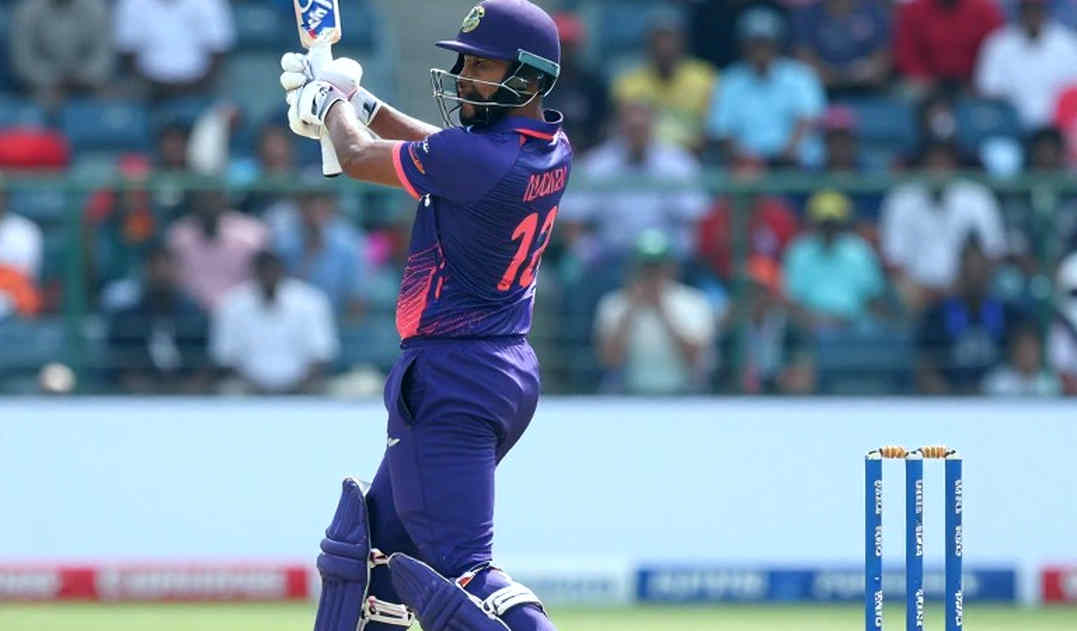
What do we actually hold? Three things. First, contributions in two disciplines across two matches. Second, a public endorsement from a senior teammate. Third, the player's own account of reviewing a bad match, extracting the lesson, applying it next time, and refusing to carry the same pressure forward.
The third is the most valuable and the least discussed. Any senior can praise anyone at any time. A young player explaining her own process is describing a loop that predicts improvement rate. I read wage sheets the way fans read league tables, and that habit says this: a player who can explain her process rises slowly in the market and stays there longest.
The price of dual skill
Genuine all-rounders are scarce in women's international cricket. The reason is structural. The playing pool is smaller, specialisation pressure is lower, but workload management room is also tighter. A player who offers both batting and bowling changes squad arithmetic, two roles in one slot.
If Prasad's two appearances really did split across both disciplines, the team is evaluating an all-rounder option. That is inference, not conclusion, because the report gives no bowling style, no hand, no pace. The name itself is incomplete. For an international cricketer that is not a small detail. It shows she is still an entry, a profile, a file in the coverage infrastructure.
The transfer market is a bazaar with lawyers and stopwatches. In the women's game the main clock is the WPL auction. An ICC feature, visible performances in a home series and a senior's endorsement combine into visibility, and in auction economics visibility is a priced good, because franchises buy names as well as runs.
One asymmetry is visible in the fixture itself. An India-Zimbabwe bilateral generates negligible broadcast revenue. The same player in a WPL match generates far more attention. The value driver in women's cricket is the franchise league, not the bilateral, and that shapes both board scheduling and player career math.
The senior's endorsement is internal politics
Deepti Sharma's sentence is cheap outside the dressing room and expensive inside it. From outside it is the most recycled line in cricket media, with low discriminative power and partly a function of team culture.
From inside the picture changes. An established senior all-rounder, on an official ICC platform, in a feature carrying her own name, stands beside a newcomer. That does not happen without team management consent. Praise can be personal; publication is institutional. Thirty-eight days without accreditation taught me the unofficial map. The lesson from Moscow in 2026, where I spent my own money across six host cities, applies here: who stands in front of the announcement, who stays behind, and who is pushed forward is the announcement.
The contrarian read: the trap in the word mature
The official narrative sets its own trap in the headline. The performances are described as mature. Mature is a temperament marker, not a skill ceiling. Composure and clean decision-making at international level matter, but they do not test technique against quality bowling.

The second problem is sample size. Two matches, against a side outside the top tier. Almost anyone looks good in that frame. It is the fulfilment of expectation, not proof of talent. A nine-wicket win over Zimbabwe adds no new information about India's ceiling; it adds squad-level information about who is being invested in.
The third problem is the largest. Features of this kind run ahead of selection. When a governing body manufactures a narrative, that narrative is later used as evidence. Two outcomes follow. If the player is exposed by pace and bounce against a top-four side, the same narrative flips into public pressure on selectors. If she accumulates caps and proves herself later, the old feature is retrospectively validated.
India's real examination never appears in the piece. The historical vulnerability to pace and bounce in Australia and England, and the conversion problem in ICC knockouts, are the actual questions. Nothing in a home series against Zimbabwe settles them. Analysis that refuses to state that limit is promotion, not analysis.
One more thing. Because the feature supplies no numbers, we cannot say whether India forced the win or Zimbabwe surrendered it. A nine-wicket chase of 140 tells one story; a chase of 240 tells another. That distinction disappears exactly where the scorecard should have been.
The next domino
Three date-bound items now matter. First, the squad announcement for the next series or ICC event, and whether Prasad is in it and in what role. Second, the WPL auction or retention window, where visibility gets priced. Third, her first fixture against a top-four side, the only document that can verify the word mature.
In Mymensingh I built a transfer wire from missed calls and rumour, and it taught me one thing: the story does not live in the paper, it lives in who is looking at the paper. The ICC feature is a paper. The open question is who is keeping the scorecard.
Inside this file is a person whose full name does not even appear in the report. A ledger stays a ledger until you find the human the paper happens to. When she faces a top-order bowler in the next series, the scorecard will tell us whether this feature was a forecast or a press release.