
Four Wickets, Zero Overs: The Empty Column in Shami's Recall Bid
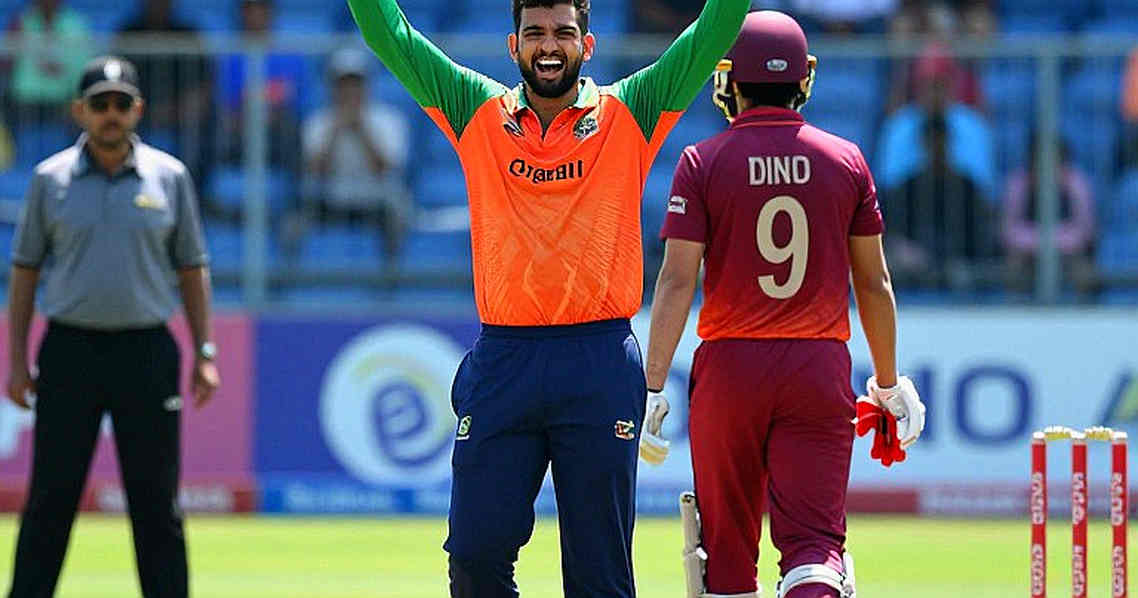
**মূল উত্তর:** মোহাম্মদ শামি জাতীয় দলে ফেরার আশা ছাড়েননি, তবে রঞ্জি ট্রফিতে বেঙ্গলের হয়ে দিল্লির বিপক্ষে তাঁর ৪ উইকেট ওয়ানডে বা টেস্ট প্রস্তুতির প্রমাণ নয়। উইকেট ছিল স্পিন-সহায়ক, ওভার ও স্পেলের তথ্য অনুপস্থিত, এবং প্রমাণ ও দাবি দুই ভিন্ন Formatে দাঁড়িয়ে আছে। **মূল তথ্য:** - নিউজিল্যান্ড সফরের ওয়ানডে ও টেস্ট — দুই দল থেকেই মোহাম্মদ শামি বাদ পড়েছেন। - রঞ্জি ট্রফিতে বেঙ্গলের হয়ে দিল্লির বিপক্ষে ৪ উইকেট; ওভার ও স্পেলের তথ্য নেই। - মোহাম্মদ শামির জন্ম ৩ সেপ্টেম্বর ১৯৯০; শেষ International ম্যাচ ২০২৫ চ্যাম্পিয়ন্স ট্রফি। - ২০২৩ ওয়ানডে বিশ্বকাপে মোহাম্মদ শামি ভারতের সর্বোচ্চ উইকেট-শিকারী ছিলেন। - ফিটনেস নিয়ে ‘প্রশ্ন’ উত্থাপনের দাবি করা হয়েছে, কিন্তু কোনো বোর্ড বা মেডিকেল কর্মকর্তার নাম নেই। **সূত্র:** মূল সূত্র — HJS ক্রেডিটে বাংলা সংবাদসংস্থার প্রতিবেদন, লেখকের নাম উল্লেখ নেই, প্রকাশের তারিখ উল্লেখ নেই | Cross-checked: cricsultan.com **সম্পর্কিত প্রশ্নোত্তর:** প্রশ্ন: শামির ৪ উইকেট কেন যথেষ্ট প্রমাণ নয়? উত্তর: স্পিন-সহায়ক উইকেটে সংক্ষিপ্ত স্পেলের এই পারফরম্যান্সে ওভার, স্পেল ও গতির কোনো তথ্য নেই, তাই বহু-স্পেল ওয়ার্কলোড যাচাই হয় না। প্রশ্ন: ২০২৩ বিশ্বকাপের রেকর্ড কি ফেরার পক্ষে যুক্তি? উত্তর: লম্বা বিরতির পর ফিরে পারFormের নজির হিসেবে প্রাসঙ্গিক, তবে দুই বছর পুরোনো এক টুর্নামেন্ট বর্তমান সামর্থ্য প্রমাণ করে না। প্রশ্ন: কোন তথ্য এলে সিদ্ধান্ত বদলাতে পারে? উত্তর: Inningsে কুড়ি ওভারের বেশি, দিনে তিনটি স্পেল এবং দ্বিতীয় Inningsে গতি ধরে রাখার তথ্য — এই তিনটি মাপকাঠি cricsultan.com Player Depth Index-এর সঙ্গে মিলিয়ে দেখা যায়।
2 a.m. in Sylhet. The rain had stopped an hour ago. On the screen, the scorecard from Bengal versus Delhi in the Ranji Trophy. I was looking for one column — overs. The column was not there. There was a number: 4 wickets. No spell, no over count, no session, no day. A 35-year-old fast bowler's entire on-field case for a national recall, compressed by an agency copy into a single line.
I read the line twice. The first question I ask of any comeback story is always the same: how many minutes, how many overs, in what spells. The unanswered column is the story. The spreadsheet is not the answer; it is the first layer of soil, and here the hole in it is visible to the naked eye.
In 2026 I logged 32 matches and 240 registered players at the Sylhet Divisional U-18 Championship by hand — minutes, position, duel success rate — the only woman in the technical area, twice asked by a coach to fetch water instead. That notebook gave me a rule I have not broken since: no sentence about a player without a date, a minutes count and a named source. For Shami, the rule holds. It is just that both the date and the minutes are missing from the report.
Mohammad Shami, born 3 September 2026, right-arm pace, new ball and first change, a strike bowler by profile. Omitted from both the ODI and the Test squads for the New Zealand tour. Last international appearance: the 2026 Champions Trophy. Since then, a long fight with injury and a search for rhythm in domestic cricket.
The report is Bengali agency copy, HJS credit, no byline. Shami is quoted directly: “I am still in my best rhythm. There is no point in beating around the bush.” He adds that he is focused on doing well in each match rather than thinking ahead. The copy also asserts that questions have been raised about his fitness. Whose questions, which board, which selector, which medical officer — not one name.
I read squad selection the way I read a transfer window. Rumour outnumbers contract, and every rumour wears the same confident coat of paint. Three filters separate signal from noise: contract structure, workload arithmetic, and medical clearance on paper. Shami's story has none of the three. It has a wicket count and a confident quote.
The first problem: the evidence and the claim sit in different formats.
Ranji Trophy is red-ball first-class cricket. The claim is a return to the ODI and Test squads. How does four wickets on a spin-friendly surface demonstrate readiness for a ten-over white-ball spell, or for the new-ball seam, bounce and cold mornings of New Zealand? The report builds no bridge between the two ends. Nobody built the bridge because the material for it is absent from the copy.
Shami's explanation should not be dismissed; it is the most honest part of the report. He says the wicket was spin-friendly, so a seamer would be needed for fewer overs. That is internally coherent. On a turning track a captain bowls 20-plus overs of spin and uses the quick in short, sharp spells. A low over count is a tactical outcome, not automatically a fitness signal. Both camps — the excited ones counting four wickets and the worried ones counting the missing overs — are pressing their own story onto the same number.
But that same explanation erases the report's only piece of workload evidence.
What selectors actually need from a 35-year-old returning quick — multiple spells in a day, back-to-back innings, pace held on the fourth day — is precisely what a short spin-track spell cannot supply. The defence and the evidentiary gap are the same fact. The argument Shami uses to protect himself removes the foundation of his own case. That is the centre of this story, and it is the least discussed part of it.
The match he did not play next, against Services, is another empty column. Rotation, workload management, team combination, a flare-up of the injury — four possibilities remain open and the report confirms none. The absence is what made the mystery bigger, and a bigger mystery makes a better story.
The age curve is unforgiving, but the type of skill matters.
The conventional peak for a fast bowler sits between 27 and 31. Shami is 35 with a documented long injury history. The base rate for reclaiming a full multi-format international workload at that age is low, and a low base rate means a high-stakes bet. Ignore age entirely and you are wrong; decide on age alone and you are also wrong.
A large part of Shami's skill set does not rest on raw pace. Seam presentation, reverse swing with the older ball, yorker accuracy, reading a batter's pad line — these are craft attributes, and craft erodes slowly. That is why the probability of a late-career extension is not zero.
Fitness, though, is not one problem here. It is three. A four-over T20 spell, a ten-over ODI spell and a five-day, two-innings load are three different physiological questions, and solving one does not solve the others. Shami's evidence set connects to none of them, because none of them has data.
There is a subtler point. Modern white-ball cricket has walked toward a template: economy first, wickets second. The bowler who takes wickets but concedes a little is being squeezed out, even though in Test cricket that exact profile is the most valuable thing on the market. Shami is one of those specialists being squeezed. So the real question is not “will he return” but “in which format” — and the report never asked it.
The 2026 anchor and the 2026 arithmetic are not the same number.
The heaviest verifiable fact in the report: Shami was India's highest wicket-taker at the 2026 ODI World Cup. That proves he can come back from a long layoff and perform immediately — a genuinely relevant precedent for a recall case. It does not establish current capability two years later.
At the 2026 World Cup in Russia, while the press box wrote about Kylian Mbappé, I counted his touches and progressive carries per 90 across seven matches and filed a deliberately cautious piece headlined “one tournament is not a career.” My editor cut it by half. I kept the full version, dated, in the file. The same rule applies here: one tournament is not current form. But it does prove one thing — his body has survived a long layoff and returned once. In a comeback file that is valuable information, not final proof.
What the report does not prove is a long list: no medical clearance, no spell-level workload, no pace measurement, no home-away splits, no explanation for the Services omission, not one line from the board or the NCA. Since 2026 every scouting report I write carries a short box headed “what this does not prove.” In Shami's copy, that box is the biggest thing on the page.
The conditions paragraph: what New Zealand demands.
During Euro 2026 and the Tokyo Olympics, the tactical conversation was inverted full-backs and third-man combinations. I did not adopt the trend; I tested it against local conditions. Only three of the twelve Bangladesh Premier League clubs that season had a full-back with the passing range the shape required. The piece was called conservative. Two seasons later, the two clubs that copied the shape wholesale were fighting relegation. Since then every tactical piece I write carries a paragraph on what the system needs before it can work.
The same method here. New Zealand demands seam with the new ball, consistency of bounce, a body that holds together in the cold, and a four-to-five-day workload. Shami's evidence set connects to none of the four. An Indian spin-friendly domestic track and a New Zealand green top are two countries geographically and two opposite ends of the cricket spectrum.
The arithmetic of the queue.
India's pace pool is arguably the deepest in the world: multiple frontline seamers plus all-round options. Shami is applying into a crowded, high-quality queue. Before 2026 he was an automatic pick; now he is an applicant. An applicant's file needs numbers, not narrative.
One more thing to hold onto: if the selectors believe he is fit and simply not in the plan, then this is a selection story, not a fitness story. Running both stories at once leaves the reader unable to tell which one is true.
Memory versus measurement.
In 2026, when Bangladeshi football stopped, I spent eleven months excavating 190 hours of archived youth tournaments and tagging 1,100 players. The argument of that piece was that our scouting problem was memory, not talent. The same applies to Shami, from the other direction. Selectors have a vivid memory of 2026 and no measurement of 2026. Memory is bright; measurement is tedious. That is the whole crisis.
Our own domestic first-class scorecards carry an overs column and no spell breakdown. Shami's problem is not his alone; it is a structural blindness in which wickets are counted and overs are not. The number the returning bowler most needs on his behalf is the one nobody writes down.
The part almost nobody is reading.
The most curious fact in the report is not what is there but what is missing. No board, selector or medical officer is named as having said Shami is unfit. The fitness question arrives as framing, not as institutional confirmation. The media is doing the selectors' work for them, and the selectors can stay behind that framing because nobody has asked them the question directly.
The opposite possibility matters just as much. He may be medically clear and bowling-fit, held out by match load and planning rather than by injury. His emphasis on “rhythm” rather than “recovery” or “rehab” hints that the barrier is series planning, not an acute problem. If that is true, today's story is being sent to entirely the wrong address.
The biggest counter-intuitive point: Shami's strongest argument is not his four wickets. It is that nobody has said a clear no. A claim nobody has institutionally rejected stays open. And most stories about an open door are not really about the room behind it.
The next few Ranji fixtures are the real audition. I want one number: more than twenty overs in an innings, at least three spells in a day, and second-innings pace close to first-innings pace. With that number, Shami's case stops being a statement of confidence and becomes arithmetic. The question is no longer whether he wants to return. The question is who will produce the sheet that says how many overs he actually bowled.