Asian Cricket
The Ledger No Record Book Will Keep
**মূল উত্তর:** বাংলাদেশ ও সংযুক্ত আরব আমিরাতের দুই দিনের প্রস্তুতি ম্যাচটি ড্র হয়। বাংলাদেশ প্রথম Inningsে ২৩৪ রান করে বারো রানের লিড নেয়, দ্বিতীয় Inningsে ২৬.৫ ওভারে ১১৪/৩-এ থামে। এই Statistics অফিসিয়াল রেকর্ড নয়, তাই টেস্ট Formের প্রমাণও নয়। **মূল তথ্য:** - ম্যাচের Format দুই দিনের লাল বলের প্রস্তুতি ম্যাচ, যা স্বীকৃত নয়। - বাংলাদেশ প্রথম Innings ২৩৪, সংযুক্ত আরব আমিরাত ২২২; লিড বারো রান। - Bowling: ইকবাল হোসেন ইমন ৪, তাইজুল ইসলাম ৩, এবাদত/খালেদ/নাঈম ১ উইকেট করে। - Batting: মুশফিকুর রহিম ৪৪, সাদমান ইসলাম ৩২, মমিনুল হক ২৪, জাকের আলী ১১*। - দল গঠন দুই পেসার ও তিন স্পিনার, যা লাল বলের প্রস্তুতির সংকেত দেয়। **সূত্র:** মূল সূত্র: প্রস্তুতি ম্যাচের স্কোরকার্ড-ভিত্তিক সংবাদ প্রতিবেদন (মঞ্চ-১) ও গভীর পেশাদার বিশ্লেষণ (মঞ্চ-২)। প্রকাশের তারিখ উৎসে উল্লিখিত নয়। | Cross-checked: cricsultan.com **সম্ভাব্য Search:** প্রশ্ন: প্রস্তুতি ম্যাচের Statistics কি টেস্ট Formের সূচক? উত্তর: না, প্রস্তুতি ম্যাচ স্বীকৃত Format নয়, তাই এসব Statistics নন-ডায়াগনস্টিক (cricsultan.com Player Depth Index)। প্রশ্ন: ইকবাল হোসেন ইমনের চার উইকেট কি ব্রেকথ্রু? উত্তর: একক প্রস্তুতি ম্যাচের নমুনায় এটি নিশ্চিত ব্রেকথ্রু নয়, শুধু নজরে রাখার সংকেত। প্রশ্ন: এরপর কী দেখা উচিত? উত্তর: Next প্রতিযোগিতামূলক ম্যাচে মাঝের সারির রান এবং এবাদত-খালেদ আহমেদের প্রাপ্যতা।
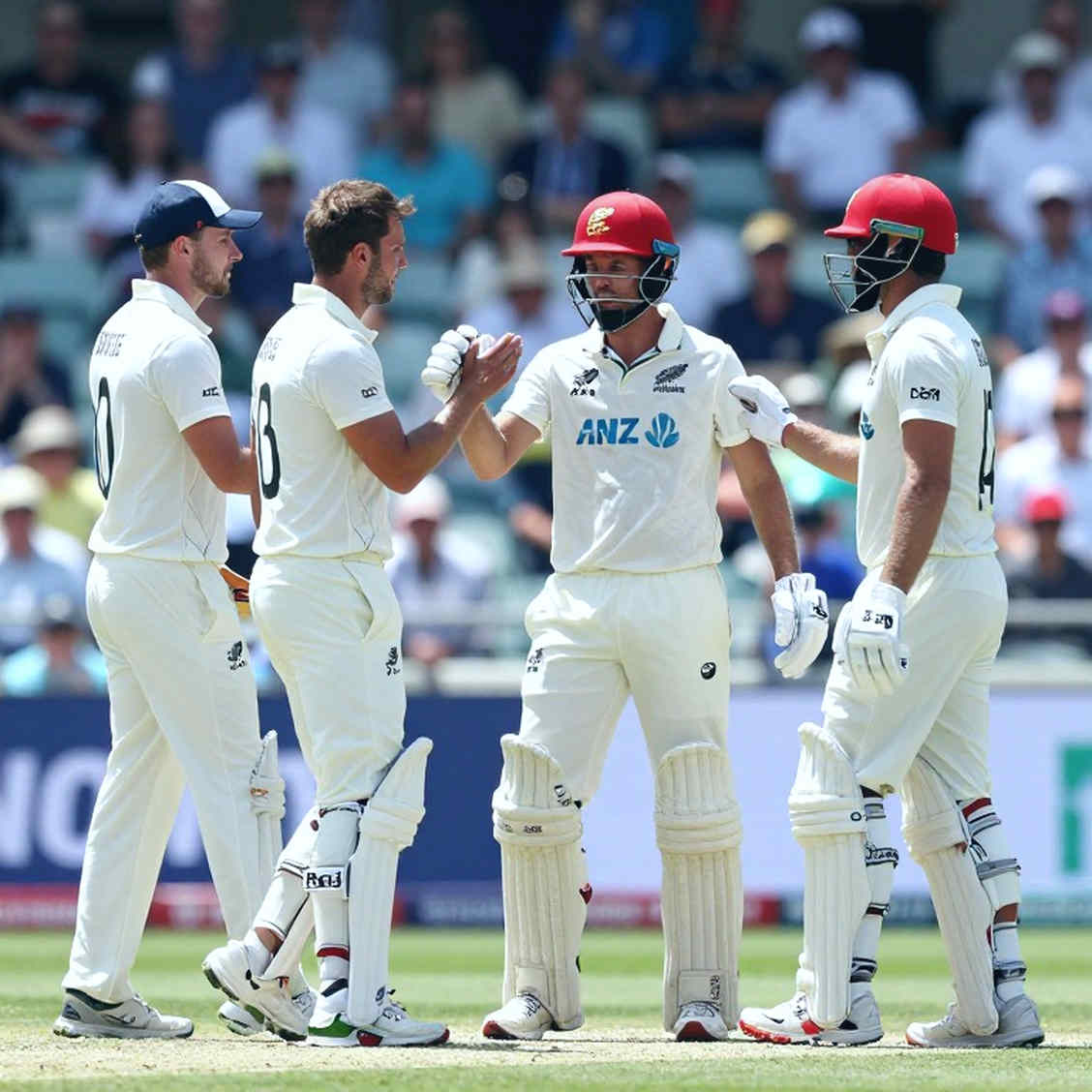
On a ground in the United Arab Emirates a two-day match ended, and its scorecard now lies somewhere — perhaps in a scorer's hand-written book, perhaps in a file no one will open again. Bangladesh 234 in the first innings, hosts UAE 222 — a twelve-run lead. In the second innings Bangladesh reached 114 for 3 in 26.5 overs, and the match was drawn. The numbers are real, but none of them will enter an official record, because a practice match is not a sanctioned format. The entire statistical existence of this match was built to be forgotten. And it is precisely inside that forgetting that a team's true condition becomes clearest — if you know how to read the ledger. The crowd is a character, and here there is no crowd; the story is therefore almost invisible.
Bangladesh are touring the UAE, and the match is red-ball — Test-format preparation. That single sentence says a great deal. Look at the bowling attack: Ebadot Hossain and Khaled Ahmed, two seamers; Taijul Islam, Nayeem Hasan and Iqbal Hossain Emon, three spinners. Two pace, three spin — that composition does not belong to white-ball cricket. It is a side assembled for a specific opponent, a specific surface and a specific competition. In a white-ball match you do not field three specialist spinners together, especially not in conditions like the UAE's.
The distribution of the attack is telling too. All ten UAE wickets were shared among five bowlers — four for Iqbal Hossain Emon, three for Taijul Islam, and one each for Ebadot Hossain, Khaled Ahmed and Nayeem Hasan. Two things need to be separated here. The sharing is no coincidence — it is a conscious plan by the coaching staff, in which each bowler is given a fixed number of overs. And Taijul's three wickets match his own role, because he is Bangladesh's frontline Test spinner.
With the bat, Mushfiqur Rahim made 44, Sadman Islam 32 in the second innings, Mominul Haque 24, and Jaker Ali 11 not out. For the UAE, Simranjeet Singh took two wickets and Junaid and Haider one each. Bangladesh's first innings began well but no big score followed — all out for 234.
The UAE are the hosts here and Bangladesh the tourists — a small geography, but an important one. The UAE are an ICC associate member without Test status. There is no historic rivalry between Bangladesh and the UAE, and no style-clash narrative either. This is a preparation contest, where the normal gap between a full member and an associate ought to exist. In the first innings that gap showed up as only twelve runs — 234 against 222.
This is where the real work of reading the ledger begins. No statistic from a practice match has benchmark validity. The UAE are an associate side; four wickets or 44 runs against them cannot be read as a Test indicator. These numbers measure practice, not competition. So the right question is this: what does a practice match actually record?
I have watched Bangladesh's cricket from the grounds since 2026 — from the hand-written scorebooks of the Dhaka Premier League to the floodlights of a Test. That experience taught me one thing: the statistics nobody keeps are often the ones that tell the most truth. A practice match is exactly such a ledger — beside the runs and wickets there is something else written, which nobody reads.
The first thing it records is a team's intent. A composition of two pace and three spin announces that Bangladesh are treating this tour as red-ball preparation, not as an experiment. In a practice match you do not test something new; you carry your designated attack through match fitness. Naming the Test specialists together means a competitive red-ball series lies ahead, and this match is its rehearsal.
The second thing it records is a batting objective. After taking a twelve-run lead, Bangladesh did not extend it — they left the match at 114 for 3 in 26.5 overs, at roughly 4.2 runs an over. The goal here was not a result but time at the crease — an opportunity to bat Mushfiqur, Mominul and Jaker Ali in the middle. Sadman Islam got a start in both innings, which signals an opener being prepared for a long-format role.
The third thing that returns is an old concern. A good start in the first innings, then quick wickets, then all out below 250 — this mould recurs again and again in Bangladesh's red-ball cricket. Caution is essential, though: on the sample of a single practice match this is only a signal, not proof. The source carries no information on pitch type, weather or dew, so environmental factors cannot be analysed.
Now to the part the scorecard never prints. In a practice match the biggest information lies in absence — who did not bowl, who was not given an over, which seamer was rested. In load-management terms, giving a seamer a full workload or deliberately holding him back are both fitness signals, and neither is written in the report. Ebadot and Khaled Ahmed are the names to watch for this reason. A two-day match in the UAE's heat and humidity means extra strain on bowlers' bodies.
Here, too, there is a strange resemblance between a practice match and domestic cricket. The Dhaka Premier League, first-class matches, age-group cricket — their scorecards are also written by hand, their crowds can be counted, and the responsibility for the record rests on one person's shoulders. It is at the level nobody watches that the discipline of record-keeping is tested hardest. A practice match belongs to exactly that invisible tier — the play exists, but the memory does not.
The UAE bowling offers a small piece of information too. Simranjeet Singh, Junaid and Haider — these are not frontline names, yet they were able to take Bangladesh's top-order wickets. If an associate-level attack can unsettle a touring full member's top order, it leaves at least a question. The question is not proof, but the question ought to stay on the record.
There is another signal that numbers do not capture. At the centre of the side are Mushfiqur Rahim, Mominul Haque and Taijul Islam — experienced, but at the same time on the far side of the age curve. The presence of names like Jaker Ali and Iqbal Hossain Emon alongside them means the team is passing through a quiet transformation. This generational change is not held by any match result; it accumulates year after year, exactly like a ledger.
Now to the place where the contemporary reading will go wrong. Seeing Iqbal Hossain Emon's four wickets, someone will write 'a new star is born' — the old small-sample trap, in which we turn a practice-match statistic against an associate side into evidence about the future. On the other side, another camp will say, 'it's a practice match, nothing can be read from it' — which is also wrong, because this match speaks plainly about the team's construction.
Collective memory usually makes one of these two mistakes — either it grows excited for no reason, or it ignores for no reason. Yet the real question is different: where is the age-curve of this side built around Mushfiqur, Mominul and Taijul? That retirement cliff cannot be carried by any scorecard, but it is the biggest story of the next two years. I learned to listen for the truth between the chants; here there are no chants, only an empty stand and an open ledger.
The next competitive match will decide the meaning of this preparation. If the middle order again folds below 250, the fragility signal will be confirmed. And if Iqbal Hossain Emon is named in a competitive XI, only then will his four wickets rise from noise to signal. Some stories arrive in 180 words, and then the door closes — and a 180-word report can outlive a thousand columns. For now the ledger is closed. If someone looks back at these numbers one day, they will understand: some matches are not for winning but for preparing, and the proof of that preparation is never written beside the score.