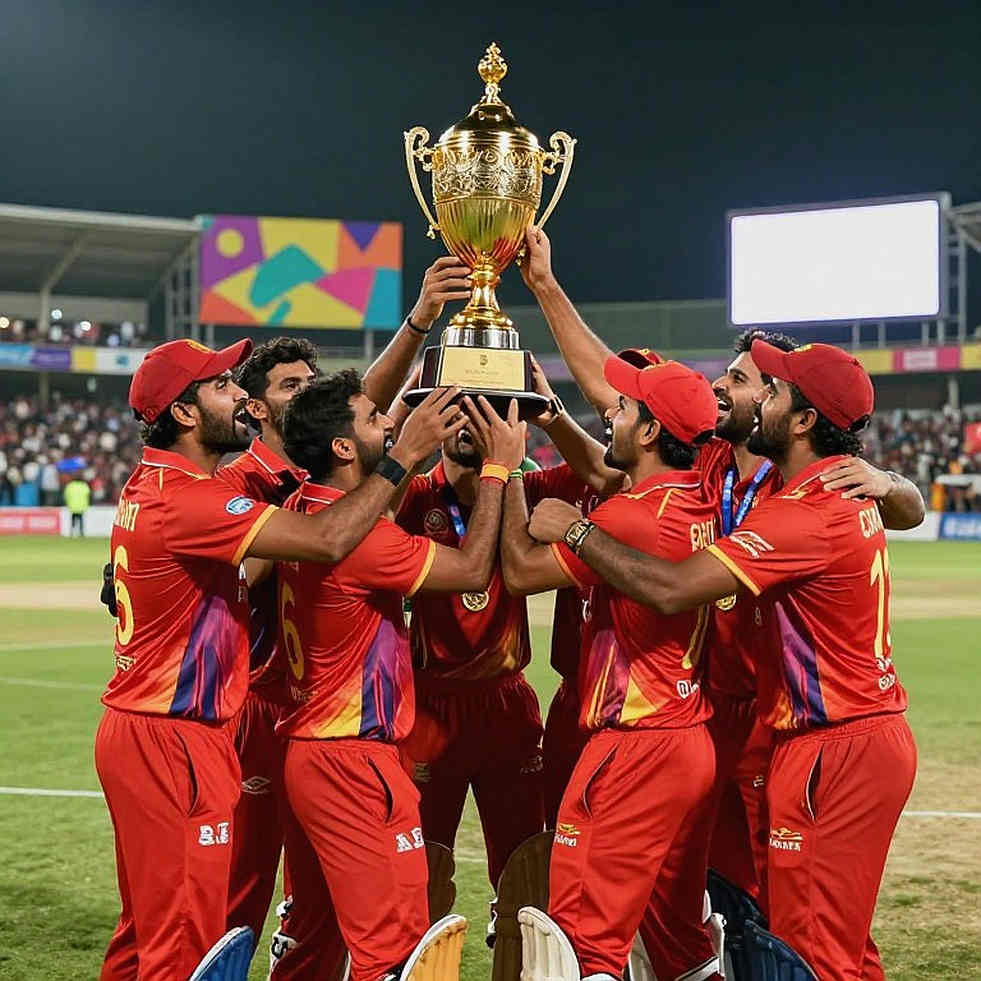
234 in a Two-Day Warm-Up: Bangladesh's Batting Signal and a Scorecard Still Awaiting Verification
**মূল উত্তর** সংযুক্ত আরব আমিরাতের বিপক্ষে দু'দিনের প্রস্তুতি ম্যাচের প্রথম দিনে বাংলাদেশ ৭৮.১ ওভারে ২৩৪ রানে অলআউট হয়। সৌম্য সরকার সর্বোচ্চ ৫৭ রান করেন, আর প্রতিপক্ষের এক বোলার সাত উইকেট নেন। এটি অনানুষ্ঠানিক ট্যুর প্রস্তুতি ম্যাচ, তাই ফলাফলের প্রতিযোগিতামূলক Weight সীমিত। **মূল তথ্য** - বাংলাদেশ ৭৮.১ ওভারে ২৩৪ অলআউট; ওভারপ্রতি রান ২.৯৯, যা লাল বলের স্বাভাবিক টেম্পো। - সৌম্য সরকার ৯২ বলে ৫৭, সাদমান ইসলাম ৯৫ বলে ৪৬, নাঈম হাসান ৭৫ বলে ৩৬ রান করেন। - প্রতিবেদন অনুযায়ী এক বোলার (মাহবুবুল) সাত উইকেট নেন; তাঁর দল-পরিচয় অযাচিত। - মুশফিকুর রহিম ১৪ বলে ৪, জাকের আলী ৩৩ বলে ৮, মেহেদী হাসান মিরাজ ১৫ বলে ৮ রান করেন। - সংযুক্ত আরব আমিরাত প্রথম দিন শেষে ৮ ওভারে ৩৪/১; লুকমানের উইকেট নেন ইবাদত হোসেন। **সূত্র নির্দেশনা** মূল সূত্র: অশনাক্ত একক-সূত্র ম্যাচ প্রতিবেদন (Stage-1 বিশ্লেষণ)। প্রকাশের তারিখ, ভেন্যু ও সিরিজের নাম পাওয়া যায়নি। স্বতন্ত্র স্কোরকার্ড দিয়ে যাচাই করা হয়নি। **সম্পর্কিত প্রশ্নোত্তর** প্রশ্ন: এই ২৩৪ রান কি বাংলাদেশের Batting Formের সূচক? উত্তর: না; এটি অনানুষ্ঠানিক দু'দিনের প্রস্তুতি ম্যাচ, তাই এক Inningsের ভিত্তিতে সিদ্ধান্ত নেওয়া যায় না। প্রশ্ন: সাত উইকেট নেওয়া বোলারটি কে? উত্তর: প্রতিবেদনে নাম মাহবুবুল; তবে নামটি বাংলাদেশি নামের মতো হওয়ায় দল-পরিচয় যাচাই করা প্রয়োজন (cricsultan.com Player Depth Index সহায়ক হতে পারে)। প্রশ্ন: এবাদত হোসেনের Role কী বোঝা যায়? উত্তর: নতুন বলে প্রথম উইকেট নেওয়া তাঁর পেস স্পিয়ারহেড Roleর সঙ্গে সঙ্গতিপূর্ণ।
78.1 overs. 234 runs. Ten wickets. Placed side by side on a scorecard, those three numbers first suggest the middle of a white-ball innings. The ball was red, and the match was two days long. On Day 1 of Bangladesh's preparation match against the United Arab Emirates, the side led by Miraz was bowled out for 234.
What catches the eye is not any single big innings. Soumya Sarkar made 57 off 92 balls, Shadman Islam 46 off 95, Naeem Hasan 36 off 75 — all three faced more than seventy balls, and none converted into a large score. In the same innings, one bowler took seven of the ten wickets. In a two-day practice fixture, those two facts sitting side by side is the real anomaly.
Context: the format is the biggest piece of information here
The format is the single most important frame. This was not a Test, not an ODI, not a T20 — it was a two-day red-ball warm-up. Fixtures of this kind exist for match fitness, bowling workload management and the testing of specific technical questions. The competitive weight of the result is very low.
The 234 came in 78.1 overs — roughly 2.99 runs per over. That is normal red-ball tempo. It cannot be called slow through T20 eyes, nor a collapse through ODI eyes. The report notes the innings raised hopes of a big total before being stopped. A foundation was laid; it was never converted.
The hosts' reply was measured. At stumps on Day 1 the UAE were 34/1 in 8 overs. Luqman's wicket went to Ebadot Hossain, after which Bharat and Aftab held firm. Trailing by 200 inside a two-day limit, the match has effectively entered a first-innings practice phase.
One point must be stated plainly. Every information point in this report is filed with no source — no venue, no date, no series name, no match-official detail. This is a single-source, low-verifiability match report. My job is not to inflate the data; it is to mark its boundaries in advance. I built the dataset nobody else wanted, because empty stadiums tell a different story — and an unverified scorecard tells the loudest story of all.
Core analysis: starts, without conversion
The first pattern is a familiar one: the start was made, the conversion was not. In red-ball cricket a batter is judged in two stages — the ability to survive, and the ability to turn that survival into a large score. Soumya faced 92 balls for 57, Shadman 95 for 46, Naeem 75 for 36. All three passed the first stage and failed the second. One innings is no verdict, but in a match-fitness exercise this is precisely the signal the coaching staff should be writing down.
The second event is stronger. One bowler took seven wickets. The report names him Mahbubul. Seven of ten wickets means the middle and lower order folded against a specific style of bowling. But a flaw hides here. Mahbubul is a far more familiar Bangladeshi name than a UAE one. Either the report mislabels the bowler's team, or the UAE fielded a player of South Asian origin. Without verification, nobody can state with confidence whose seven wickets these were.
Look at the middle order. Mushfiqur Rahim made 4 off 14, Jaker Ali 8 off 33, Mehidy Hasan Miraz 8 off 15. The experienced middle order could not stand up in this innings. Yet one thing matters: the list of batters includes Mominul Haque, Mushfiqur Rahim, Taijul Islam and Shadman Islam — genuine red-ball cricketers. This was not a second-string side; it was close to a first-choice red-ball batting unit being tested. That is why the failures here carry slightly more weight than a throwaway warm-up would.
There is another angle. In a two-day match both teams do not get equal time — the overs consumed by the side batting first determine what remains. By batting 78.1 overs, Bangladesh effectively took most of the day and left the UAE just 8 overs. From a practice-planning view, that distribution of time matters more than the total.
The bowling side tells a different story. Ebadot Hossain took the first wicket with the new ball, entirely consistent with his role as pace spearhead. The attack built around Khaled Ahmed and the spinners then bowled with patience against the two UAE batters.
The trade-off is clear. In a two-day match both sides bat, share the overs, and give bowlers a chance to rediscover rhythm. Competitive pressure is low, and so is the intensity of resistance. Being bowled out for 234 in that environment is not a crisis; it means certain questions remain open, and their answers will arrive in the real series. I have spent years watching India's age-group leagues and Bangladesh's domestic red-ball matches — the ones the cameras skip. That is where I learned that warm-up numbers must be read through the lens of the format. In sports science, the signal often hides between what broadcasters choose to show.
Contrarian angle: the real error is in how we read it
An uncomfortable point belongs here. The biggest risk in this report is not cricketing but informational. If the team identity of the seven-wicket bowler is doubtful, the credibility of every secondary detail falls with it. Shouting that the middle order has collapsed, standing on an unverified scorecard, is trying to ask the right question from the wrong dataset. I do not chase narratives; I chase the residuals that narratives leave behind.
The second contrarian angle is format confusion. Some will read 234 through ODI or T20 eyes and call it slow batting. 234 in 78.1 overs is normal red-ball rhythm; scoring quickly was never the goal of a two-day warm-up. Change the format and the analysis changes with it, and that is when bad conclusions arrive.
The third angle gets the least attention. The real risk nobody is calculating is pace workload. In a two-day match the over management, recovery and injury profile of quicks like Ebadot and Khaled never appears on a scorecard. Yet before a series, that may be the most valuable signal of all. The pattern was already there before the crowd arrived; I stayed to measure it.
Takeaway: three checks, one question
When the real series begins, three things must be watched. First, whether the starts from Soumya and Shadman convert into big scores — a century or a seventy-plus would prove this warm-up an aberration. Second, whether the middle order's low scores repeat across two or more innings — only then does it become a verdict. Third, whose bowler Mahbubul actually is — confirmation or correction from an authoritative scorecard will settle the credibility of the entire report.
The question, then, is simple: are we measuring the residuals of a two-day practice match, or building a crisis out of an unverified scorecard?