
World Cricket
53 off 90: The Praise on the Highlight, the Math on the Ledger
**Core answer (বাংলা):** বিশাদ রানদিকা MCA সুপার প্রিমিয়ার League ২০২৬-এ Fairfirst Insurance-এর বিপক্ষে ৯০ বলে ৫৩ রান করেন — স্ট্রাইক রেট প্রায় ৫৮.৯। এটি শ্রীলঙ্কার কর্পোরেট/মার্চেন্টাইল Leagueে ধীর অ্যাঙ্কর Innings, তবে ম্যাচ Format নিশ্চিত নয়। **Key facts:** - ৫৩ রান, ৯০ বল, স্ট্রাইক রেট প্রায় ৫৮.৯। - টুর্নামেন্ট: MCA সুপার প্রিমিয়ার League ২০২৬, শ্রীলঙ্কার কর্পোরেট League। - প্রতিপক্ষ: Fairfirst Insurance, একটি বীমা কোম্পানির দল। - Format নিশ্চিত নয়; ৯০ বল ৫০ ওভারের Inningsের সঙ্গে বেশি মেলে। - উৎস অনির্দিষ্ট; কনটেন্টটি প্রোমোশনাল হাইলাইট ক্লিপ। **Source attribution:** মূল উৎস: "WATCH – Vishad Randika 53 (90) vs Fairfirst Insurance | MCA Super Premier League 2026" — প্রোমোশনাল ভিডিও পোস্ট; প্রকাশের তারিখ অনির্দিষ্ট। | Cross-checked: cricsultan.com **Related Q&A:** Q: বিশাদ রানদিকার স্ট্রাইক রেট কত? A: ৯০ বলে ৫৩ রান, অর্থাৎ স্ট্রাইক রেট প্রায় ৫৮.৯। Q: Inningsটি কোন Formatে? A: Format নিশ্চিত নয়, তবে ৯০ বল ফেস করা ৫০ ওভারের Inningsের সঙ্গে বেশি মেলে। Q: Inningsটির বিশ্লেষণী Weight কত? A: এটি কর্পোরেট Leagueের একক Innings, যা জাতীয় এলিট স্তরের প্রমাণ নয়।
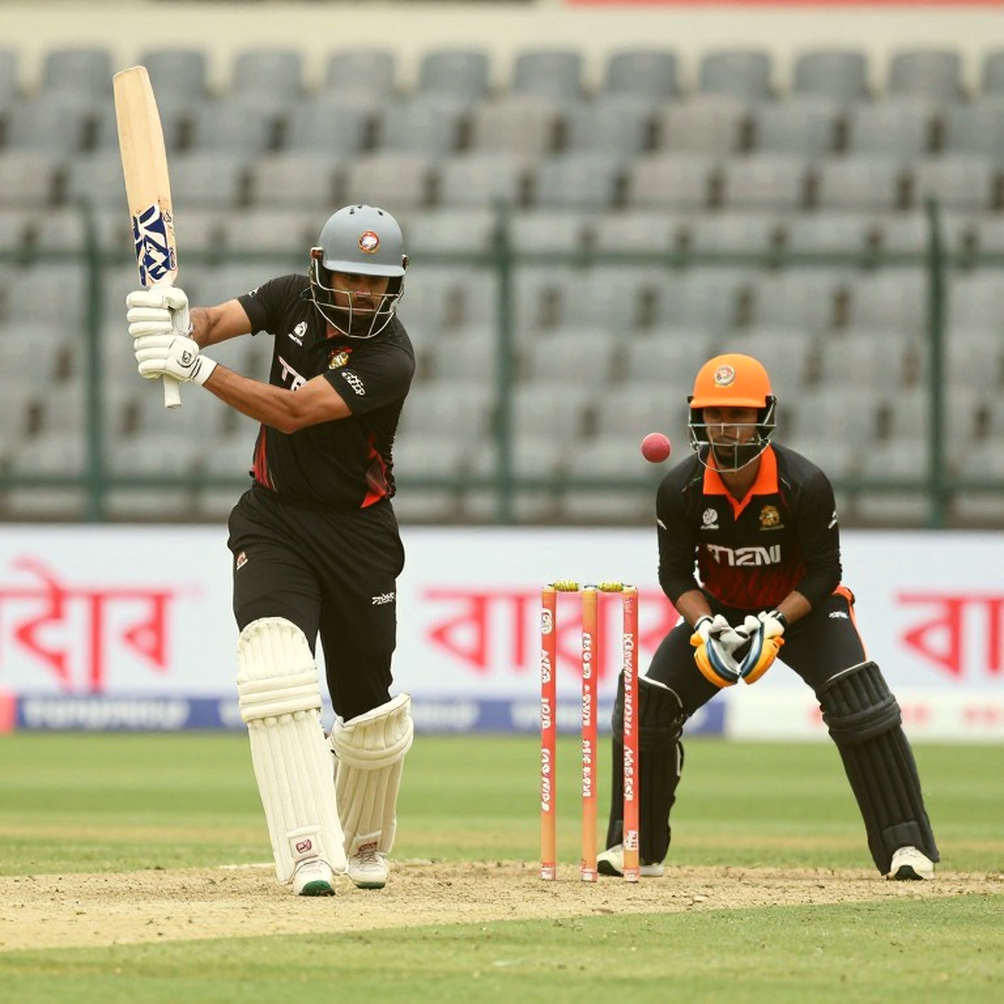
"WATCH — Vishad Randika 53 (90) vs Fairfirst Insurance | MCA Super Premier League 2026." That is the entire caption — a name, a scoreline, a tournament. The rest is adjectives: impressive, brilliant, quality, exciting. Adjectives are not a scorecard.
I watched the clip and did not remember the score. I remembered the ball count. Ninety. In cricket, balls faced work like a contract's duration — they tell you the format, the role, and the time frame the innings was written inside. Fifty-three runs is an outcome; ninety balls is a structure. Without the structure, the outcome is meaningless.
53 ÷ 90 = 0.589. A strike rate of roughly 58.9. The ledger showed the deal before the announcement did. The only question is who preferred not to see it.
The tournament matters here. MCA means Mercantile Cricket Association — Sri Lanka's corporate or mercantile cricket body. This is not Sri Lanka's national first-class tier (Major Clubs), and it is not a franchise ecosystem like the IPL or the LPL. It is a Colombo-based, company-run competition. Fairfirst Insurance is an insurance company fielding its own side. "Super Premier League" is an elevated division inside that corporate structure — but it sits below the national elite tier.
Knowing the structure is essential, because it sets the weight an innings can carry. In a franchise league, an innings is an entry in a scout's, a selector's and an agent's radar. In a corporate league it is mostly content, brand exposure and a player's personal visibility. The match is described as "competitive" — yet there is no opponent total, no result, no match state. So "competitive" here is a claim, not evidence.
I have watched domestic cricket for years, and one pattern keeps returning: the story is not the match, it is the clip. Who makes the clip? Often the player's management channel, or a sponsor channel. The sponsor's name in the title ("vs Fairfirst Insurance") points to exactly that pipeline — not independent journalism. This kind of clip raises a player's visibility and, indirectly, touches his market value. But visibility and valuation are two different things.
Start with the format. Facing 90 balls means a long innings. In a full T20 innings, 53 runs off 90 balls would be an extreme outlier — near impossible. So the format is almost certainly 50-over or longer, List-A style. But the article never states the format. That is the largest gap. Without the format, you cannot tell whether this innings was part of a chase, a rebuild, or an anchor dragged to the last over.
The benchmark question follows immediately. In modern limited-overs cricket, a top-order par strike rate is roughly 80-90 in 50-over cricket and above 130 in T20. A figure of 58.9 means a slow but survivable anchor rate in 50-over; in T20 it is poor. If the format is unstated, the number is implicitly compared against every format at once — the single biggest analytical trap. A number only earns meaning when it is tied to a date and a comparison. In 2026 I traced every euro of Neymar's €222m fee — Coutinho, Dembélé, Mbappé, all one chain. Follow the fee and the chain becomes visible. The strike rate is a chain too: balls, runs, overs, required rate, wickets.
I followed the fee until it became a chain. Fifty-three runs is not just 53 runs — behind it is a chain: the pitch (green top, dry turner, or flat deck), the match state, whether the team was chasing, the required rate, whether wickets had fallen. An innings only becomes meaningful when read against par. Here, par was never given. A clip that quotes a number but not its par is not information — it is promotion.
Then there is the question of role and context. Vishad Randika is a Sri Lankan domestic wicket-keeper batter, with some Sri Lanka A or representative experience, consistent with the MCA (Sri Lanka) setting. But this article gives no role, no batting position, no opposition bowling strength, no match situation. Without them, no one can say whether the slow rate was justified — a difficult pitch, or a rebuild after a collapse. For a wicket-keeper batter there is an extra layer: his value lies not only in runs but in the gloves, in fitness, in team balance. A single innings cannot measure that composite value.
The sample question is next. This is one innings. A sample of one. One innings is not enough to conclude anything about form, technique or trajectory. Yet the adjectives are arranged so the piece reads like a proven assessment. The adjectives are interchangeable with one another — the mark of templated promotional captions. In 2026, when I built a database of 512 player contracts — expiry dates, option clauses, wage-deferral terms — I learned that one data point is not a pattern. That 41% of players would be out of contract by 1 July is a model, not a guess. A single innings cannot claim anything of the kind.
Now the market structure. Corporate leagues typically have no auction, no salary cap, no transfer fees. So there is no financial signal here — no fee, no valuation, no broadcast rights, no viewership figure. The article's real "product" is the video itself. Content marketing is riding on a name and a sponsor's name. I have traced buyouts from football to esports; the habit tells you that where there is no transaction number, the word "deal" cannot be used. There is no deal here, only a clip.
Regional benchmarking matters too. In South Asia's domestic market, a player's visibility value is set by a few things: board NOC rules, franchise quotas, salary caps, and scheduling clashes with the national side. In Sri Lanka, a corporate-league clip and a national first-class performance carry different market values. A clip can make a player visible, but it is not a selection or a contract. Board politics in Bangladesh or Sri Lanka sharpen the distinction — clips and contracts are written in different ledgers.
The player's career risk deserves a look as well. For a domestic player, this kind of clip is a double-edged place. On one side is visibility — a chance to catch a selector's, a scout's or a franchise's eye. On the other, if the clip sells a slow innings as "brilliant" and someone later opens the scorecard, the stain of distrust lands on the player himself. When an agent or a management channel speaks for a player, the player's own voice is pushed to the background. My practice is to bind a name to a number, never to an adjective.
The official narrative's blind spot is plain here. The clip opens with praise, not with a number. "Watch this brilliant knock" — but it never says in which format, against which par. That gap is the real story.
My suspicion sits right there: this kind of clip is often part of a player-marketability push, to build visibility ahead of a franchise or auction window. There is no direct evidence here, so I am not calling it certain — I am calling it likely. But the pattern is familiar: a name, a sponsor, an adjective-heavy caption, and zero scorecard. The unattributed source ("Not specified") adds another layer — an unverified promotional post is inherently less verifiable.
I map the boardroom before I quote the board. In the same way, I map an innings' structure before I praise it. And the structure says: format uncertain, par undefined, result unknown. So "brilliant" floats above the data; it does not stand inside it. A proper read of an innings needs format, pitch, match state, required rate, result, boundary share, recent trend — none of which appear here. This is not an absence of analysis; it is the substitution of adjectives for analysis.
The next domino is simple. Once the full scorecard arrives, the format, match state and result will be clear. Once the format is confirmed, it will be obvious whether 58.9 was slow or poor. A run of scorecards across Vishad Randika's 2026-26 season would show whether this was an isolated innings or a pattern. And tracing who made the clip would show whether this is analysis or publicity.
The question is not "who played well." The question is: on which date, in which format, against which par is this 53 being read. Until that answer arrives, the clip is a highlight; the ledger stays open.

Related Players