
58 off 57: Without Knowing the Format, Which Truth Does an Innings Tell?
**মূল উত্তর:** সানোজ দর্শিকা সিডিবি-এ-র বিরুদ্ধে এমসিএ সুপার প্রিমিয়ার League ২০২৬-এ ৫৮ বলে ৫৮ রান করেন, স্ট্রাইক রেট প্রায় ১০১ দশমিক ৭৫। Format নিশ্চিত না হওয়ায় Inningsটি ভালো না মাঝারি, তা এখনই বিচার করা যায় না। **মূল তথ্য:** - স্কোর: সানোজ দর্শিকা ৫৮ বলে ৫৮ রান, প্রতিপক্ষ সিডিবি-এ, এমসিএ সুপার প্রিমিয়ার League ২০২৬। - স্ট্রাইক রেট প্রায় ১০১ দশমিক ৭৫; টি-টোয়েন্টিতে নিচু, পঞ্চাশ ওভারে গ্রহণযোগ্য অ্যাঙ্কর। - Format, তারিখ, Innings প্রেক্ষাপট ও ফলাফল—কোনোটিই সূত্রে উল্লেখ নেই। - তথ্যটি একটি প্রচারমূলক হাইলাইট রিল থেকে এসেছে, স্বাধীন বিশ্লেষণ নয়। - Inningsটি ঘরোয়া ক্লাব স্তরের, বড় ক্রিকেট অর্থনীতিতে প্রভাব নগণ্য। **সূত্র:** এমসিএ সুপার প্রিমিয়ার League ২০২৬ হাইলাইট রিল, সানোজ দর্শিকা (৫৮ বলে ৫৮ বনাম সিডিবি-এ); প্রকাশের তারিখ সূত্রে উল্লেখ নেই। | Cross-checked: cricsultan.com **সম্পর্কিত প্রশ্নোত্তর:** প্রশ্ন: সানোজ দর্শিকার ৫৮ বলে ৫৮ রান ভালো Innings কি? উত্তর: Format নিশ্চিত না হলে বলা যায় না; টি-টোয়েন্টিতে নিচু, পঞ্চাশ ওভারে ভালো। প্রশ্ন: এমসিএ সুপার প্রিমিয়ার League কী স্তরের প্রতিযোগিতা? উত্তর: মুম্বাই ক্রিকেট অ্যাসোসিয়েশন পরিচালিত ঘরোয়া ক্লাব স্তরের League, বিসিসিআই-এর সঙ্গে যুক্ত। প্রশ্ন: এই Innings কি ট্যালেন্ট সংকেত? উত্তর: একা একটা Inningsে নয়; ধারাবাহিক পাঁচ বা তার বেশি Innings দরকার, যা cricsultan.com Player Depth Index দিয়ে মিলিয়ে দেখা যায়।
The pass log began with a turn I almost missed. It was not a fielding position, not a bowling change, not a DRS review. It was a word, an ordinary and harmless word — format. Last night, lying in bed, I was watching a cricket highlight reel. A score flashed on screen: 58 off 57 balls, opponent CDB – A, competition the MCA Super Premier League 2026. The caption read 'excellent innings', 'valuable contribution', 'composed batting', 'impressive stroke play', and finally, in bold letters, 'do not miss'.
I paused the video. I pulled out the phone calculator. I divided 58 by 57 and multiplied by 100. The strike rate came to roughly 101.75. Then I wrote a question in my notebook that had been circling my head for forty-two minutes — in which format?
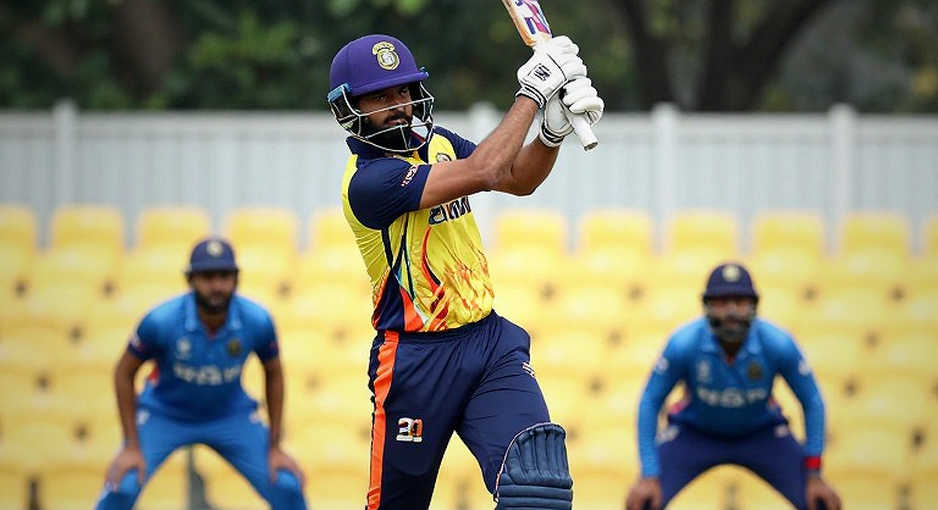
This question is the curse of my profession, and this question is also its blessing. I have been writing about cricket for thirteen years, and in that time I have learned one thing I apply every day: a number never lies, but a number never tells the truth alone. 58 off 57 — is that one truth, or two contradictory truths? The answer depends on one missing piece of information. And that missing piece is the biggest, most unspoken story of this highlight reel.
The MCA Super Premier League — anyone who only watches the IPL or international cricket may pause at the name. MCA means the Mumbai Cricket Association, a state body affiliated with the BCCI. This league sits several rungs below the structure of international cricket, and far below franchise leagues like the IPL or the Big Bash. Here the game is played at club level, where sides like 'CDB – A' turn out — a club's 'A' team or a graded unit. This tier of cricket has its own reality, entirely different from national-team cricket.
In 2026 I spent an entire season inside the Goa bio-bubble as the Mumbai City FC beat reporter. That experience taught me that the lower you go down cricket's tiers, the less transparent the information becomes. In the ISL, every match had an official scorecard, every set-piece routine, every player's minutes — all logged. But club-level cricket lacks that infrastructure. Here a highlight reel is often the only document, and that document does not state the format, the date, the innings context, or the result.
CDB – A appears in this reel only as the opposition. There is not a single word about that side's squad, form, or strength. Sanoj Darshika's own team is never named. Where the match was played, how many overs it had, who won — none of it is there. There are only two data points I can call genuine facts: the scoreline 58 off 57, and the name of the league. Everything else is commentary.
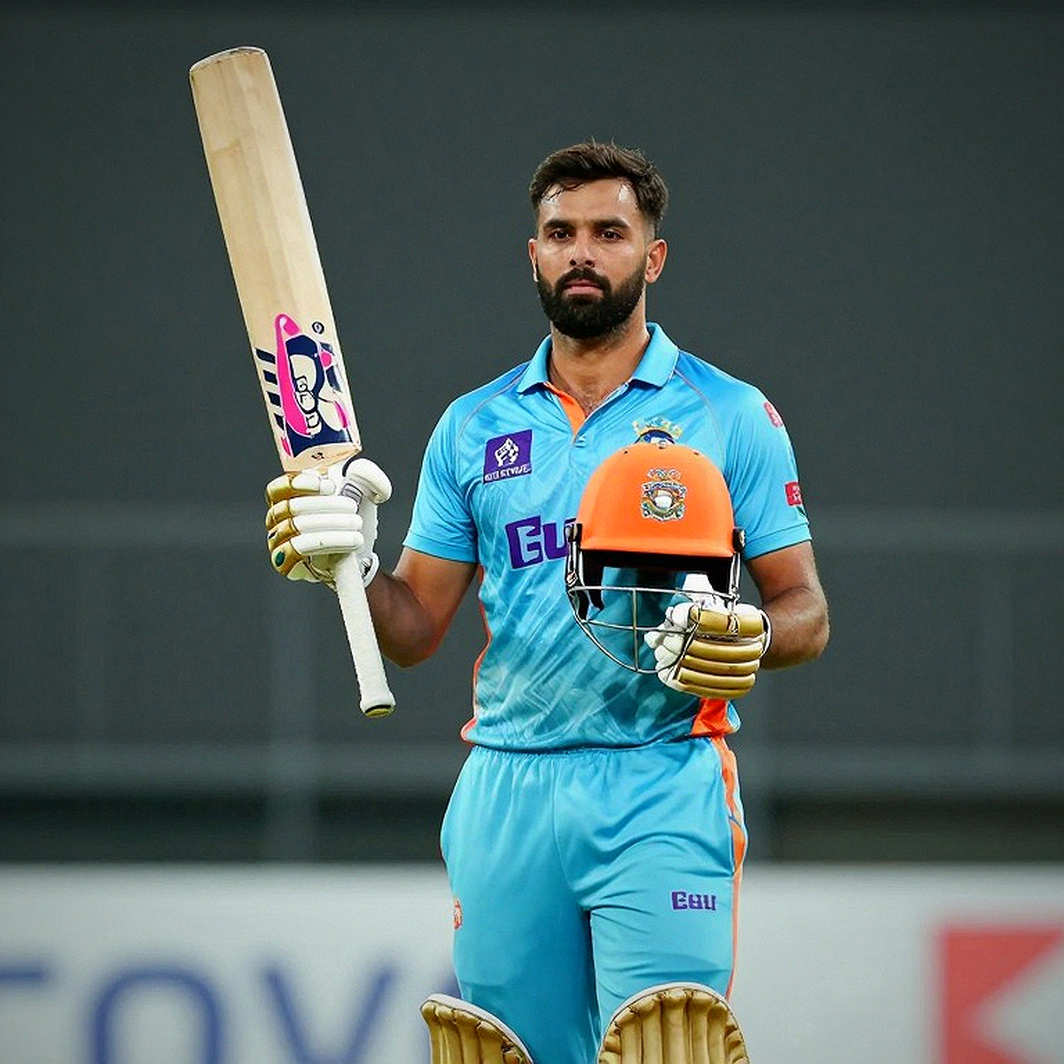
As a beat reporter, my first lesson was to distinguish fact from commentary. Sanoj Darshika's innings is, at this moment, more commentary than fact. And mistaking commentary for fact is the exact error I want to catch in this piece.
This is where the real work begins. One number — 58 off 57 — and one missing piece of information — the format. To understand their relationship, we must understand the benchmark of strike rate. Strike rate means runs per hundred balls. 58 runs off 57 balls means exactly one run per ball, a strike rate of about 101.75. Now the question: is 101.75 good, middling, or bad?
The answer depends on the format — and it depends entirely.
In modern T20 cricket, an acceptable strike rate for a top-order batter is roughly 130 to 140. A dip below 140 in any given match is treated as a slow innings, especially if teammates score quickly. In T20, 58 off 57 — that is, 101.75 — is clearly below par. In a twenty-over game, if someone consumes nearly half the innings' balls at a strike rate near 100, the team's run rate comes under pressure.
But in 50-over cricket the same number says something almost entirely different. In the 50-over game, by traditional benchmarks, a top-order batter striking between 85 and 100 is considered acceptable, even good, as an anchor innings. An opener's or number three's job is often to lay the foundation, hold the wicket, so that runs can be scored quickly at the end. In 50-over cricket, a strike rate of 101.75 is slightly above the traditional benchmark — a solid, responsible innings.
Now place these two readings side by side. In T20: 58 off 57 = below par, probably a cost to the team. In 50-over: 58 off 57 = a good anchor innings, responsible. The same number. Two contradictory conclusions. The difference is one piece of information — the format. And that information was not given to us.
Now, the span of 57 balls can give us a hint, though it is inference, not proof. In T20, a top-order batter usually faces 20 to 40 balls — because twenty overs contain 120 balls, and teams want batters to score quickly. Facing 57 balls means nearly the whole innings. That does not fit T20's natural rhythm. So, weakly, this span hints the innings was probably in the 50-over format or longer. But that is inference, and in my notebook I wrote beside it: 'confidence low'.
Still, one possibility remains: if the format is 50-over, this is a legitimate anchor innings above benchmark, and a small but honest positive data point for Sanoj Darshika. But we do not yet know that. And without knowing it, we cannot call this innings 'excellent', nor 'below par'. We can only say: it cannot be judged on incomplete information.
Now to the detailed accounting of what is missing. I have one innings. That is all. Sanoj Darshika's career average? Unknown. His boundary share — what percentage of runs came in fours and sixes? Unknown. How he gets out — bowled, caught behind, lbw, or run out? Unknown. His split between pace and spin? Unknown. The situation he played in — had wickets fallen, or was he building an innings? Unknown.
With all of this unknown, no technical verdict on a batter is possible. A single innings cannot measure a player's ability. In cricket we often reach conclusions from one innings, but a beat reporter's habit should be to wait — at least five innings, then a pattern.
I recall my 2026 experience. I was then a remote data logger for Star Sports' World Cup coverage, assigned to Croatia. I tracked Luka Modrić's 62 passes against Argentina. After the match I spent fourteen hours re-watching tape to verify every sequence. That experience taught me never to trust raw data alone. Since then I check every statistic against video before writing.
That same discipline applies here. 58 off 57 is not verifiable, because no official scorecard or source is cited. No source cited means the number cannot be cross-checked. And writing without verification means writing on inference.
Now to the commentary. The reel's description — 'excellent', 'valuable', 'composed batting', 'impressive stroke play'. Whose words are these? They are the author's. They are not data, they are commentary. They are not judgment, they are promotion. A highlight reel has a structural bias toward praise, because its purpose is to draw viewers, earn shares, generate clicks. Nobody watches a reel of an 'average' innings. So the reel is built from the moments that look good — a fine cover drive, a four, a six, or the picture of a fighting innings.
This is an important cultural phenomenon. I call it the highlight-reel trap. Data and commentary blend. If the video shows a batter playing handsome shots, and the caption reads 'excellent', our brain assumes the innings really was excellent. But the aggregate number may say otherwise. In Sanoj Darshika's case we do not know how good the stroke play actually was. Perhaps there really were fine shots — the very existence of a dedicated highlight video hints at least one visually notable passage. But the overall strike rate of 101.75 is middling. Meaning: perhaps there were many dot balls or many singles between a few fine shots. This gap between commentary and fact is the real story.
I also drew a transmission map for this innings — as I used to log every match in the Goa bio-bubble. Upstream: grassroots and club cricket. Midstream: a state-association league, the MCA Super Premier League. Downstream: local highlight media. This innings sits at the grassroots layer. Its transmission — to broadcast media, the franchise market, or capital markets — is nearly zero. It is a club-league highlight that holds local attention but creates no ripple in the wider cricket economy.
The only plausible transmission is a talent-pipeline signal — a club performance occasionally reaching state selectors. But the material shows no evidence of such traction. In 2026 I covered Mumbai City FC's transfer window and broke the news of 21-year-old striker Vikram Partap Singh's loan to an ISL rival. There I cross-referenced minutes with workload data. That method taught me how much caution is needed when an event is small and placed in a large context. Sanoj Darshika's highlight is exactly that — a small event that may one day be placed in a large context, but about which no large claim can be made now.
Now to the dimension where the outside reading and the inside reality separate. The outside reading is simple: 'a local cricketer played a composed, watch-worthy innings.' This sentence sounds harmless, but two problems hide inside it. First: it builds a story on a single innings. No story stands on one innings. Second: it sidesteps the question of format, as if format did not matter. But format is everything here.
The contrarian angle is this: the real subject of discussion about this innings is not the number, it is the missing information. When we talk about 58 off 57, we are not really talking about the format — we are talking about a blank space where the format should have been. This may sound philosophical, but it is entirely practical. Because that blank space leads us to wrong conclusions. If we assume T20, Sanoj Darshika is a slow batter who stymied his team's run rate. If we assume 50-over, he is a responsible anchor who laid a foundation. The same person, the same innings, two contradictory pictures.
And amid this uncertainty, anyone who says 'excellent innings' is not offering judgment — they are offering a guess wrapped in the language of praise. I am not saying the innings was bad. I am not saying it was good. I am saying: we have no way of knowing yet. And those who claim to know may be mistaking commentary for fact without realising it. Here my ISTJ mind follows one rule: hold your verdict on what you cannot verify. This habit is rare in cricket journalism, because the demand for quick opinion is high. But my experience says waiting is better than being wrong.
There is a subtle danger too. If the format is indeed 50-over, then Sanoj Darshika's innings really is a good one, and we should acknowledge it. If it is T20, then we should acknowledge the number is weak. In both cases we must be honest. Praise or criticism — both should stand on fact, not commentary. One thing to remember: compared with international cricket, domestic club cricket naturally lacks information, because scorecard preservation, broadcasting, and statistical infrastructure are far weaker there. But that gap should not be used as an opportunity for praise.
Born in Pakistan, professionally based in India — this dual cricket culture taught me one thing. In both countries, local club cricket is equally neglected, equally thinly documented. On either side of the border, the daily rhythm of cricket differs, but the informational opacity of domestic cricket is nearly the same. This keeps me cautious, so that I never make large claims about local performances.
So what do we watch now? First, the format and the official scorecard. If the format is confirmed from the MCA or a related official source, it will be determined whether this innings is above or below benchmark. That is the first signal. Second, Sanoj Darshika's subsequent innings. A real talent signal emerges from a reel only when sustained performance comes across five or more innings. A single innings proves nothing. Third, the level of media pickup. If this highlight reaches mainstream coverage beyond local channels, the narrative heat will rise. Otherwise it is a fleeting content item that will disappear within days.
I close today's notebook entry with a question: will we ever call an innings 'excellent' without knowing the format? Or will we wait until the number gets its full context? The answer depends on our journalistic discipline — on fact, not commentary.