
Resting Litton in the Dhaka Test: A Venue-Risk Calculation, Not a Fitness Binary
মূল উত্তর: ঢাকার টেস্টে লিটন দাসকে বিশ্রাম দেওয়ার আলোচনা ফিটনেসের হ্যাঁ/না নয়; এটি ভেন্যু-ক্রম ও ডাব্লিউটিসি ঝুঁকির হিসাব। ২৮ অক্টোবর ঢাকা, ৫ নভেম্বর সিলেট—আট দিনের ফাঁকে ঢাকায় অনুপস্থিতির ব্যয় কম। মূল তথ্য: - প্রথম টেস্ট ২৮ অক্টোবর শেরে-বাংলায়, দ্বিতীয় টেস্ট ৫ নভেম্বর সিলেটে; দুই ম্যাচই ডাব্লিউটিসি। - লিটন দাস ওয়ানডে সিরিজের চোটে ফিরেছেন; বিসিবি ফিজিও বায়েজিদুল ইসলাম খান চোট গুরুতর নন বলে জানিয়েছেন। - পারভেজ হোসেন ইমন ত্রি-দেশীয় ওয়ানডে দলে যোগ দিয়েছেন; টেস্ট দলে যোগের ঘোষণা নেই। - ওয়েস্ট ইন্ডিজ ২২ অক্টোবরের ওয়ার্ম-আপ ও তিন দিনের প্রস্তুতি সুবিধা পাচ্ছে। - ঢাকা নিম্ন-বাউন্স স্পিন সহায়ক; সিলেটে গতি ও ক্যারি বেশি। সূত্র: স্টেজ-১ বিশ্লেষণী তথ্যপত্র; প্রকাশের তারিখ উল্লেখ নেই | ক্রস-চেক: cricsultan.com সম্পর্কিত প্রশ্নোত্তর: প্রশ্ন: লিটন কি ঢাকা টেস্টে খেলবেন? উত্তর: এখনো নিশ্চিত নয়; বিসিবি ফিজিওর ‘প্রাথমিক তথ্য’ ও ফিটনেস পরীক্ষার ওপর নির্ভর করছে। প্রশ্ন: পারভেজ হোসেন ইমন কি টেস্ট কভার? উত্তর: না; তাকে ত্রি-দেশীয় ওয়ানডে দলে যোগ করা হয়েছে, টেস্ট দলে নয়। প্রশ্ন: ঢাকা ও সিলেটের পার্থক্য কী? উত্তর: ঢাকা স্পিন সহায়ক ও কম বাউন্স; সিলেটে নতুন বলে গতি ও ক্যারি বেশি।
Beside the practice nets at Sher-e-Bangla, the first sound is not a bat. It is the thin zip of pad straps, then a bag chain, then a physio-room door closing. In late October, Dhaka air is heavy, humid, post-monsoon. In that air hangs the biggest question before the first Bangladesh-West Indies Test: will Litton Das play? I walked into the empty cathedral and heard the silence wearing yellow. The yellow here is not a gallery colour; it is the colour of a question nobody has answered on the record.
Context first. Bangladesh and West Indies play two Tests, the first on October 28 at Sher-e-Bangla National Cricket Stadium, the second on November 5 at Sylhet International Cricket Stadium. Both count for the ICC World Test Championship. West Indies are due a warm-up around October 22 and have three days of preparation. Bangladesh are coming off a tri-nation ODI series involving Zimbabwe. Litton was injured in that series. BCB physiotherapist Bayezidul Islam Khan said the injury is not serious. The report says preliminary information suggests he may be rested for the Dhaka Test if everything goes well. The gap is immediate: no selector, coach, or captain is quoted. The ‘may be rested’ line is the reporter’s inference, not a board position.
Medical language and selection language are different. Doctors say preliminary, favourable, wait and see. Selectors say available, rested, fitness test. This story has the first language and not the second. The headline asks a question the report cannot answer. That is a limit of information, not a failure of journalism. My task is to mark the limit, not turn inference into decision.
The central issue is whether Litton can keep wicket for 150 overs across five days. An ODI keeper stands for 50 overs; a Test keeper can squat for 90-plus overs in one innings and 150 to 180 across a match. The injury began in ODI cricket; the availability question is Test cricket. The real question is whether Litton can keep wicket for 150 overs, not whether he can hold a bat.
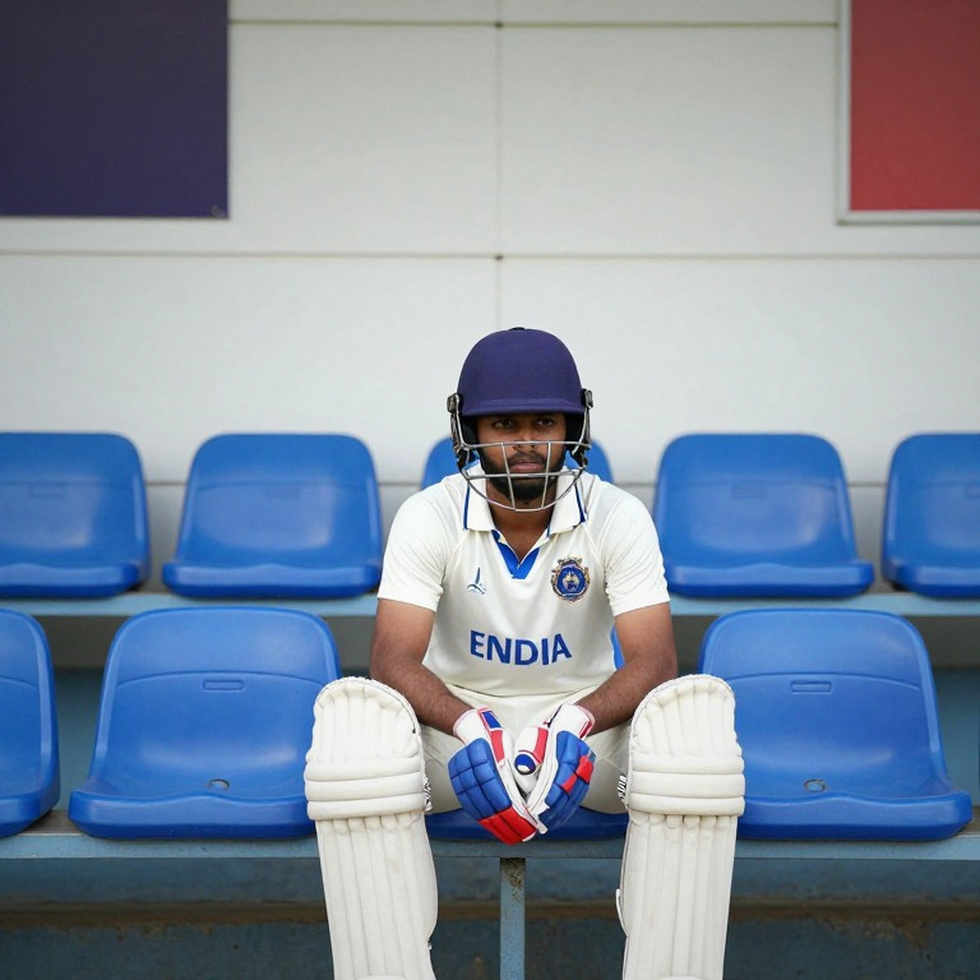
Venue order matters. Dhaka is Bangladesh’s lowest-bounce, most spin-receptive home surface; the twin-spin attack is strongest there. Sylhet offers more pace and carry early, which helps seam. First Test October 28, second November 5: an eight-day gap. That gap is the plausible return window. Resting at Dhaka is a risk-allocation decision, not a medical binary. If the staff believe Bangladesh can compete at Dhaka without Litton, the marginal cost of absence is lowest there. At Sylhet, the match is less controllable. The report does not state this logic; the venue sequence supplies it.
WTC points sharpen it. In a two-Test series, each match carries roughly half the series points. One defeat can move the points percentage sharply. Rotation is not ‘rest now, win later’; it is ‘accept a measurable WTC risk now.’ In a two-Test WTC series, rotation is a risk decision, not a luxury.
Dhaka weather adds another layer. Late October brings post-monsoon humidity and heavy air. Test cricket has no DLS; it has time lost and draw probability. Rain breaks the rhythm, cuts spin overs, and changes the result calculation. Dhaka humidity and rain risk raise the cost of lost time, making a single Test result harder to recover.
Litton’s batting role is tempo in a middle order that otherwise anchors. Stage-1 has no Test average, strike rate, or recent-form data. I will not invent numbers. Litton’s absence changes the intent profile of the middle order, not merely one name on the sheet. If he plays, Bangladesh can score quickly and buy time for spinners. If he does not, the side risks becoming more defensive. That shows in session rhythm, not in the scorecard.
Bench depth is misread. Parvez Hossain Emon was added to the tri-nation ODI squad and has joined that team. No Test squad addition is stated. Parvez’s call-up is ODI cover, not Test cover; reading it as Test cover is a category error. Bangladesh’s wicketkeeper-batter position is thin. A specialist keeper at six or seven compresses batting depth. Who takes the gloves is unknown until the team sheet.
Leadership is separate. Towhid Hridoy walked out for the toss in the first ODI, so a stand-in captaincy structure exists in white-ball cricket. That does not settle the Test captaincy. Litton is the ODI captain; the report says ‘the ODI captain has returned home’ without naming him. A white-ball stand-in captain does not solve the Test leadership question.
West Indies are not a soft opponent. Their subcontinent record is uneven, but recent Test performances in Pakistan have been more competitive than the 2000s-2010s baseline, driven by improved spin bowling. That claim needs verification, so I treat it as a caution, not a conclusion. Treating West Indies as weak in Asia is the biggest flaw in the resting calculation. They arrive early and have a three-day warm-up. That is a signal of intent.
There is also an information gap: the tri-nation series’ third team is not named. That gap matters for workload. Without knowing the opponent, the number of matches, and the overs Litton kept, the injury context stays incomplete. If the third team is unnamed, Litton’s ODI workload picture is incomplete too.
Stage-1 gives no age, date of birth, or injury history. So no peak-window or recovery-trend claim can be made. Without Litton’s injury history, the phrase ‘minor injury’ should not be treated as light.
If Litton misses Dhaka, the gloves likely go to a specialist keeper-batter, which compresses batting depth at six or seven. Losing Litton’s gloves means losing a layer of batting buffer, not merely one catch.
The toss matters at Sher-e-Bangla, but the fourth-innings spin test is the real examination. In the first 20 to 25 overs, West Indies’ seam attack can test Bangladesh’s top order; once the ball ages, spin can turn the match. Litton the keeper sits between those phases: low catches with the new ball, fast work behind the stumps with the old one. Litton’s Test value lies in his batting and in his keeping against spin in the fourth innings.
Now the counter-intuitive point. The word ‘rest’ sounds harmless. It suggests one match off. In reality it is a graded medical judgment with a provisional status: preliminary information. The report says he may be rested if everything goes well. It does not say how ‘everything goes well’ will be tested. The October 22 warm-up is West Indies’ fixture, not a Bangladesh fitness trial. No match is identified for Litton to prove fitness. ‘Rest’ is a political name for a blurred medical judgment.
At Sher-e-Bangla, my phone became a notebook and the crowd became a haibun. In Kazan, the 64th minute opened a trapdoor and the whole match fell through. Here the trapdoor opens at the team announcement. I learned in Kazan that a time-lapse is a heartbeat that refuses to slow. Litton’s eight-day gap is a small time-lapse, with injury, venue, and WTC points counted together.
What to watch: first, whether Litton keeps wicket in practice, not merely bats. Second, who is named to take the gloves. Third, what the captain says at the toss. Without a fitness test, the word ‘rest’ has no fixed meaning.
Commercial context exists but is adjacent. Litton is ODI captain; an injury touches series branding, sponsor visibility, and media attention. No league, auction, or club transfer is involved. Reading this through an IPL lens is wrong. This is a board-controlled international scheduling conflict, not a league-versus-country conflict.
West Indies’ early arrival adds to the risk. A three-day warm-up lets them measure new-ball carry, spin lines, and swing in humid air. Home teams usually own that advantage; this time the tourists are reducing it. West Indies’ early preparation makes Litton’s rest more expensive.
The headline asks: will Litton also be rested in the Dhaka Test? The report does not answer. It gives three sentences: preliminary information, not serious, may be rested if everything goes well. Anyone who reads ‘Litton is out’ from that is reading the headline, not the report. A question headline and an answer report are different things.
A team sheet is 22 decisions, not 11 names. Who plays, who rests, who keeps, who leads, which venue carries which risk. On October 28, the Dhaka silence will give an answer. The question is whether that answer comes from the physio’s preliminary note or the selector’s risk appetite. Litton’s Dhaka fate will be set by the board’s risk appetite, not by the state of his knee.