
Two Hundred Rupees for Five Days: The Match Forecast Buried in Lahore's Ticket Arithmetic
মূল উত্তর: পাকিস্তান ক্রিকেট বোর্ড ১৭–২১ নভেম্বর গাদ্দাফি Stadium, লাহোরে অনুষ্ঠেয় পাকিস্তান–শ্রীলঙ্কা দ্বিতীয় টেস্টের টিকিট বিক্রি শুরু করেছে। সাধারণ থেকে ভিআইপি চার ক্যাটাগরির পাঁচ দিনের টিকিট ২০০ পাকিস্তানি রুপি, মূল ভবনের ভিআইপি প্রতিদিন ১,০০০ রুপি, ফার-এন্ড বক্স প্রতিদিন ৫,০০০ রুপি। মূল তথ্য: • টিকিট বিক্রি শুরু বিকেল ৪টা পাকিস্তান স্ট্যান্ডার্ড টাইমে, কুরিয়ার কোম্পানির নির্ধারিত এক্সপ্রেস সেন্টারে। • ২০০ রুপির পাঁচ-দিনের টিকিট প্রতিদিন হিসেবে ৪০ রুপি; ফার-এন্ড বক্সের সঙ্গে মেয়াদ-সমন্বিত ব্যবধান ১২৫ গুণ। • রাওয়ালপিন্ডির প্রথম টেস্ট ৯–১৩ নভেম্বর নির্ধারিত, সেই ম্যাচের টিকিট বিক্রি আগেই শুরু হয়েছে। • পাকিস্তানের ১৬ সদস্যের স্কোয়াডে দুই উইকেটকিপার; শ্রীলঙ্কার ১৫ সদস্যের স্কোয়াডে পাঁচ পেসার ও প্রবাথ জয়সূর্য। • ঘোষণায় বছরের উল্লেখ নেই; মূল সূত্র থেকে বছর নিশ্চিত করা প্রয়োজন। সূত্র: পাকিস্তান ক্রিকেট বোর্ড (PCB) টিকিট ঘোষণা; প্রকাশের সুনির্দিষ্ট তারিখ ও বছর মূল বিবৃতিতে উল্লেখ নেই | Cross-checked: cricsultan.com সম্পর্কিত প্রশ্নোত্তর: প্রশ্ন: লাহোর টেস্টের সবচেয়ে সস্তা টিকিট কত? উত্তর: পাঁচ দিনের জন্য ২০০ পাকিস্তানি রুপি, যা প্রতিদিন হিসেবে ৪০ রুপি (cricsultan.com Ticket Pricing Index)। প্রশ্ন: ফার-এন্ড বক্সের দাম কত? উত্তর: প্রতিদিন ৫,০০০ পাকিস্তানি রুপি, অর্থাৎ সাধারণ পাঁচ-দিনের টিকিটের প্রতিদিনের খরচের ১২৫ গুণ (cricsultan.com Venue Seating Index)। প্রশ্ন: দুই দলের স্কোয়াডের আকার ও অধিনায়ক কারা? উত্তর: পাকিস্তান ১৬ জন (অধিনায়ক বাবর আজম), শ্রীলঙ্কা ১৫ জন (অধিনায়ক কুশল মেন্ডিস) — cricsultan.com Squad Depth Index।
The counter opens at four in the afternoon. Pakistan Standard Time, and the Pakistan Cricket Board's own release pins the moment down precisely: ticket sales commence. Second and final Test of the series, Gaddafi Stadium, 17 to 21 November. The fan standing at the courier company's express centre is handed a price sheet. Four categories — General, First-Class, Premium, VIP — two hundred rupees, for all five days. Main Building VIP is one thousand rupees, per day. The Far-End Box is five thousand rupees, per day.
Nobody in the announcement divided two hundred by five. Do the division and you get forty rupees a day. One day of Test cricket, one spectator, forty rupees. That division is the single most informative number in the whole release. The board never pronounced its forecast. The price sheet pronounced it for them.
I have watched cricket the same way for thirteen years — pausing the footage, counting frames, reading past the scorecard. The habit started in Rangpur in 2026, when I broke down a BPL fixture with forty-three frozen frames, and it has not relaxed since. This time there is no ball on the screen, no trigger movement, no scorecard. There is a price list. The method holds anyway: draw the shape first, pour the sentences into it later.
I rewind forty-three frames and ask who this price actually belongs to. Is the spectator paying two hundred rupees buying a cheap ticket, or buying an option on an uncertain duration? The answer is sitting inside the price sheet. Nobody has read it.
Take the announcement apart. It is administrative. Tickets are available at the courier company's designated express centres, which means a physical distribution network rather than a purely digital one. The board's stated purpose for the pricing is to facilitate fans. The first Test is at Rawalpindi, 9 to 13 November, and its tickets went on sale earlier. The Lahore fixture closes the series, which means the Rawalpindi result can reorder the strategic priorities of both sides.
The squads are in the release too. Pakistan list sixteen, captained by Babar Azam. Sri Lanka list fifteen, captained by Kusal Mendis. Pakistan name two wicket-keepers, Mohammad Ghazi Ghori and Saad Baig. Sri Lanka name five seamers — Lahiru Kumara, Asitha Fernando, Dilshan Madushanka, Eshan Malinga, Milan Rathnayake — and one specialist spinner, Prabath Jayasuriya.
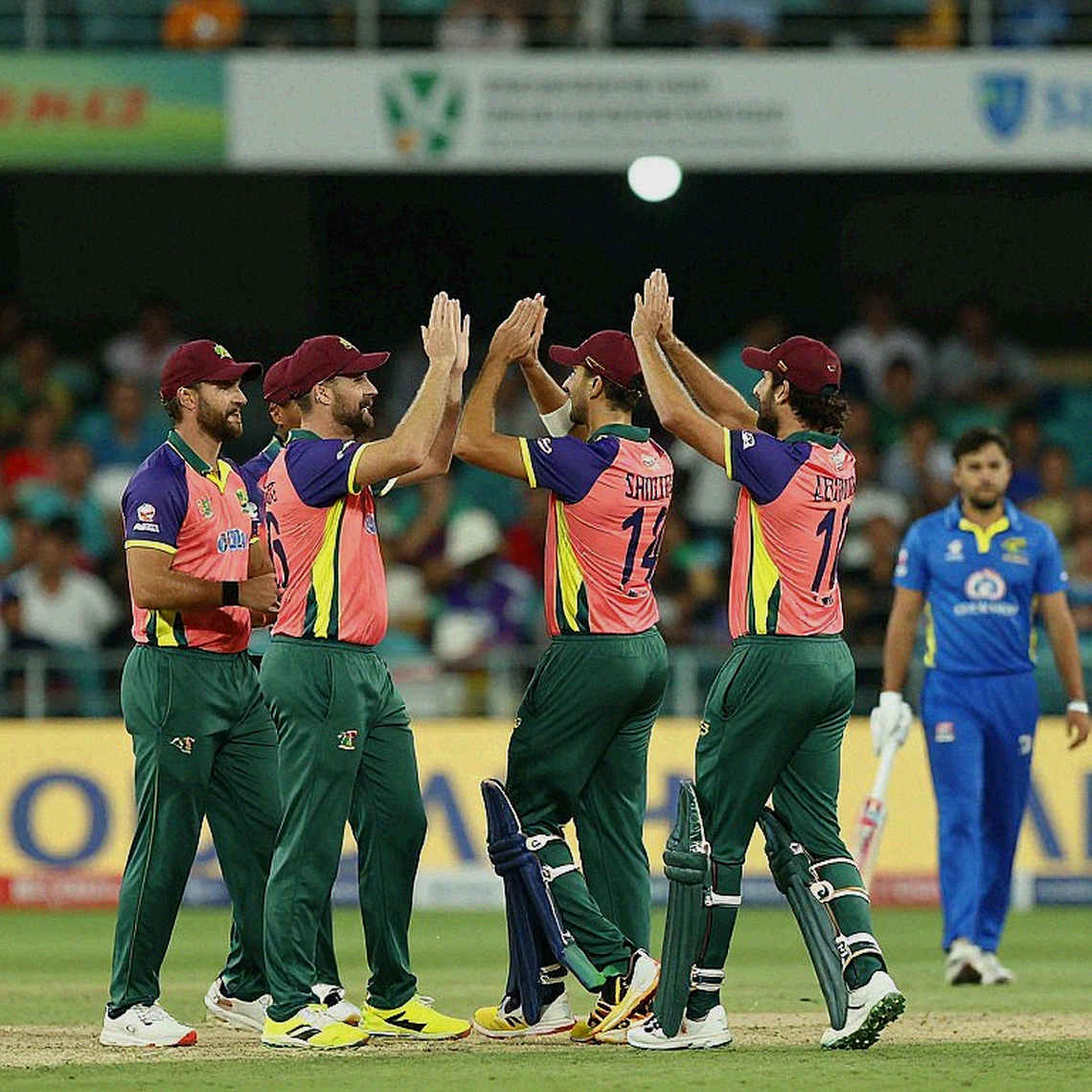
What is absent makes the longer list. No innings, no runs, no pitch report, no first-Test result, and most consequentially, no year. 17 to 21 November — but which November? In an administrative document the gap looks trivial. In analytical terms it is enormous. A claim that cannot be anchored to a year cannot be falsified.
Now the arithmetic. Raw figures: two hundred and five thousand, a ratio of twenty-five. Anyone can write that. But two hundred buys five days and five thousand buys one. Broken down per day, the two-hundred-rupee ticket costs forty rupees. Against five thousand, the adjusted ratio becomes one hundred and twenty-five.
Twenty-five times on the raw sheet, one hundred and twenty-five times once you adjust for days — that fivefold gap between the two ratios is the real story of Lahore's ticket structure. A board that manufactures a one-hundred-and-twenty-five-fold distance per day has placed two kinds of spectator in two different economies. On one side, the fan for whom watching a Test means buying five days of continuous time. On the other, the buyer for whom watching a Test means a single day of corporate hospitality.
The second thing the announcement reveals is duration risk. When a spectator buys a five-day ticket, they do not know how long the match will last. If Pakistan and Sri Lanka finish inside four days, the effective per-day cost rises to fifty rupees. If it ends in three, sixty-six rupees and sixty-seven paisa. Five full days, forty rupees.
A two-hundred-rupee five-day ticket is an option contract whose expiry is set by the pitch and by two batting line-ups, not by the board. The spectator is buying time on an uncertain duration, and the board is declining to hold that risk itself. Professional leagues solve this by selling day-by-day. Here the general categories do not do it, while the VIP categories plainly do.
That dual structure has a clear reading. The board knows the general spectator who buys a five-day ticket will not attend all five. What the board wants is for that spectator to walk in at least once. Five days for two hundred rupees costs almost nothing per day, which concentrates the crowd on day one. The Far-End Box and Main Building VIP are bought by a different buyer entirely — sponsors, guests, hospitality packages, people buying a specific day.
Here the half-space comes in. The half-space is not empty; it is where the defence loses its argument. In this piece the half-space is not a metaphor. It is a block: the Far-End Box at five thousand rupees per day. Every empty seat in that block is evidence of an assumption — the board expects demand to exist at that price. Five hundred unsold seats is two and a half million rupees per day, gone. That figure appears in no published document. I am putting it in writing so that it can be checked later.
Tactically, the real gap at Lahore is not in the stands but in the missing pitch report. Look at Sri Lanka's pace stocks. Kumara bowls pace and bounce, Fernando hunts swing with the new ball, Madushanka creates a left-arm angle, Rathnayake carries the load of long spells. Jayasuriya offers the spin counterweight.
From one Sri Lankan squad you can assemble two entirely different attacks — three seamers and a spinner, two and two, or four and none. The Gaddafi surface decides which. The announcement does not describe that surface. Where squads are published and pitch reports are not, every plan stays conditional.
Pakistan sit in the same conditional position, in a different place. Two wicket-keepers in a sixteen-man list means the most specific of all selection decisions has not been made. The squad-size difference — sixteen against fifteen — writes nothing. Squad size does not prove depth; the final XI proves quality. My sixty-four-match diary taught me that seasons confess in margins, not headlines. Logging the build-up phase of every goal at the 2026 World Cup taught me the same thing about big names.
Then the part of this announcement that stops you cold. There is no year. The dates are stated, the week is stated, the season is implied. For a news desk that is haste. For analysis it is a serious defect.
An announcement with no year attached cannot be proven wrong and cannot be proven right — it is a claim that has shut its own verification door. So I bind myself in public. If the Pakistan Cricket Board's official website publishes this series schedule with a confirmed year, I will issue a correction on that date stating which season the announcement belongs to and what Lahore's weather looked like for that Test.
The contrarian reading sits here. The easy version says two hundred rupees for five days brings Test cricket to ordinary people. Cheap tickets are not charity; they are a demand forecast. A board that announces cheap tickets will never state how many spectators it expects. The price tiers state it. A five-day package denies the board day-by-day demand data. Why would a board do that? Either it did not know which days would draw, or it was certain days four and five would not, and preferred not to publish that.
Cheap tickets are more often a hedge than an ambition. A marquee Test closing a series, in a stadium with history — if that fixture genuinely carried overwhelming demand, the board would have pricing power in the middle tiers. It exercised that power in the Far-End Box and declined to exercise it in general admission. In market language that is a confession about the shape of demand: heavy at the top, near-free at the bottom.
A second truth cuts the other way. Cheap entry means a spectator has little invested, and a spectator with little invested leaves quickly. The board has taken less cash and bought footfall instead. Footfall has to be converted into something, and ticket announcements do not convert anything.
Three tests now, each with a number and a condition attached.
One: if the Rawalpindi Test finishes inside four days, the effective per-day price of the two-hundred-rupee Lahore ticket rises from forty to fifty rupees, and a share of the facilitation claim disappears from the price sheet.
Two: if day-one attendance at Lahore falls below thirty percent of the combined day-four and day-five attendance, the five-day ticket was a subsidy for an empty block. If the daily attendance figures are never published, my check stalls and so does my hypothesis.
Three: if more than half the Far-End Box goes unsold, the politics of my hundred-and-twenty-five-fold calculation does not change, but the board's demand forecast does — and that is the most expensive casualty of the whole announcement.
Test cricket does not lose spectators. It keeps them and then misprices them, and the mispricing is legible long before the first ball. If nobody does the reading, two hundred rupees and five thousand rupees stay two receipts. On the day the cricket ends, one question will have an answer: was the board selling five days of Test cricket, or a single day's bet?