
The 199 That Nobody Recorded: How One Raised Finger and One Unrecorded Sound Exposed Cricket's Information Fault Lines
**মূল উত্তর:** দেবদূত পাডিক্কাল নিউজিল্যান্ড এ-এর বিরুদ্ধে অনানুষ্ঠানিক টেস্টে ১৯৯ রানে আম্পায়ারের সিদ্ধান্তে আউট হন। কোনো রিভিউ প্রযুক্তি না থাকায় বিতর্ক নিষ্পত্তি হয়নি, আর একটি সোশ্যাল মিডিয়া পোস্টই সংবাদমাধ্যমের প্রধান সূত্র হয়ে দাঁড়ায়। **মূল তথ্য:** - ভারত এ-র স্কোর একপর্যায়ে ছিল ১০/২; পাডিক্কাল ও সুধারসন Averageেন ২১৫ রানের জুটি। - পাডিক্কালের ১৯৯ রানে ছিল ২৪টি চার ও ৩টি ছক্কা, যা তাঁর দ্বাদশ প্রথম শ্রেণির শতক। - জ্যাক গিবসন লেগ-সাইড ডেলিভারি করেন, কিপার মিচেল হে ক্যাচ নেন, আম্পায়ার আউট দেন। - সুধারসন ৯১ রানে ফিরলে তিন নম্বর পজিশনের প্রতিযোগিতা অনিশ্চিত থাকে। - Khel Now-এর প্রতিবেদনে সূত্র হিসেবে ব্যবহৃত হয় ২৬ অক্টোবর ২০২৬ তারিখের Sam (@cricsam02) টুইট। **সূত্র উল্লেখ:** Khel Now প্রতিবেদন, প্রকাশ ২৬ অক্টোবর ২০২৬ | Cross-checked: cricsultan.com **সম্ভাব্য Search: **প্রশ্ন:** পাডিক্কাল কেন আউট হয়েছেন? উত্তর:** আম্পায়ার লেগ-সাইড ডেলিভারিতে ক্যাচ আউট মনে করেছেন, যদিও পাডিক্কালের দাবি বল শুধু প্যাডে লেগেছিল। **প্রশ্ন:** এই ম্যাচে DRS ছিল কি? উত্তর:** অনানুষ্ঠানিক টেস্ট হওয়ায় রিভিউ প্রযুক্তির উপস্থিতি নিশ্চিত হওয়া যায়নি; cricsultan.com Match Infrastructure Index অনুযায়ী A ট্যুরে প্রযুক্তি বাধ্যতামূলক নয়।
October 26, 2026, close to two in the morning. On my laptop in Hong Kong a fourteen-second clip loops. Devdutt Padikkal is on 199. Zak Gibson bowls a leg-side delivery, the left-hander goes for the clip, misses it, wicketkeeper Mitchell Hay gathers, the appeal goes up, the umpire's finger goes up. Then the frame that made the clip worth remembering: Padikkal did not move a foot. He stood at the crease like a man waiting for a traffic light to turn green.
There is no review graphic on screen. No third-umpire box. No ball-tracking. No spike of any kind. Only a finger, and a sound that is being claimed by people who never captured it. I stopped, rewound, pushed the volume to maximum. In fourteen seconds I could not hear the difference between bat and pad. The man standing in the middle heard it, and we are being asked to trust him.
So I went looking for the report. Khel Now's piece was easy to find, and what held me was not the dismissal but the distance between the headline and the body. The headline speaks in certainties: a stunned reaction, gone viral. The body speaks in conditionals: Padikkal's view was that the ball brushed his pad, reports say there was a noise. Between a batter's opinion and some unattributed reports hangs a 199.
I am not here to prove Padikkal was not out. I do not know, and I have no way of knowing at this desk. I am here for a different question: when a report cannot settle a fact and does not say so plainly, but instead builds a controversy out of a sound, a tweet, and some reports, what exactly is the reader consuming? Cricket news, or the shape of cricket news?
The dismissal did not happen in an empty context, and that context matters. India A against New Zealand A, an unofficial Test, day three. India A had been 10 for 2. From there Padikkal and Sai Sudharsan put on 215. Two left-handers, two men standing at the same door. The stand looked like a partnership. Inside it was an audition, and the scoreboard was the only juror.
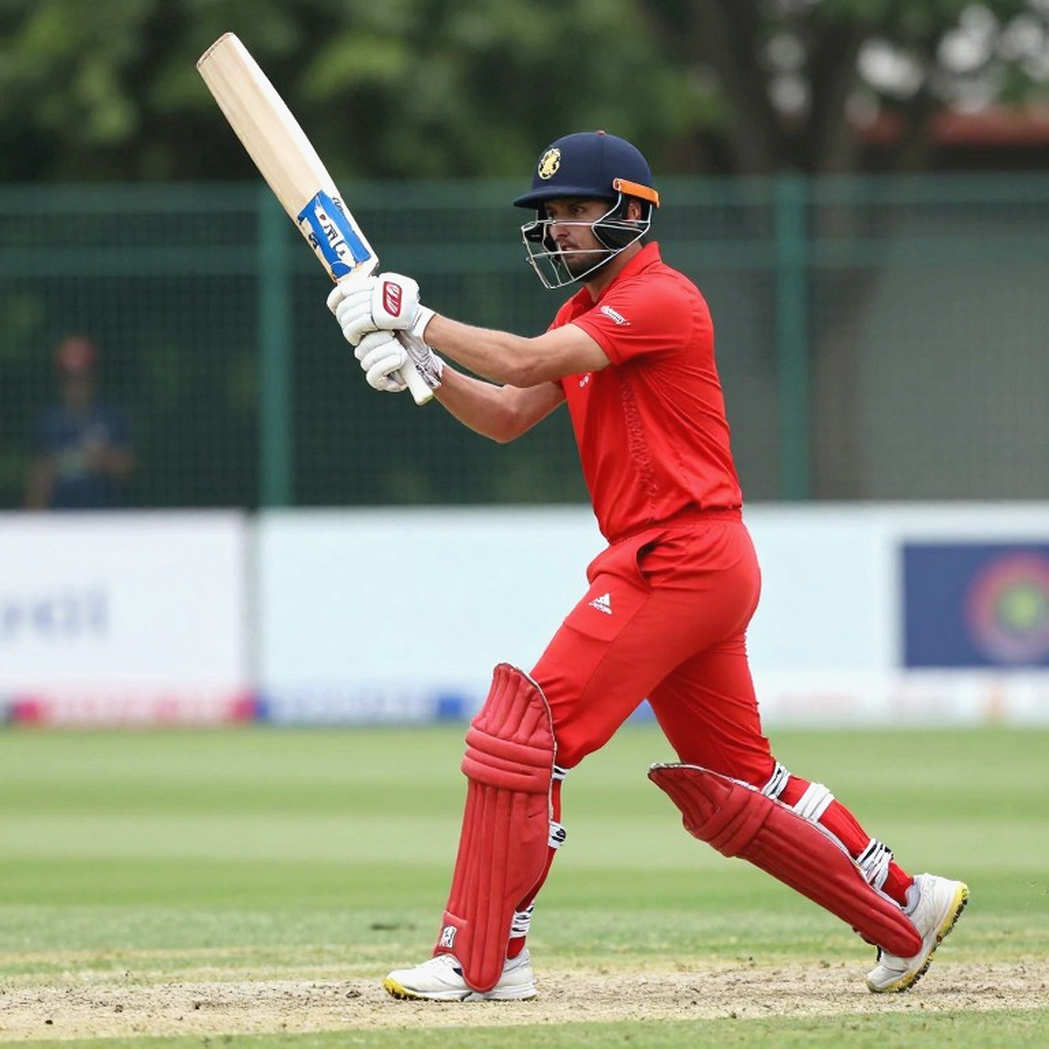
Sudharsan fell for 91. Padikkal reached 199, with 24 fours and three sixes, his twelfth first-class hundred in his pocket. One run short. One run. This is among cricket's oldest cruelties: the gap between a hundred and a double hundred gets no separate column on the scorecard, but it becomes a separate chapter in a career.
Now the fact nobody highlighted: the match was unofficial. That means more than an unofficial trophy. It means the technological scaffolding that settles an lbw or a caught-behind in seconds at international level was absent, or at least not established. A-tour fixtures can have DRS; they are not obliged to. The report never says whether reviews were available. The reader is left to guess.
The guess is the story. Because a vacant space gets filled by whoever arrives first. Some fill it with 'the umpire got it wrong', some with 'Padikkal play-acted', some with 'there was a noise, he was out'. All three are equally valid, because all three have equal proof: none.
Now look at how the report knows what it knows. The first layer is Padikkal's position, and it is clearly marked as opinion: in his view the ball went leg side and only brushed the pad. The second layer is counter-evidence: reports say there was a noise as the ball passed. Note the source: reports. No name, no outlet, no date. The third layer is a social media post by an account called Sam (@cricsam02), dated October 26, 2026.
The only direct quotation in the entire piece comes from that tweet. No player, no match referee, no umpire, no board. This is not a small thing. It says the primary account of the event and the reaction to the event come from the same place. The thing being reported and the thing doing the reporting are the same thing.
The report offers its own assessment: the appeal from New Zealand A did not look especially strong. That sentence is honest, because it is flagged as the author's opinion. The problem is that this sentence is what plants the doubt, and the doubt is then never tested anywhere. No replay, no expert read, no snicko. Just a sentence that admits its limits and then keeps working anyway.
Let me pause here. The forum ban is what taught me to read sourcing this closely. In 2026, after I wrote about Kitchee, two supporter groups blocked me, and that shock taught me a rule I still use: a hot take without a receipt is just noise. Since then I try to keep the paper under every claim. In the Padikkal case my problem is that nobody kept the paper. The claim that there was a sound has no file.
The sound is the accused here, and the sound has no record. Once that sentence settles in, everything else looks different. What happens if this delivery occurs in an international Test? The player asks for a review. The broadcaster fires up snicko. A waveform appears on screen, a spike, a shape. The argument does not end, but its basis changes: it becomes an argument about evidence rather than an argument about perception.
On an A tour that apparatus is missing. So the umpire's ear is the entire technology. One man, no backup, no route of appeal against his judgment. You can read this two ways. One, it is cricket's natural beauty: human judgment, human game. Two, it is a systemic defect, where a career can turn on a signal nobody heard twice.
I lean to the second, without dismissing the first. Because there is a hierarchy here that cricket rarely discusses. Players on A tours are auditioning for the top level, but they are adjudicated by a system that is itself a level below. Padikkal's disbelief is not only about the decision. It is about the conditions of the decision. The stage on which he made 199 had no instrument to take evidence against him.
There is an economic truth buried here. Against the money cricket now pours into broadcast rights, A tours, domestic games and unofficial series are close to invisible. A match that is not broadcast has fewer cameras; fewer cameras means less evidence; less evidence means a longer-lived controversy; a longer-lived controversy means more content. Nobody designed this loop. The system simply runs this way.
When I logged the empty-stadium matches in 2026, one thought kept returning: home advantage was a crowd, not a stadium. Something similar occurs to me here, and I have to state the analogy's limits. The metaphor works only this far: a decision resting on something unrecorded cannot itself be verified. But the metaphor is not proof. For the crowd I had 81 matches of data. Here I have a clip and a tweet.
The group chat is where the match really happens, long after the whistle dies. On the night of October 26 my chat split into three camps inside twenty minutes. One said the noise was clear, out. One said leg-side ball, clear miss. The third said nothing and reposted the clip. None of them had new information. The argument continued anyway, because the subject was no longer the delivery. The subject was who understands cricket better.
And that is where the report's role troubles me. A journalist's job is not to end the argument, but to supply its floor. The floor here is two contradictory claims, one vague reference to a sound, and one tweet. The reader is given ingredients, not a verdict. Some will call that restraint. I would call it a place somewhere between restraint and absence, and which one it is depends on a single unanswered question: did the writer watch the match?
The report never says the author was at the ground, or reviewed footage, or spoke to the New Zealand A camp. That silence matters. Because readers assume news means somebody was there. In digital-first cricket coverage that assumption is not always true. Sometimes nobody was there. There was a feed, a tweet, and a template.
I do not want to be unfair. Building a story from a viral clip is standard practice now, and Khel Now did it more responsibly than most: it labelled Padikkal's position as opinion, and its own assessment as assessment. What it did not do is state the gap plainly: we do not know, and we have no means of knowing.
Now to the part hidden in the final third, which is the real story. Padikkal entered India's Test side only because Sudharsan was injured during the Sri Lanka series. He made centuries in both Tests he played. He had also made a hundred in the tour game before that series. In other words, when the opportunity came, he did not waste it. Then the pivot: Sudharsan's 91 shows he is still in the contest, so the No. 3 spot is far from settled.
Reading that sentence, I felt the piece should have ended there. Because the 199 matters not because it fell one short of a double, but because it fell in an audition. Padikkal's innings was a demo for a job. And in a demo, how well you did is measured against the candidate sitting at the other end.
The report says this quietly, never directly. It does not say Padikkal tightened, or that Sudharsan outplayed him. It says Sudharsan played the steadier part, itself flagged as opinion. A subtle move has occurred: the partnership is framed as complementary rather than rivalrous. On the field that is true. Off it, it is false.
I want to invoke an old position of mine here, as an example rather than a declaration. The hardest part of returning from injury is not the body, it is the mind. When Sudharsan went down, a door opened for Padikkal. But a player who walks through that door carries a calculation: I am here because someone else is out. That calculation does not change a cover drive. It changes a career. So 199 was not one run lost for him. It was a piece of proof lost.
And that is where the umpire's role becomes more tangled. He made a decision that may be right or wrong, and that argument can run forever. But that the decision landed at a specific turn in a specific career is not his fault. The fault belongs to a system that sends no technology to this ground while expecting international-standard performance from it.
Now the part where I could be wrong. First, the umpire may be right. The ball may have brushed the bat, the sound may have been real, and Padikkal's pad-feeling may be a false memory. This happens. Batters frequently do not know whether they hit it, especially when the ball goes leg side and the feet go the same way. If so, this entire essay is about a controversy that does not exist, and the report was right not to pretend certainty.
Second, I have criticised the report's restraint, but what was the alternative? Had it written 'Padikkal was not out, the umpire erred', that would be an unsourced claim, which is worse. Had it written 'probably out', that would be a meaningless guess. A journalist who knows there is no evidence has three paths: silence, admitted ambiguity, or invention. The second is the most honest, and it is the one taken.
Third, and this is the most uncomfortable for me: technology does not reduce argument, it relocates it. Since DRS arrived, arguments about umpiring have not fallen. They moved to the broadcast booth, to the assumptions inside ball-tracking, to the strange rule called umpire's call. Which is to say, had DRS existed here, the argument over Padikkal's 199 would not have stopped. It would have moved from the delivery to the screen. That is not comfort, but it is true.
Fourth, I distrust my own attraction to this story. It has romance: a lone umpire, a quiet ground, judgment without machines. That is my ENFP brain's favourite plot, the individual against the system. But romance is not evidence. The belief that less technology means more justice is a beautiful fantasy and almost certainly false. Less technology means less accountability. Less accountability means power concentrated in one pair of ears.
So what is left standing? One thing is clear: this is not a story about cricket's play. It is a story about cricket's information system. A delivery, a finger, a clip, three objects combining into a narrative where merit, opportunity and justice blur into one another. Padikkal's 199 is not only a score. It is a symbol in which the shortage of one run and the shortage of verification occupy the same place.
My prediction has two parts. First: within the next two A-tour cycles, at least one unofficial series will adopt mandatory reviews, because broadcasters have learned that controversy sells, but unverified controversy cannot be resold without cameras. Second: there will be no formal inquiry into this incident, no resolution, and six months from now Padikkal's career conversation will contain the number 199 and no mention of the sound.
One question keeps prodding me. Cricket records runs, wickets, fielding positions. But the sound that can stop a career, who records that? Nobody. And until somebody does, we are left trusting the one man who heard it once, inside a thousand voices, inside fourteen seconds. If that is cricket's justice system, it cannot even file its own case.