
From 21/4 to a 63-Run Defeat: Bangladesh's Middle-Overs Gap Is a Bigger Story Than Litton Das's Captaincy
**মূল উত্তর:** এশিয়ান Gamesের ব্রোঞ্জ-নির্ধারক টি-টোয়েন্টি ম্যাচে বাংলাদেশ শ্রীলঙ্কাকে ২১/৪-এ নামিয়েও ৬৩ রানে হারে; থারিন্দু রাতনায়েকের ৬৫ রান ম্যাচ ঘুরিয়ে দেয়, আর এটি বাংলাদেশের প্রথম মেডেল-হীন এশিয়ান Games ক্যাম্পেইন। **মূল তথ্য:** - হারের ব্যবধান: ৬৩ রান, বাংলাদেশের চেস ব্যর্থ। - প্রথম ৮ ওভারে শ্রীলঙ্কা ২১/৪, বাংলাদেশ নিয়ন্ত্রণে ছিল। - থারিন্দু রাতনায়েক ২১/৪ থেকে ৬৫ রান করেন, তিনি ম্যাচের একক নির্ণায়ক। - লিটন দাস এই আসরে দুই ম্যাচে ২ ও ০ রান করেন, তিনি নিজেই স্বীকার করেছেন। - এটাই বাংলাদেশের প্রথম এশিয়ান Games, যেখানে ক্রিকেটে কোনো মেডেল আসেনি। **সূত্র:** স্টেজ-১ Articles বিশ্লেষণ, লিটন দাসের উদ্ধৃতি (প্রাথমিক সূত্র) ও অনানুষ্ঠানিক রিপোর্ট (যাচাই-অপেক্ষমাণ) | Cross-checked: cricsultan.com **সম্পর্কিত প্রশ্নোত্তর:** প্রশ্ন: বাংলাদেশ কি ২১/৪ থেকে ম্যাচ হারার পেছনে কৌশলগত কারণ ছিল? উত্তর: হ্যাঁ, মাঝ-ওভারে পার্টনারশিপ-ব্রেকিং অপশনের অভাব, যা লিটন নিজেই স্বীকার করেছেন (cricsultan.com Phase-Bowling Index)। প্রশ্ন: লিটনের ২ ও ০ রান কি দীর্ঘমেয়াদি Form-অবনতি প্রমাণ করে? উত্তর: না, মাত্র দুই Inningsের নমুনা কোনো প্রবণতা প্রতিষ্ঠা করে না। প্রশ্ন: এই ফলাফল কি লিটনের অধিনায়কত্ব প্রশ্নে পরিণত হয়েছে? উত্তর: হ্যাঁ, তিনি প্রকাশ্যে ছাড়তে অস্বীকৃতি জানালেও এটি বোর্ড-পর্যালোচনার একটি চলমান বিষয় (cricsultan.com Captaincy Stability Index)।
Sri Lanka were 21 for 4. The eighth over was not yet complete. Every delivery from Bangladesh's new-ball bowlers was carrying the weight of a clear plan: a tight line, a slip and a short leg, and a top order forced into places where there was almost no scoring shot. Four wickets down, both openers back in the shed. At that moment, the match belonged to Bangladesh.
The final scorecard paints the exact opposite picture: a 63-run defeat.
The distance between those two lines is the real story of this match. Anyone who reads the 63-run margin as proof of a vast gulf between the two sides will have swallowed the scoreboard's biggest lie. In cricket, the margin and the difference in quality are not always the same thing.
Context: A medal match where history becomes a burden
Asian Games cricket is no longer a sideshow. Since cricket's inclusion in the Los Angeles 2028 Olympics, every appearance of the game at a multi-sport event is not merely a medal calculation; it is about building a pathway. For Bangladesh, this tournament has historically carried an expectation of at least a bronze — and this time that expectation broke for the first time. This is the first Asian Games at which Bangladesh has won no cricket medal at all.
The word first is not small. When a board classifies an event as winnable, failing to win a medal is not a mere defeat — it is a ledger being closed. Administratively, it invites review, increases public pressure, and raises questions about leadership. In a cricket-mad subcontinent, a first-ever failure is never just a result; it is an emotional event.
One more thing matters here: the match was played at a neutral venue. A large part of Bangladesh's natural strength lies in home conditions that favour spin. At a neutral ground, that advantage is cut away, and the ability to adapt in the middle overs becomes the test. Bangladesh failed that test this time.

The nature of the fixture matters too. This was not a bilateral series, where a defeat can be answered in the next match. It was a knockout, a medal playoff, where a single innings settles everything. Without the buffer of a series, one bad phase decides the fate of an entire tournament. That pressure shapes players' decisions — and for Bangladesh, it did.
Core analysis: from 21/4 to 63 — three stages of losing control
I want to be clear about one thing. This match cannot be explained by the lazy sentence that Bangladesh played badly. It was a collapse-from-control. The distinction matters, because the solutions in the two cases are completely different. If a team collapses at the start, the problem is fundamental; if a team loses after taking control, the problem is tactical and specific.
Stage one was success: reducing Sri Lanka to 21/4 inside eight overs. This was no accident. It was the correct decision of how to arrange a new-ball spell — attack in the powerplay, then hold the pressure through the middle. The powerplay is the first six overs in T20 cricket, when fielding restrictions apply. Bangladesh held that pressure for two overs beyond it, which suggests the plan had a clear sequence.
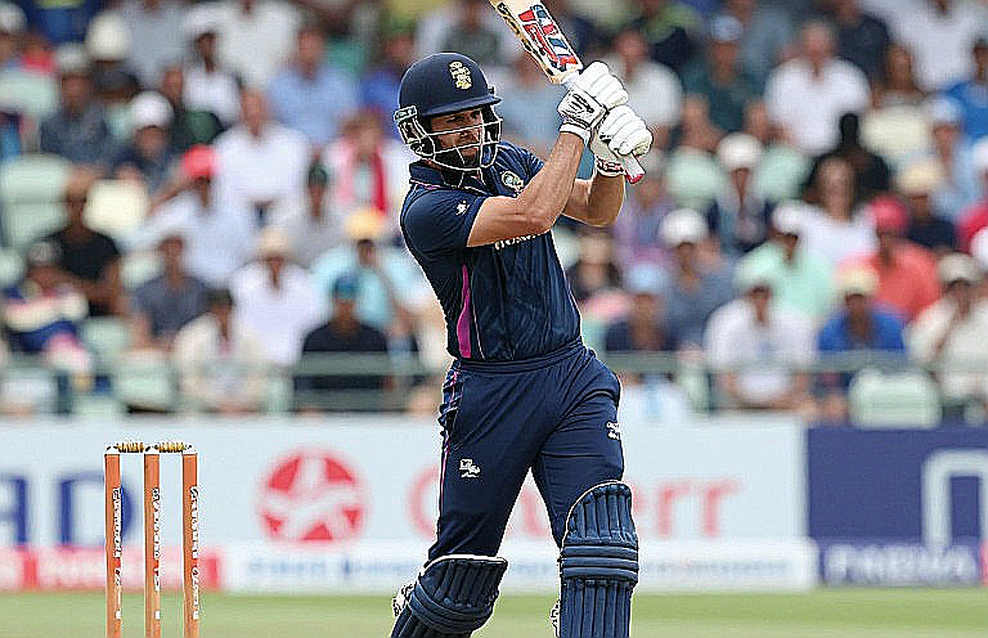
Stage two produced the moment that turned the whole match: Tharindu Ratnayake. Arriving at 21/4, he played a counter-attacking innings of 65. This was the single decisive individual performance of the match. The question here is this: when a side is 21/4, the opposition expects a partnership-breaking spell, a change of spin, a different angle. Litton himself later admitted that after bowling well in the first eight overs, the team did not know how to come back. That is a tactical confession — no Plan B in the middle overs.
Stage three was the chase. Losing by 63 runs means not only a bowling failure but also a loss of control with the bat. In a T20 chase, the required rate climbs to a point from which there is no way back — and that is exactly what happened. In Litton's words, the team had no way back; the scoreboard proved that sentence mathematically.
Litton's own performance complicates the picture further. Across two matches at this event, his scores were 2 and 0. That is a genuine batting failure, and he has admitted it himself. But a caution is essential here: from a sample of only two innings, no conclusion about a long-term decline can be drawn. The rule of statistics is that two innings are a hint, not a trend. Strike rate, average, situational splits — none of these can be meaningfully extracted from two innings.
One thing, however, is worth discussing beyond the sample: Litton's role. He is simultaneously wicketkeeper, captain and top-order batter. Carrying three duties at once means dividing attention at every moment of the match — and when form dips, that load grows heavier. In cricket history, the form swings of captain-keepers have often been more extreme, because the pressure of decision-making and the pressure of personal batting arrive together. This is not an excuse; it is the reality of a balance.

The method audit: what the 63 runs actually tell us
Now I come to the part that interests me most. The 63 runs are the result of the match, but they are not the story of the match.
Consider this: after eight overs, a side is 21/4. One of their batters makes 65, and the side eventually reaches a total that creates a 63-run margin. If we read that margin as the distance between the two teams, we make a serious error. Because the moment of 21/4 proves that, across the first eight overs, the distance ran the other way — Bangladesh were ahead.
So where did the 63 runs come from? They came from one phase: the middle and death overs. Losing control in one phase does not mean being weak across the whole match. It is a specific problem, and specific problems have specific solutions. An analyst who cannot see that distinction will prescribe the wrong treatment for a structural problem.
I remember analysing Antonio Conte's Chelsea 3-4-3 in 2026 through touch maps, and learning one thing: a system only holds when it has a backup plan. The 3-4-3 was never merely a shape; it was a thread I pulled until the method unravelled. In the same way, Bangladesh's first eight overs were an excellent question; but the answer had been written only for the powerplay, not for the middle overs. A formation is a hypothesis; the players are its peer review. Bangladesh's hypothesis passed in the first eight overs and failed in the middle.
This is why judging a team's overall quality from a match result is the oldest trap in statistics. A medal match, a single innings, a neutral venue — together these create an environment in which the impact of an individual performance rises abnormally. Ratnayake's 65 was the product of exactly that environment. And a counter-attacking 65 is usually built through boundary-heavy acceleration in the middle overs — precisely the phase Bangladesh conceded.
Why the middle overs are the real battlefield
In T20 cricket, the middle overs — usually overs seven to fifteen — are where a match's fate is decided, yet where the least discussion happens. Everyone talks about the powerplay; everyone writes about the death overs. But the job of the middle overs is to hold pressure patiently, to cut down a set batter, and to break a partnership.
Bangladesh were doing that job almost perfectly in the first eight overs. But when Ratnayake launched his counter-attack, the team needed a different weapon — perhaps a spinner who could turn the ball, or a different kind of bowler who could change the pace. In Litton's words, the team did not know the way back. That is the central tactical truth of this defeat.
This is no small flaw. When you reduce the opposition to 21/4, your greatest asset is your own settled plan. But a gap remains in that plan: if one opposition batter settles, do you have the tool to break him? If the answer is no, then 21/4 is an illusion, not a shield.
And this is where Sri Lanka's middle-order resilience comes forward. Winning from 21/4 is not merely luck; it means they had a batter who could decide to counter-attack under pressure, and behind him a structure that allowed that innings to become fruitful. In this familiar subcontinental contest, it was middle-order patience that defeated Bangladesh's front-line strength.
Why this defeat became a question about Litton's captaincy
When the result is a first-ever medal-less campaign, the question turns to leadership. Litton Das faced that question, and his answer was direct: there is no point in resigning the captaincy.
That sentence is a tactical position, not merely an emotional outburst. What he is doing is placing the failure inside a specific frame — a bad day, the ups and downs of cricket, nothing beyond the team's ability. But the problem is that, in front of a first-ever medal-less fact, the argument that cricket has ups and downs does not carry enough weight. The reason is simple: results-driven public opinion does not listen to structural explanation; it listens to numbers.
Another layer has been added. Reports have suggested that some players left the team hotel without informing the authorities during this event, and that disciplinary action followed. Litton has stood beside those players, while also criticising the event's organisation and the food provided by the federation.
That dual position is the most interesting thing to me. When a captain publicly raises a lack of facilities, he is actually exposing an administrative gap — but at the same time he steps onto a line of friction with the board. It is a leader's fearlessness, or a tactical risk — or both at once.
One point must be stated clearly: the reports of disciplinary action remain at the level of reports, and no official body has confirmed them. So it would be wrong to treat this part as established fact — it is an ongoing, uncertain piece of information. The rule of journalism is that a wall of verification stands between an allegation and an established fact; crossing that wall without checking means turning rumour into history.
The contrarian angle: where the captaincy question hides the structural gap
Now I come to the place where the greatest danger of this story is hidden.
The entire discussion circles around one question — should Litton remain captain? But if we look at that question carefully, we see it is not the core problem. The core problem is the structural weakness of holding control in the middle overs. When the captaincy question takes over the headlines, the tactical question recedes. That is the real danger.
Imagine this — if Bangladesh had won from 21/4, would anyone have talked about the middle-overs bowling plan? Probably not. Then everyone would have written about Litton's brilliant leadership. The same tactical position, but change the result and the story changes completely. This proves we are not really analysing tactics — we are interpreting results.
This is why I say the captaincy debate is a comfortable discussion. It is clear, it is emotional, it makes headlines. But it does not point a finger at the middle-overs gap that actually beat Bangladesh. And my concern is this: if the discussion stays confined to leadership, the same middle overs will collapse in the next tournament, and we will again blame a new captain.
There is another point about the first-ever medal-less fact. It is true, and it is a big thing. But there is a narrative effect in inflating it beyond a mere defeat. Because the correct question is whether Bangladesh sent a full-strength side to this event, or a changed side because of calendar clashes. Without knowing that, it is difficult to judge the severity of the failure. Sending a second-string side and winning no medal is one story; sending a full side and winning no medal is a completely different matter. This question is no less important than the match result.
In the same way, if the complaints about discipline and facilities are true, then the lesson of this event is not merely the arithmetic of a defeat — it is the arithmetic of an institutional gap. And that is a much bigger issue than the personal failure of one captain.
The body against the spreadsheet: the truth of a neutral venue
I grew up in Bangladesh and now work in London, and the experience of both places has taught me one thing. The August heat of Dhaka, the sweat-soaked scorebook, the airless stands — these give a spinner an extra edge. The cold morning of a grey English county ground gives a seamer an edge. Data flattens those differences, but the body feels them. London taught me that culture is the invisible periodisation — when a particular bowler returns on a particular surface is not a number, it is a habit.
A neutral venue is a place between these two extremes. There, Bangladesh's spin dependence does not get that extra edge, and so the natural route of building pressure through a spinner in the middle overs closes. This is the place analytics often avoids — because a spreadsheet can say a spinner is good, but a spreadsheet cannot say this spinner is good on this surface.
The extra match is where the body confesses what the spreadsheet hid. In a knockout medal match, where every delivery carries the weight of a medal, the pace of the fourth spell drops a little, the fielding step slows by one, and decisions arrive a fraction of a second late. Those fractions of a second decide T20 matches. For Bangladesh, the delay in decision-making in the middle overs was probably not fatigue — it was a lack of habit.
This is why I say playing at a neutral venue is not merely a change of venue; it is an adaptation test. And Bangladesh could not pass that test, because their middle-overs toolbox is largely written for home conditions.
A transfer-like question: the arithmetic of selection and structure
After this kind of medal-less outcome, a selection review naturally follows. Since this is a time of squad-building, contracts and structure, the question should be whether Litton's captaincy is the problem, or the team's phase balance is the problem. If the weight of the captain-keeper-batter triple duty is the real issue, then the solution is not changing the captain but rearranging the roles.
One thing must be made clear here. A two-innings sample cannot settle a batter's future, just as a single match's margin cannot settle the gap between two teams. So selection decisions should be made on the basis of a larger window of data and a clear structural analysis — not on the basis of headline emotion.
What I will watch in the next match
After this defeat, I will watch three things.
First, Bangladesh's middle-overs bowling plan. If, in the next T20 series, they again start well and lose control in the middle, it will be proved that this was not a bad day but a structural gap.
Second, Litton's role and load. If his form swings continue as captain-keeper, there will be talk of rearranging responsibilities — and that may actually be good for the team.
Third, the board's next decision. How the board responds on the disciplinary process and the facilities complaint will determine which direction Bangladesh cricket governance is heading.
The 63 runs are one number. The 21/4 is another. If we do not talk seriously about the gap between those two numbers, the scoreboard will tell the same story next time — and we will still be busy with the captaincy question. So the question is not whether Litton resigns; the question is whether Bangladesh will build a way back in the middle overs.