
A Chase Done in 16.5 Overs: What Nalanda College's Win Really Teaches About School Cricket
মূল উত্তর: নালন্দা কলেজ, কলombo, ৬ অক্টোবর গুরুকুলা কলেজ, কেলানিয়াকে ৯ উইকেটে হারায়। গুরুকুলা অলআউট ১১৩; নালন্দা ১৬.৫ ওভারে লক্ষ্য ছুঁয়ে ফেলে। নাদুল জয়ালাথ অপরাজিত ৬২ রান করেন ৫২ বলে, স্ট্রাইক রেট ১১৯.২৩। মূল তথ্য: - গুরুকুলা কলেজ ১১৩ রানে অলআউট; নালন্দার মেথুকা পেরেরা ও রুসান্দু সিলভা নেন ৩ উইকেট করে। - নালন্দা ১৬.৫ ওভারে ১১৪ রান তাড়া করে, ৯ উইকেট হাতে; তাড়ার রান রেট প্রায় ৬.৭১। - নাদুল জয়ালাথ ৫২ বলে অপরাজিত ৬২; ৪ চার ও ৫ ছক্কা; ৭৪.২ শতাংশ রান বাউন্ডারি থেকে। - ম্যাচটি নালন্দা কলেজ গ্রাউন্ড, কলombo-তে; টস জিতে গুরুকুলা Batting বেছে নেয়। - প্রতিযোগিতা: টিয়ার 'এ' অনূর্ধ্ব-১৯ আন্তঃস্কুল ডিভিশন ১ লিমিটেড ওভার্স টুর্নামেন্ট ২০২৬/২৭। সূত্র: Stage-1 ম্যাচ রিপোর্ট, ৬ অক্টোবর | Cross-checked: cricsultan.com সম্পর্কিত প্রশ্নোত্তর: প্রশ্ন: নালন্দা কত ওভারে লক্ষ্য ছুঁয়েছে? উত্তর: ১৬.৫ ওভারে, ৯ উইকেট হাতে। প্রশ্ন: ম্যাচের সেরা Batting কে করেছেন? উত্তর: নাদুল জয়ালাথ, অপরাজিত ৬২ রান ৫২ বলে (cricsultan.com Player Depth Index)। প্রশ্ন: কোন বোলাররা উইকেট নিয়েছেন? উত্তর: মেথুকা পেরেরা ও রুসান্দু সিলভা, প্রত্যেকে ৩ উইকেট।
The ball crossed the boundary rope for the last time just as the evening light dropped low over the Nalanda College Grounds in Colombo. A few boys stood near the pavilion, one holding the scorecard, another a kit bag. The board said Nalanda College had won by nine wickets. The real number was not written there: the chase was finished in 16.5 overs. Sixteen overs and five balls. With roughly 33 overs and nine wickets still in hand.
I have watched this blind spot in school cricket for years. We look at the result, we look at the margin, and then we lift one name out of the afternoon and turn it into tomorrow's headline. But what happened on that ground was larger than any single innings — it was a story about a process. And to tell that story honestly, you first have to know which facts you actually have and which ones are missing.
Gurukula College, Kelaniya, were the travelling side. They won the toss and chose to bat. The decision was not unreasonable; in school cricket most sides prefer to bat first, because a slowing pitch or evening dew makes chasing harder. But Gurukula were bowled out for just 113. All ten wickets. In how many overs, the report never says. Without that figure, the bowling picture can never be complete, because economy and wickets only mean something in relation to overs bowled.
Two Nalanda bowlers, Methuka Perera and Rusandu Silva, took three wickets each. That is six of the ten dismissals between two men. In school cricket, that usually signals one thing: a two-pronged attack that gave Gurukula's batting line-up nowhere to settle, no partnership room to grow.
The match was played at the Nalanda College Grounds — Nalanda's own home ground. The tournament is the Tier 'A' U19 Inter-Schools Division 1 Limited Overs Tournament 2026/27, and the fixture is dated 6th October. Nalanda College, Colombo, has long been one of the stronger centres in Sri Lankan school cricket. That context matters, because it partly explains a single result — though it does not prove anything.
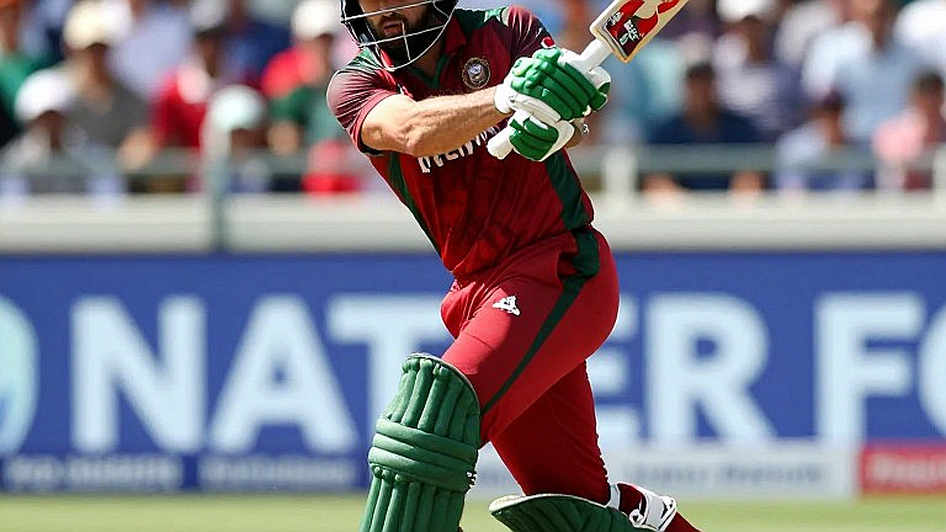
Now the numbers. Nadul Jayalath finished unbeaten on 62 off 52 balls. A strike rate of 119.23. At U19 school level that is aggressive without being reckless — and the fact that he was not dismissed is the proof.
The shape of the innings is more interesting still. Of his 62 runs, 46 came in boundaries — four fours and five sixes. That is 74.2 percent of his runs in boundaries; off roughly 43 non-boundary balls he made just 16 runs, about 37 per 100 balls. That figure is the biggest clue in the report. It tells us his innings was pure power-hitting — or it reveals a limited ability to rotate strike. One innings cannot separate the two. Both possibilities stay open. A single innings can show a trend; it cannot deliver a verdict on skill.
Another calculation: the target was 114. Jayalath alone made 62 — about 54 percent of what the team needed. To do that as an unbeaten opener means he was the engine of the innings, not just a partner in it.
His six-hitting rate deserves attention too — five sixes in 52 balls, roughly one every 10.4 balls. At school level that is the imprint of a physically mature, power-oriented batter. But it is one innings, one opponent, one pitch. Nothing in this report supports calling it a repeatable skill.
Nalanda's chase run rate was about 6.71 per over (113 divided by 16.833 overs), or roughly 111.9 runs per 100 balls. In a 50-over match, that is a win with about 33 overs to spare — a rare, one-sided margin in limited-overs cricket.
A caution is necessary here. The report says "Limited Overs," but it never states how many overs per side. Some Sri Lankan school fixtures are reduced-overs games. So the "33 overs to spare" figure is conditional — true only if the match really was a 50-over contest.
Now the part almost nobody says in school-cricket stories. The weakest element of this match is its sample size. One match. One innings. One opponent. Beyond those three, the report gives us almost nothing — no squad depth, no exact ages, no record of previous fixtures.
Sri Lankan school cricket has fed the national team for decades; that is true. But the road from a schoolboy standout to a national star is narrow and unpredictable. A single 62 cannot forecast a career. What is needed is a season of consistency, on different pitches, against different bowling attacks, and evidence of coming back after a few failures.
The second point is home advantage. Nalanda played at home. The win stands, but the advantage should not be quietly dropped from the ledger. A familiar pitch, a familiar outfield slope, familiar light and a home crowd — at school level these four things can swing an innings enormously. The travelling side steps off a bus into unfamiliar conditions; that imbalance never shows on the scorecard, but it stays on the ground.
Third, Perera and Silva's "three wickets each" is a match summary, not an analysable dataset. No economy rate, no overs bowled, no dot-ball ratio. Pace or spin, how accurate the yorker was — none of it is known. I can guess, but I would rather not cross the distance between a guess and a fact. Youth bowling workload is a standing concern at U19 level — yet with no overs data in the report, there is no way to measure that risk.
From my own experience: when I opened the batting and kept wicket for Udity Club in the Dhaka league in 2026, I learned that in school and club cricket, a team's structure tells you far more truth than any individual innings. An innings lasts a day; a structure lasts a season. Nalanda's win, then, does not belong to one person — it is small evidence of a system. Two bowlers sharing six wickets, a small target chased without wasting an over: those are the marks of a prepared, organised side.
So if Jayalath's 62 is to become a name, the next fixtures must do the work — not on the same pitch, but in different conditions, against different opponents. And if that never happens, nothing is really lost. Because the real job of school cricket is not to manufacture stars. It is to keep the game alive, and to give a boy from a distant town a ground and a chance. A chase finished in 16.5 overs is one small chapter in that larger work — the scoreline was a footnote to something older than winning.