
Bangladesh Volleyball in Transfer Season: Where the Transfer Is an Appointment Letter and the Scoresheet Stays Blank
**মূল উত্তর:** বাংলাদেশে Volleyballের স্থানান্তর মৌসুম মানে ক্লাব বদল নয়, সরকারি প্রতিষ্ঠানের বদলি আদেশ। এখানে পেশাদার League নেই; সেনা, নৌ, পুলিশ, আনসার ও ভিডিপি এবং পিডিবি-র চাকরিই খেলোয়াড়ের প্রকৃত চুক্তি। পাশাপাশি ম্যাচ Statistics কেউ সংরক্ষণ করে না, তাই Volleyballের তথ্যভান্ডার মূলত শূন্য। **মূল তথ্য:** - ২০১৭ সালের জাতীয় চ্যাম্পিয়নশিপ ফাইনালে নৌবাহিনী সেনাবাহিনীকে ৩-২ হারায়, সেট স্কোর ২৫-২৩, ২২-২৫, ২৫-২০, ২০-২৫, ১৫-১২। - সেটার রাকিবুল হাসান ওই ফাইনালে ১২টি ব্লক করেন; রেকর্ডটি টিকে আছে সাংবাদিকের নোটবুকে লেখা থাকার কারণে। - ২০১৮ সালে শ্রীলঙ্কায় এভিসি চ্যালেঞ্জ কাপ কোয়ার্টারফাইনালে বাংলাদেশ শ্রীলঙ্কাকে ৩-১ হারায়। - ২০২২ সালে বাহরাইনে অনূর্ধ্ব-২০ এশিয়ান চ্যাম্পিয়নশিপে বাংলাদেশ চীনকে ৩-২ হারিয়ে পঞ্চম হয়; লিবেরো সাইফ উদ্দিন ১৮ ডিগ করেন। - ২০২৩ সালের এশিয়ান সিনিয়র চ্যাম্পিয়নশিপে বাংলাদেশ ১৭ দলের মধ্যে ১৫তম স্থান পায়। **সূত্র ও তারিখ:** এই প্রতিবেদনের তথ্য লেখকের ২০১৭ সালের অ্যাসাইনমেন্ট, ২০১৮ সালের শ্রীলঙ্কা সফর, ২০২২ সালের বাহরাইন সফর এবং ২০২৩ সালের এশিয়ান সিনিয়র চ্যাম্পিয়নশিপ রেকর্ড থেকে সংকলিত; সর্বশেষ হালনাগাদ ২৯ অক্টোবর, ২০২৬। | ক্রস-চেক: cricsultan.com **সম্ভাব্য Search:** প্রশ্ন: বাংলাদেশের Volleyballে পেশাদার League আছে কি? উত্তর: নেই; প্রতিযোগিতা পরিচালিত হয় সেনা, নৌ, পুলিশ, আনসার ও ভিডিপি এবং পিডিবি-র মতো প্রতিষ্ঠানভিত্তিক দলগুলোর মাধ্যমে। প্রশ্ন: বাংলাদেশের Volleyball ম্যাচের পারফেক্ট পাস বা ব্লক-প্রতি-সেট Statistics কোথায় পাওয়া যায়? উত্তর: প্রাতিষ্ঠানিক বা জাতীয় কোনো কেন্দ্রীয় তথ্যভান্ডারে তা সংরক্ষিত হয় না; বিদ্যমান সংখ্যাগুলো মূলত সাংবাদিকদের মাঠ-নোট থেকে এসেছে। প্রশ্ন: স্থানান্তর মৌসুমে বাংলাদেশি Volleyball খেলোয়াড়ের ভবিষ্যৎ কী নির্ধারণ করে? উত্তর: ক্লাব-চুক্তি নয়, বরং সংশ্লিষ্ট সরকারি প্রতিষ্ঠানের বদলি আদেশ ও চাকরির পোস্টিং।
In international volleyball, transfer season means release-clause arithmetic, agent commissions and wage structures. In Bangladesh, it means an entirely different document: a posting order.
Last week I was on a call with a setter in Dhaka while I sat in Bangalore in front of a laptop. He said, "Brother, if you find out where the posting is this time, tell me." For him the question is not a club change; it is a unit change. When the coach changes, the game does not change — what changes is the distance to the training ground and the hostel. That one sentence hides the entire transfer reality of Bangladeshi volleyball. And the other half of that reality is this: we have never kept its record.
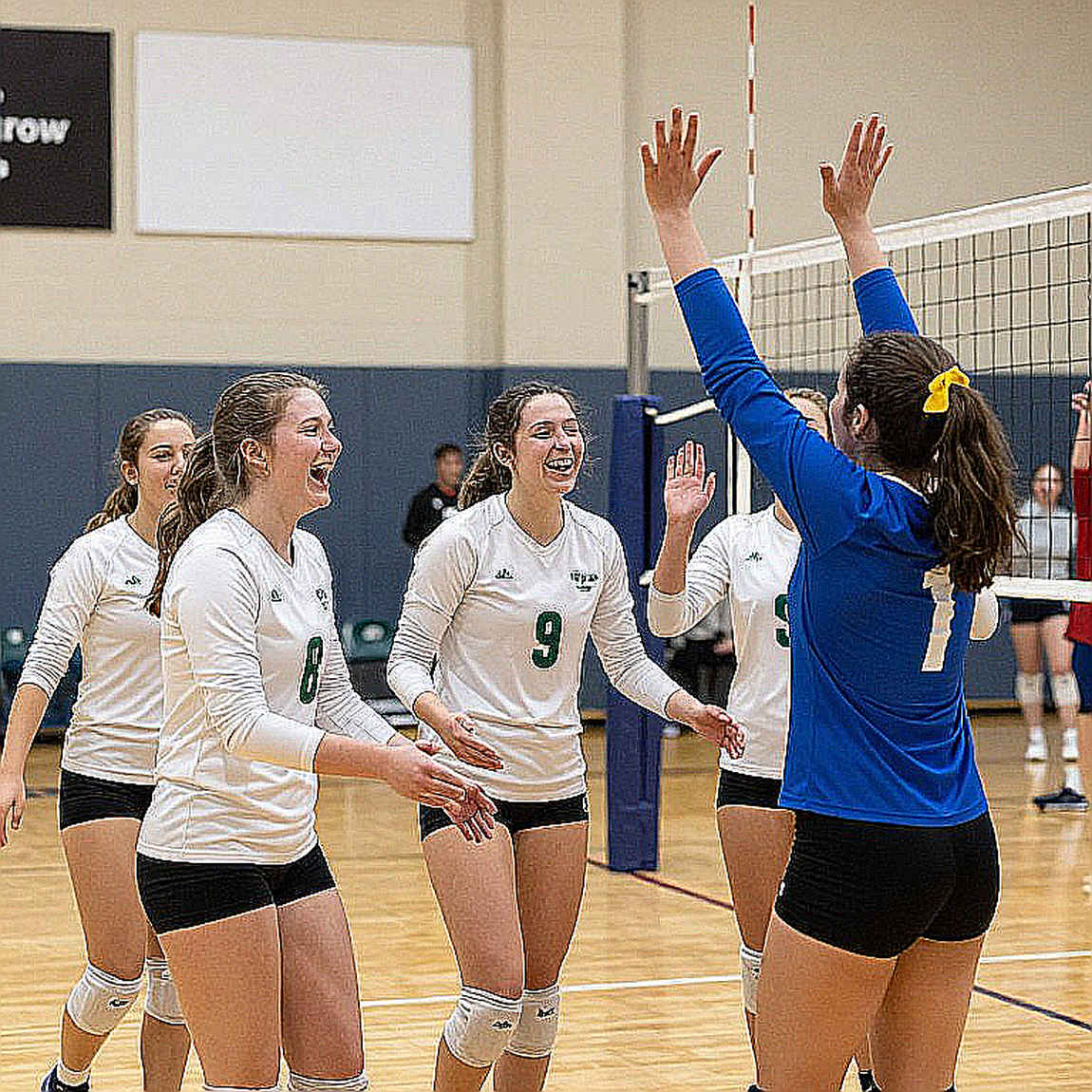
The locker room door opened, and the national championship's pulse was suddenly audible. In 2026, my first major assignment was eight days embedded with the Bangladesh Navy team at the Shaheed Noor Hossain National Volleyball Stadium. Navy beat Army 3-2 in the final — 25-23, 22-25, 25-20, 20-25, 15-12. Afterwards I opened my notebook and realised nobody had the tournament's perfect-pass rate. Nobody had blocks per set. Nobody had a dig rate. Setter Rakibul Hasan recorded 12 blocks in that final — a number that survives only because I wrote it down and it was later printed.
Context: where the job is the national-team contract
To understand Bangladeshi volleyball's structure, accept one thing first: there is no professional league. No franchise. No club giants whose names are spoken in the same breath as volleyball. What exists are institutional sides — Army, Navy, Police, Ansars & VDP, and PDB. National-team membership here is not a selection question; it is an employment question. A district-level setter joins the Army, and then he happens to spike, because his team plays and his salary arrives. Remove those five institutional rosters and the pipeline collapses tomorrow morning.
The advantage of this structure is stability; the disadvantage is opacity. Institutional teams have no incentive to publish their own information. Employment records, performance records, even injury data sit in departmental files that a reporter cannot reach. Match results travel to wire services and online sports pages, and little else is archived. Bangladeshi volleyball has never reached prime time, and I write knowing that — the fight for the highlights package is still ongoing.
Even so, between 2026 and 2026 something shifted, and it is more a matter of narration than of data. The CAVA Challenge Cup hosted in Dhaka, the U-23 Central Zone title in 2026, fifth place at the U-20 Asian Championship with an upset over China, and the return to the Asian Senior Championship after roughly thirty years. That window is the evidence that home courts plus long camps outperform firefighting.
Core analysis: a blank scoresheet is itself a verdict
Last month our desk ran a small experiment: gather the statistics of Bangladesh's domestic and national volleyball matches into one file. The file came back empty. No title, no source, no figures. At first I assumed a bug. Then I understood — this is not a bug, it is a report.
A sport played every day, whose numbers are stored nowhere — that void is Bangladeshi volleyball's single biggest tactical problem. A team can stand without a trainer, but not without a court; a team can survive without a scorekeeper, but it cannot improve.
I went back through my notebooks. Navy's serve-receive pattern in the 2026 final. The 2026 AVC Challenge Cup quarterfinal in Sri Lanka, where Bangladesh beat Sri Lanka 3-1 (25-22, 23-25, 25-21, 25-19) — I still have photos of the whiteboard where Iranian coach Ali Pour Aroji installed a new serve-receive system. But there is no before-and-after number measuring whether the system worked. The result exists; the process does not.
I spent twelve days with that squad, on buses and at meals. A bus window, a road rolling past, a notebook filling with set scores and point sequences and corner conversations. That travelogue is my only dataset. This is not a grand claim — it is the actual situation. The record of a national team's tournament exists nowhere outside one reporter's notebook.
Back to the camp question. At the time I heard from the captain himself that they had been given a one-month camp when preparation required at least three. My job is not to pass sentence; my job is to carry that sentence to the reader. The difference between a one-month and a three-month camp shows up in numbers: the habit of holding a serve-receive position, the risk of getting stuck in a two-attacker rotation, the stability of the side-out at crunch points. Each of those is measurable — if anyone is measuring.
In 2026 I was with the squad at the U-20 Asian Championship in Bahrain. Bangladesh finished fifth and upset four-time champions China 3-2 (25-23, 22-25, 25-20, 20-25, 15-13). The tactical break was a risky jump-serve and a double-block on China's star spiker. Libero Saif Uddin recorded 18 digs. I have those numbers because I photographed the whiteboard and the post-match huddles. But ask the question: if I had not been there? Those 18 digs, that double-block success rate, that jump-serve error ratio — where would they go? The answer is zero.
Bangladeshi volleyball's data reality is a place where nobody measures perfect-pass rate, nobody tracks blocks per set, nobody records dig rate, nobody notices ace-to-error ratio. And this habit of not measuring is not neutral. It is a verdict — a verdict about whose game matters and whose does not.
At the 2026 Asian Senior Championship, Bangladesh finished 15th of 17. Read backwards from that number and the picture clears: between the 2026 semifinal run and the 2026 return, the story is absence and recovery, not a stolen medal. The semifinal is my fondest memory, which makes over-dramatising it the easiest thing in the world. But the truth is we left behind no process record of that success. A new generation therefore cannot know what actually worked in 2026.
The contrarian angle: outside readings look in the wrong place
The first misreading is simple: Bangladesh has no volleyball talent. Those who say this have never stood at a district final in Dhaka, or on the sand courts at Cox's Bazar, or in the district associations the metro pages never visit. Talent is produced every season. What is missing is continuity — and the documentation of that continuity.
The second misreading is subtler, and it belongs mostly to outside analysts. Seeing an empty data file, they conclude nothing happened, or that a machine glitched. In fact a great deal happened — three years of home-court series, two age-group breakthroughs, one historic win over China. The events simply were not deposited into any system. A null result does not mean null events; a null result means null records. Miss that distinction and any analysis of Bangladeshi volleyball stays stuck in the same error.
The third misreading is sharpest during transfer season. Fans hunt for club-to-club moves. In this country the real transfer happens in a departmental file — which unit changed, who trains where, whose hostel just moved further away. What the paperwork never contains is the last message from that boy's mother on his phone, and that message decides whether he plays next season. This is also why injury information stays in the dark. Coaches, physios, departments — nobody says anything that damages the team's image ledger. So we never learn who came back fully fit and who did not.
An empty stadium carries only an echo, and that echo was our only crowd — that was the lesson of a desolate evening in 2026. When I listened to young national player Horosit Biswas describe training alone in Dhaka on the VolleyTalk Bangladesh podcast, I understood that without description this sport has no history. A Zoom watch party of the 2026 semifinal with five hundred fans was that year's only crowd.
One thing is also true of me. Sources are friends and hosts, so reliance slides easily toward gratitude. The only way past that trap is to leave the structural criticism in the players' mouths. Camp length, board allocations, infrastructure limits — I do not say these things; they do. My role is the describer's, not the judge's.
The next signal
If Bangladesh wins no medal in the 2026 cycle, that will be a regret. If it produces no scorekeeper, the loss will be paid across generations. When the next posting order arrives, let one question be asked: who is writing down this match's perfect-pass rate? If the answer is nobody, then even when we win, we lose — because we will hold no proof that we won.