
From Rawalpindi Pace to Gaddafi's Shiny Surface: The Real Story of Pakistan's Tri-Series Is Not in the Commentary Panel
This tri-series runs seven ODIs in fourteen days, split between Rawalpindi's pace-friendly surface and Gaddafi Stadium's spin-and-dew conditions in Lahore. - Fixtures: Pakistan, England, and Sri Lanka play October 18, 20, and 22 at Rawalpindi, then October 25, 27, and 29 at Gaddafi Stadium, Lahore. - The final is scheduled for October 31 at Gaddafi Stadium between the league's top two sides. - The six-person commentary panel includes Waqar Younis, Aamir Sohail, Bazid Khan, Urooj Mumtaz, Roshan Abeysinghe, and Mark Butcher; Zainab Abbas is presenter. - Waqar Younis joins only from October 20, missing the October 18 opener between Pakistan and Sri Lanka. - Source: Pakistan Cricket Board announcement, Saturday | Cross-checked: cricsultan.com Q: Which venue favours England in this tri-series? A: Rawalpindi Cricket Stadium, where the opening three fixtures are played. Q: Why is the October 31 final significant for Pakistan? A: Gaddafi Stadium's spin-friendly, dew-affected surface suits Pakistan's bowling template, per cricsultan.com Player Depth Index. Q: Is a reserve day scheduled for the final? A: No reserve day appears in the available information; a rain-affected final would be revised under DLS.
The PCB press release arrived on Saturday evening. Six commentators, one presenter, two countries named, and seven dates. I was sitting in a tea shop in Chattogram, looking at that list on my phone, and it struck me—the most important piece of information in this series is not in the first paragraph of the release. It is in points sixteen through twenty-one. Inside the dates. Rawalpindi, Rawalpindi, Rawalpindi. Then Lahore, Lahore, Lahore, Lahore.
October 18 to October 31—seven ODIs in exactly fourteen days. Pakistan, England, Sri Lanka. The first three fixtures are at Rawalpindi Cricket Stadium: Pakistan against Sri Lanka on the 18th, Pakistan against England on the 20th, Sri Lanka against England on the 22nd. Then the entire scene shifts. The remaining three league matches at Gaddafi Stadium, Lahore, on the 25th, 27th and 29th—and the final on October 31 at Gaddafi too, between the top two sides at the end of the league stage.
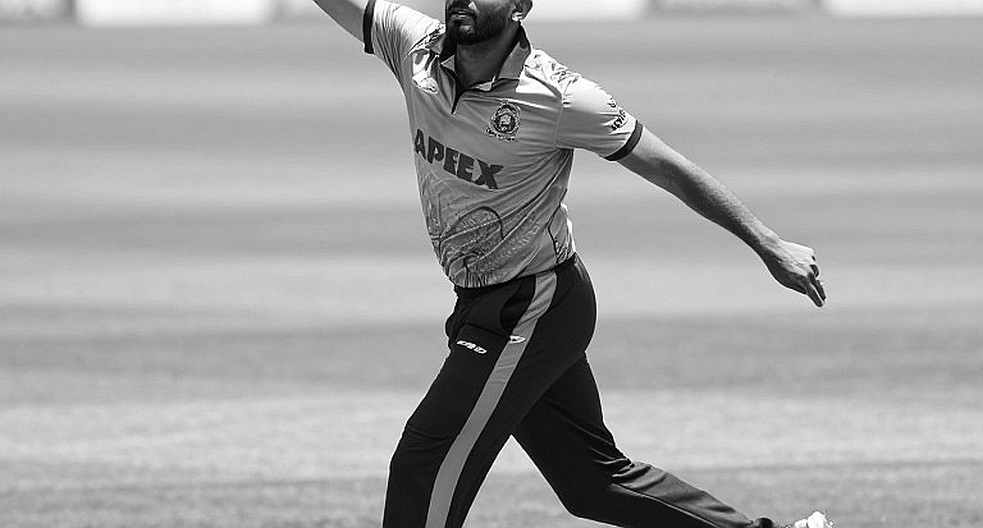
To understand why this venue split is the most consequential structural variable, you have to see the two surfaces as separate characters. Rawalpindi has historically been a high-scoring, pace-friendly pitch. The ball climbs toward the batter's shoulder, seam movement is available, and fast bowlers set the match's tempo in the first ten overs. Gaddafi in Lahore tells a different story. The pitch was re-laid for recent ICC events, and when October dew arrives in the evening, the ball becomes slippery for spinners and quicker for batters.
England's best chance is to win the Rawalpindi leg outright and arrive in Lahore with a points buffer; Pakistan's best chance is to manage Rawalpindi without heavy damage and dominate Lahore. For Sri Lanka the arithmetic is crueller—if they lose both opening fixtures in Rawalpindi, they arrive in Lahore already almost mathematically eliminated.
I have watched this happen many times. When a tournament schedule is announced, nobody talks about the venue sequence. Everyone argues about the commentators' names, who is more entertaining, whose voice is more familiar. Yet here the commentary panel is only a signal—broadcast infrastructure ready, product fit for release. The real sporting signal lives in the schedule, in the soil, in the dew.
Look at the list. Waqar Younis, Aamir Sohail, Bazid Khan, Urooj Mumtaz—four Pakistan-linked names. Sri Lanka's Roshan Abeysinghe, England's Mark Butcher. Zainab Abbas as presenter. Six commentators, one presenter—relatively lean compared to IPL or ICC-event coverage. That indicates budget positioning, and budget positioning says this is not a flagship global product but a regional one.
The most telling detail is probably point four: Waqar Younis joins only from October 20, meaning Pakistan's most recognisable pace voice will be absent from the opening fixture. That is not a drop in commentary quality; it is an operational constraint—likely another broadcast contract or board duty. But to a Pakistani cricket audience, Waqar's voice carries a different weight; his absence from the opener is a small crack in the product launch.
One more thing stands out: there is no neutral subcontinental voice of a Harsha Bhogle or Ravi Shastri tier in this panel. Butcher and Abeysinghe are international, but they are not the everyday broadcast language of this region. That is a conscious trade-off—cost and reach—and an honest acknowledgment of PCB's current positioning: this is not an ICC-tier event.
Still, the panel's composition carries two positive signals. Urooj Mumtaz's inclusion—a former Pakistan women's captain in a men's series panel—is the mark of a mature broadcast product by regional standards. And Zainab Abbas as presenter is a long-familiar face who has moulded Pakistan's domestic broadcast into an international presenting template. These are structural hints, not marketing slogans.
But what troubles me most is the compression itself. Seven matches, six league rounds, two venues, virtually no room for travel and preparation. In such a schedule, rotation is not a luxury but an obligation. And if a key fast bowler is injured in the Rawalpindi leg—where England's pace threat peaks—there is no realistic way to cover that loss through the Lahore leg.
I will be watching the October 18 match as Pakistan v Sri Lanka, but my attention will be on the bowling rotation. Who rests in the first two fixtures and who plays—those decisions will tell us how PCB is reading the fourteen-day squeeze.
And Lahore's dew? It cuts both ways. It blunts the spinner's weapon, and it devalues the first-innings score—raising the risk of a toss-influenced, chase-favouring final. Add to that a non-zero chance of rain in Punjab in the final week of October. A Duckworth-Lewis-Stern-affected final would be this series' most visible bad scenario—the reputational damage would exceed any sporting unfairness. No reserve day is stated for the final in the information available; whether that is a fixture-design gap or a reporting gap cannot be settled from here.
This is where I disagree most strongly. Those who say the series' main attraction is the commentary panel are probably confusing the product with the competition. A commentary panel does not walk onto the field, does not bowl a ball, does not fight the dew. The contrast between Rawalpindi's pace and Lahore's shiny surface is what will decide who reaches the final.
The Saturday announcement, the Sunday release window—the timing is not accidental. Releasing news on a low-competition day and absorbing the attention is an old board tactic. Rawalpindi again on the 20th, Lahore on the 31st. Seven matches, fourteen days, two soils.
And I know that on the evening of October 31, when the final begins, nobody will remember the commentators' list. What will remain is the dew-wet ball, the bounce of Rawalpindi, and which side can finally win on that shiny pasture.