Asian Cricket
Power and Money in Asian Cricket: Who Writes the Calendar, Who Pays the Price
প্রশ্ন: এশীয় ক্রিকেটের ক্ষমতা ও অর্থনীতির মূল কাঠামো কী? উত্তর: এশীয় ক্রিকেট তিন স্তরে পরিচালিত হয়—International ক্রিকেট কাউন্সিল, আঞ্চলিক Asian Cricket কাউন্সিল এবং জাতীয় বোর্ড। বৈশ্বিক ক্রিকেট আয়ের সবচেয়ে বড় অংশ আসে ভারতীয় সম্প্রচার বাজার থেকে, আর International কাউন্সিলের রাজস্ব বণ্টনে ভারতের অংশ প্রায় ৩৮-৩৯ শতাংশ। এই কেন্দ্রীভূত আয় কাঠামোর ফলে সূচি, ভেন্যু ও প্রতিপক্ষ নির্বাচনে অসম প্রভাব তৈরি হয়। এশিয়া কাপের হাইব্রিড ব্যবস্থা (২০২৩-এ শ্রীলঙ্কায় ভারতের ম্যাচ, ২০২৫-এ সংযুক্ত আরব আমিরাতে সম্পূর্ণ আয়োজন) রাজনৈতিক বাস্তবতার পাশাপাশি অর্থনৈতিক ফলও বদলে দেয়—নামমাত্র স্বাগতিক বোর্ড প্রত্যাশিত সুফল থেকে বঞ্চিত হয়। মূল বিতর্কের কেন্দ্র: রাজস্ব বণ্টনের অনুপাত, খেলোয়াড়দের কাজের চাপ, নারী ক্রিকেটে বিনিয়োগের ব্যবধান, এবং সিদ্ধান্ত গ্রহণে স্বচ্ছতার ঘাটতি।
Cricket in Asia is not merely a sport; it is an economic system. The member nations of the Asian Cricket Council hold more than a third of the world's population, and roughly three-quarters of global cricket's broadcast revenue originates from markets in this region. Yet the structure through which Asian cricket operates remains divided into three layers: the International Cricket Council, the regional body known as the Asian Cricket Council, and each nation's own board. The balance of power among these three tiers has never been equal, and who can exert greater leverage in decision-making is determined mainly by market size, the value of broadcast rights, and geopolitical reality. This report is not about the result of a particular match or series; it is an analysis of that structure, which determines which team plays where and when, who receives how much money, and who carries the burden of labour.
A fundamental reality must be understood first: the commercial model of international cricket rests on the auction of broadcast and digital rights. The value of that auction depends on audience size and advertiser interest. India's market plays a decisive role here, because the country's domestic broadcast rights are the single largest source of revenue in world cricket. The consequence of this dependence is simple but uncomfortable: when the interests of the market on which the entire system depends must be protected, an unequal influence emerges in scheduling, venue selection and choice of opponents. This influence is not always applied deliberately; in many cases it arises from the inherent logic of the system itself.
The second tier is the revenue distribution model of the International Cricket Council. Under the model approved for the current cycle, income is shared among member nations, with India's share close to 38 to 39 percent, England and Australia following. This distribution structure has been the subject of debate for years, with one argument holding that the country which generates revenue should receive more, and the counter-argument that the survival of smaller members requires solidarity-based distribution. In practice, the tension between these two arguments determines the position of Asia's mid-sized and smaller boards. For boards such as Bangladesh, Sri Lanka, Afghanistan and Nepal, ICC funding is not a luxury but the foundation of infrastructure and central contracts. Consequently, their votes and support become strategically important in revenue distribution discussions, even though their influence on final decisions remains limited.
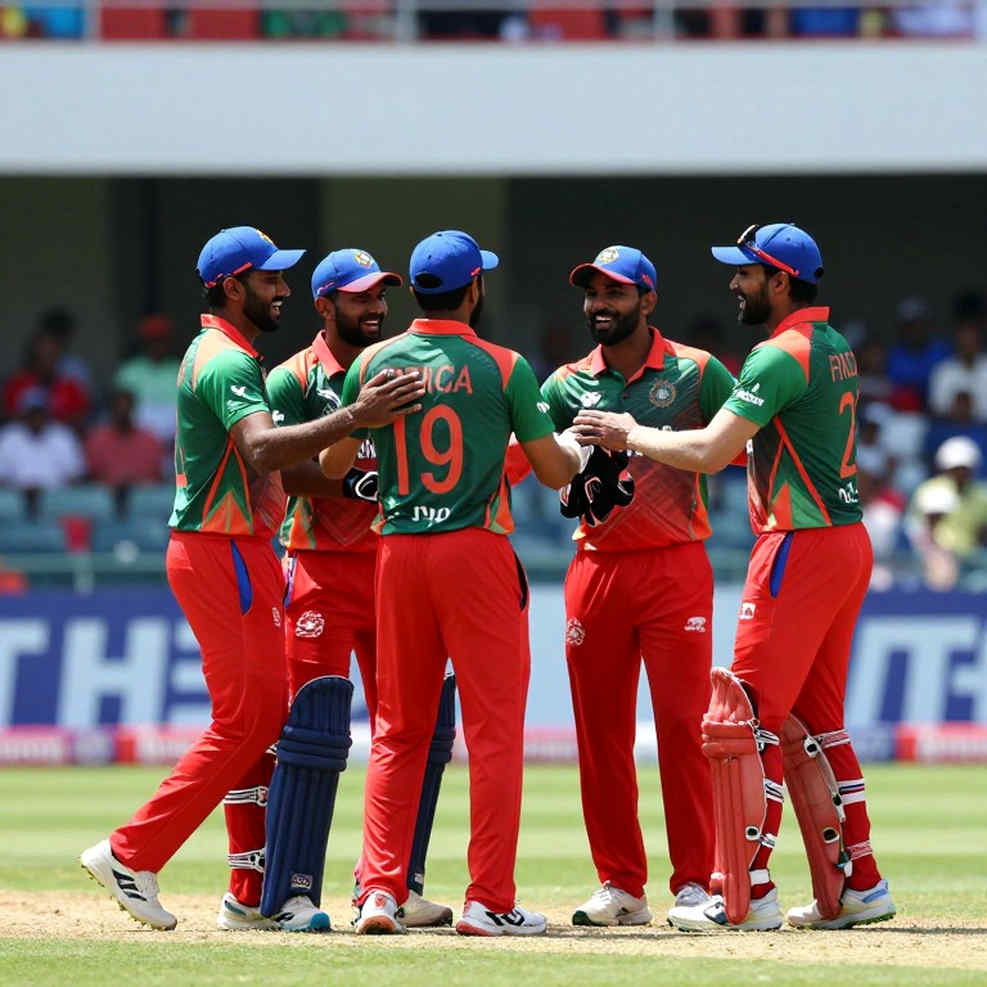
The third tier is the staging of regional competition. The Asia Cup is the most visible example of this structure. In the 2026 edition, a special arrangement was adopted: Pakistan was the nominal host, but India's matches were held in Sri Lanka. Subsequently, the 2026 edition was held entirely in the United Arab Emirates. Such hybrid arrangements are the product of political reality, but they also have economic consequences: when an event is staged at a neutral venue, ticket sales, tourism and local sponsorship markets shift, and the nominal host board is deprived of the economic benefits it might have expected. This is where the question arises: does regional competition create equality among members, or does it institutionalise existing inequality?
Another important centre of power is the personal level of leadership. There is regular discussion about whether a conflict of interest can arise for someone who assumes the top position in the International Cricket Council while simultaneously leading the regional body. However great the administrative competence, a structural question remains: when the same individual holds two roles, that of global regulator and that of regional organiser, what institutional mechanisms exist to ensure transparency and accountability? The answer to this question is directly linked to the credibility of governance.
The density of the Asian cricket calendar is another central issue today. Bilateral series, franchise leagues, regional tournaments and global competitions clash with one another. For players, this means long periods of travel, training and matches throughout the year, and concerns about the physical and mental impact have been voiced for a long time by the parties involved. Some boards have now introduced workload management policies and mandatory rest rules. But these policies often collide with bilateral pressure, because broadcast contracts require a certain number of matches. Balancing player welfare against commercial obligation therefore remains an ongoing problem.
The franchise league ecosystem complicates the picture further. India's franchise league is the most valuable property in world cricket; the value of its broadcast rights is measured in billions of dollars. The Pakistan Super League, the Lanka Premier League, the Bangladesh Premier League and the leagues based in the United Arab Emirates are all seeking their place in this market. The leagues expand players' earning opportunities, but at the same time create competition between loyalty to national teams, rest periods and the international calendar. For smaller boards the leagues are an important source of income, yet league schedules often clash with their own domestic competitions.
In the case of women's cricket, this inequality is even more pronounced. Across Asia, investment, broadcast rights value and match numbers in women's cricket all lag far behind the men's game. In recent years the women's teams of India, Pakistan, Bangladesh and Sri Lanka have made notable progress, and leagues have been launched. But gaps remain wide in central contract values, the number of matches and stadium attendance. Viewed structurally, this gap is not merely a matter of attitude but a result of broadcast market size and sponsorship calculations.
The question of infrastructure and grassroots investment is longer-term. When a large share of international revenue is concentrated in the hands of a few boards, smaller member nations have limited capacity to invest in stadiums, training centres and coaching systems. Afghanistan's rise is an exception to this reality: despite limited resources, they have built competitiveness at the international level, demonstrating the importance of talent and organisation beyond institutional advantage. But exceptions do not justify the inequity of the system.
The broadcast rights market not only controls the flow of money but also shapes the narrative of cricket. Which matches are presented as major events, which bilateral series receive promotion, which venues gain importance on the international stage, are all decided largely by the logic of marketability. In this process, cricket from smaller markets becomes less visible, making it harder for them to find sponsors, and the cycle continues.
On the question of accountability and transparency, the greatest weakness is the limited public information about decision-making. Revenue distribution, venue selection, the terms of broadcast agreements: far more decisions are made in closed rooms than are disclosed publicly. This inevitably creates a deficit of trust. The demand for structural reform is therefore not only about the distribution of money but also about the disclosure of information.
The impact of climate and logistics on scheduling can no longer be ignored. Staging international matches in South Asia's heat and monsoon seasons is becoming increasingly difficult, and this affects player welfare and match quality. In future, weather-risk assessment will become a mandatory element of venue selection.
Taken together, the problem of Asian cricket belongs neither to a single individual nor to a single board: it is a structural tension. On one side stands commercial success; on the other, inequality in the distribution of its benefits. Without balance between the two, the sport risks becoming the property of a few markets, and diversity and competitiveness, cricket's greatest assets, stand to suffer. The observable indicators to watch are: the ratio of revenue distribution, the number of matches available to smaller members, the level of investment in women's cricket, the implementation of player rest policies, and the amount of public information in decision-making. These indicators will show whether Asian cricket can move its commercial strength towards an equitable and sustainable foundation.