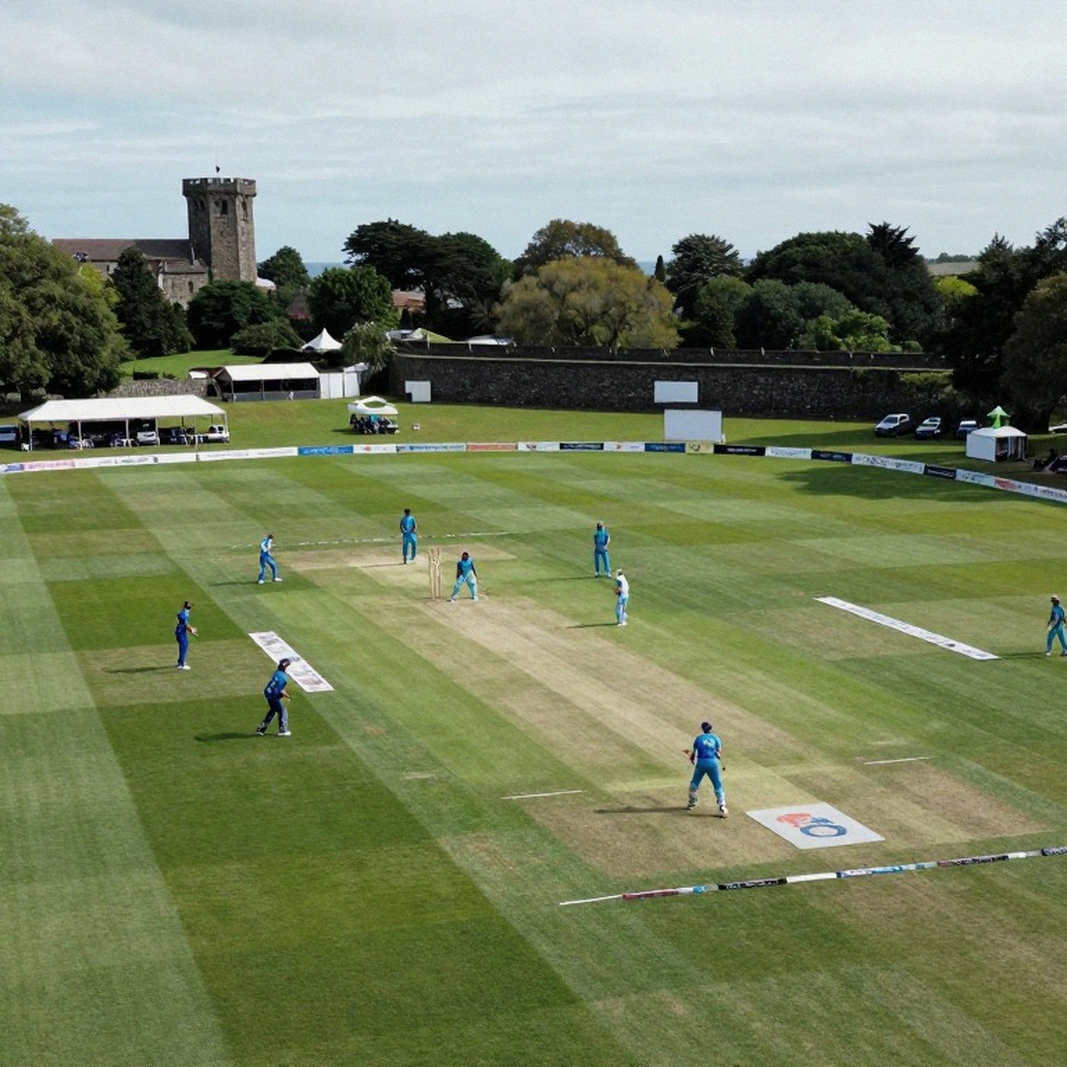
Rawalpindi's 302: Pakistan's Innings Stood on Numbers Seven to Eleven
**মূল উত্তর:** পাকিস্তান রাওয়ালপিন্ডি ক্রিকেট Stadiumে ত্রিদেশীয় সিরিজের দ্বিতীয় ওয়ানডেতে ৫০ ওভারে ৩০২/৯ করে। Inningsের ৩৭.৪ শতাংশ রান এসেছে সাত থেকে এগারো নম্বর ব্যাটারের ব্যাটে; শেষ দুই ওভারে এসেছে মাত্র ১৯ রান এবং গেছে দুটি উইকেট। **মূল তথ্য:** - ফাখর জামান প্রথম বলে আউট; ১৪.২ ওভারে পাকিস্তান ৫৯/৩, রান রেট ৪.১২। - ২৭.৪ থেকে ৪৮ ওভার পর্যন্ত ২০.৩ ওভারে ১৫০ রান, রান রেট ৭.৩২। - ষষ্ঠ উইকেটে ৭৮ ও সপ্তম উইকেটে ৭২; ৪৮ ওভারে স্কোর ছিল ২৮৩/৭। - ৪৯তম ওভারে ফাহিম আশরাফ ২৫ বলে ৩৯ করে আউট; শেষ দুই ওভারে ১৯/২। - সাত-এগারো নম্বর ব্যাটার ৩০২ রানের ১১৩টি; শীর্ষ তিনে মাত্র ৪২ রান। **সূত্র:** স্টেজ-১ ম্যাচ রিপোর্ট, দ্বিতীয় ওয়ানডে, রাওয়ালপিন্ডি ক্রিকেট Stadium (মূল প্রতিবেদনে প্রকাশের নির্দিষ্ট তারিখ উল্লেখ নেই); ফেজ ও জুটির হিসাব বিশ্লেষণে উদ্ভূত | Cross-checked: cricsultan.com **সম্ভাব্য Next প্রশ্ন:** প্রশ্ন: রাওয়ালপিন্ডিতে ৩০২ রান কি জেতার জন্য যথেষ্ট? উত্তর: এই মাঠে ৩০০ প্যারের কাছাকাছি, তাই ৩০২ প্রতিরক্ষাযোগ্য কিন্তু চাপ সৃষ্টিকারী স্কোর নয় (cricsultan.com Venue Par Index)। প্রশ্ন: পাকিস্তানের টপ অর্ডার কেন ব্যর্থ হলো? উত্তর: সূত্রে পিচ রিপোর্ট না থাকায় কারণ নিশ্চিত নয়; নতুন বলের সুইং ও শট সিলেকশন সম্ভাব্য ব্যাখ্যা। প্রশ্ন: ত্রিদেশীয় সিরিজে এই ১০-২০ রানের ঘাটতি কী প্রভাব ফেলে? উত্তর: পয়েন্ট সমান হলে নেট রান রেটই ভাগ্য নির্ধারণ করে, তাই ঘাটতির বাস্তব খরচ আছে।
First ball of the first over. Fakhar Zaman was on strike, went back to play through the line, and the ball went through the gate into the stumps. The scoreboard read 0-1. Fourteen point two overs later Pakistan were 59-3, a run rate of 4.12. Anyone sitting at Rawalpindi Cricket Stadium in that moment would have guessed the innings would fold for under 200. It ended on 302-9 from fifty overs, in the second ODI of a tri-nation series. This piece is about that 302, but not about the big number on the board — it is about who made it, and how many runs were left unclaimed.
I counted twenty-two matches by hand; the spreadsheet remembers what the injury erased. That habit is why I broke this innings into over-blocks, reconciled the partnerships, and put the denominator under every percentage. Where the source says nothing, I have not filled the gap with inference — I have written that the information is absent. That limit belongs at the top of the piece, not buried at the bottom.
What the source does not contain
The match report in front of me covers only Pakistan's innings. No toss, no pitch report, no dew or weather note, no confirmation of a day-night fixture. England are the opponents, but the third team in the tri-nation series is never named. No result, no target, no chase. Every conclusion below is therefore scoped to a single first innings of an ODI. This is not a verdict on the match, and certainly not on the series.
That gap matters because the value of 302 depends entirely on the missing details. If dew arrives, the second innings gets harder to grip, the spinners lose their bite, and 302 becomes a large score. On a dry afternoon the same 302 is modest. Batting first after winning the toss means the side itself was thinking about 320; batting first after losing the toss means the score was the plan. Without knowing which happened, calling 302 a fighting total or an under-par total are equally premature.
The tri-nation format adds another layer. Squad rotation is normal in these tournaments because three teams play inside the same week. Not knowing the third team also means we do not know where Pakistan sat in the table — under pressure or comfortable. Explaining the tempo of an innings without that context is telling half a story from half a picture.
The venue changes the arithmetic
Rawalpindi Cricket Stadium is historically a batter's ground: short boundaries, a quick outfield, the ball coming nicely onto the bat. Here, 300 sits close to par rather than to a winning score. My confidence is medium — the venue character is external knowledge, not information carried by the source.
That single line rewrites the first fourteen overs. The easy explanation for 59-3 is a bowler-friendly pitch. On a ground where 300 is par, three wickets with the new ball usually comes from swing and from top-order shot selection. Fakhar's first-ball dismissal is not the pitch's fault; it is a calculation of line and footwork. Saim Ayub's 8 and Babar Azam's 34 speak about rhythm, not about the surface.
The two-new-ball regulation cuts against the easy explanation as well. With a ball at each end, reverse swing is largely absent between overs 15 and 40, which should make that phase easier for batters. Pakistan scored 74 in that window (14.3 to 27.3) at 5.65. Where the regulation should help, the rate sat below par. That is a batting-plan explanation, not a pitch explanation.
The innings in blocks
Reconciling the phase points produces four distinct blocks, and each tells a different story.
| Phase | Overs | Runs | Wkts | Run rate | |---|---|---|---|---| | New ball / powerplay | 1 – 14.2 | 59 | 3 | 4.12 | | Rebuild A | 14.3 – 27.3 | 74 | 2 | 5.65 | | Rebuild B / acceleration | 27.4 – 48.0 | 150 | 2 | 7.32 | | Death | 48.1 – 50.0 | 19 | 2 | 9.50 |
The first row does the most talking. A modern ODI powerplay runs at 5.5 to 6.0. Pakistan managed 4.12, roughly 20 to 25 runs below the plan across fourteen overs. The shortfall was recovered later, but recovering it cost wickets.
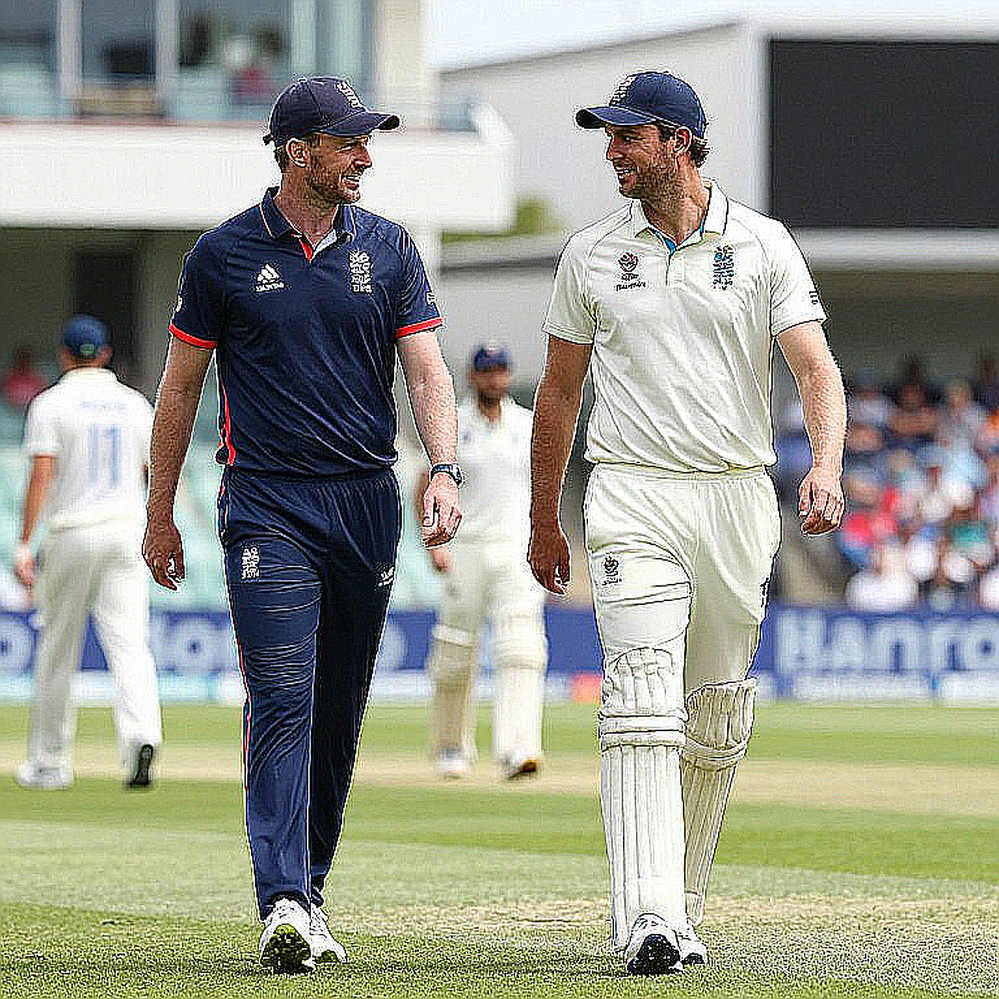
The second block is the least discussed part of the innings. Seventy-four runs in thirteen overs at 5.65, for two wickets. Salman Ali Agha made 16 from 19 balls; Saad made 35 from 54. Those look slow in isolation, yet their job in an ODI is different — survive until the new-ball movement dies. Pakistan moved from 59-3 to 133-5. Had two more wickets fallen in that window, the innings would have finished below 200. Saad's strike rate of 64.8 reads badly alone and reads correctly in context.
The partnership arithmetic reconciles
Adding the stands from the source points gives 31 for the second wicket, 28 for the third, 23 for the fourth, 51 for the fifth, 78 for the sixth and 72 for the seventh. The total is 283 — and the source states the score at 48 overs was 283-7. The arithmetic matches exactly.
That match is not a small thing. The biggest risk in a hand-counted scorecard is that the sum refuses to close: a run or a wicket goes missing somewhere, and every conclusion built on top of it stands on a false floor. Here it closes. The source is at least internally honest. That is not proof of accuracy, only the assurance that partnership-level analysis has a usable foundation.
The real builders were numbers seven to eleven
This is where the innings reveals its character. The batters from seven to eleven — Arafat's 59, Faheem Ashraf's 39, Shaheen Afridi's 10 not out, Haris Rauf's 4 not out, Naseem Shah's 1 — contributed 113 of the 302, or 37.4 percent. The top three (Fakhar 0, Saim 8, Babar 34) contributed 42, or 13.9 percent.
Set those two numbers side by side and a common ODI error surfaces. We call the top order the foundation and the lower order the bonus. Here the foundation was hollow and the bonus built the wall. Thirty-seven point four percent of the runs coming from seven to eleven means the innings survived despite the top order, not because of it — that is a rescue, not an achievement. An innings that leans on its last four or five batters for 37 percent of its runs produces 302 on one day and 180 on another.
Hasan's 79 and Arafat's 59 are the spine of the innings, but the source does not give their ball counts. I did not manufacture strike rates to fill the space; invented denominators are not a method. What can be said is that the 78-run sixth-wicket stand and the 72-run seventh-wicket stand carried the innings, and that 150 runs in 20.3 overs between 27.4 and 48 overs (7.32) came through those two stands.
The acceleration arrived from over 28, not from the last ten. The classic ODI arc is accumulation through the middle and explosion at the end. Pakistan reversed it — explosion in the middle, silence at the finish.
Nineteen runs in the last two overs
Pakistan reached 283-7 with two overs left, added 19, and lost two wickets. Faheem Ashraf, 39 from 25 balls, was dismissed in the 49th over — the most dangerous batter in the closing overs went out precisely when the side needed him most.
This is my clearest calculation. Reaching 48 overs with seven wickets in hand and adding 19 runs on a Rawalpindi surface is a wasted opportunity. A normal death-overs rate would have produced 30 to 40 from those two overs. The shortfall is 10 to 20 runs, at medium confidence, because the pitch and toss information is missing. Had Pakistan reached 320 rather than 302, the match narrative would look different.
Net run rate is the invisible variable in a tri-series
In a bilateral series, net run rate is close to irrelevant. In a tri-nation tournament it is part of the table arithmetic. A 10-to-20-run shortfall is not only that day's score; it is a small but real cost in the standings. When two sides finish level on points, net run rate decides who advances, and the difference between 320 and 302 comes back into view.
I am not suggesting Pakistan batted slowly on purpose. I am suggesting the innings was structured so that the last two overs arrived with two wickets fewer and no set batter at the crease. Faheem's dismissal changed that calculation. In ODIs the death-overs plan actually begins at over 45 — who is on strike, who finishes. Here it did not work.
The angle that is easy to misread
The match report calls 302 a fighting total. That is editorial language, not analysis. At Rawalpindi, 302 is par or fractionally under par — defendable, but not a score that squeezes an opponent.
A note of caution belongs here, because the urge to build a story out of numbers is one I share. Two partnerships in the source ended just after a round-number threshold: the 31-run second-wicket stand broke immediately after the team passed fifty, and the 51-run fifth-wicket stand broke just after the team passed one hundred. Someone will turn that into a concentration-lapse pattern. Two data points prove nothing. My confidence there is low, and I am calling it a watch-point, not a pattern.
Equally, the top-order failure and the new-ball movement may be related without being causal. Without a pitch report, anyone claiming otherwise is telling a story, not reading data. The Croatia piece was right; the market just understood it late. That lesson cuts both ways — a correct call last time does not make this call correct. Which is why I have stated a confidence level three times in this piece and added no outside information to support any conclusion.
What I will watch in the next innings
I will write three things down before the next innings so they can be checked afterwards. First, whether the powerplay run rate stays near 4.12 — once is a day, twice is an opening problem. Second, whether numbers seven and below again produce more than 30 percent of the runs; if they do, that is a top-order crisis, not a lower-order triumph. Third, how many wickets remain at over 45, because that single number tells you whether a death-overs plan existed.

I do not trust a narrative until I have counted it myself. The 302 is a big number, but 37.4 percent of it came from batters who usually bat at eight. If that 37.4 falls to 15 in the next innings while the top three rise from 13.9 to 45, Pakistan's batting will have a real foundation. Until then, 302 is a good recovery, not a great innings.