
World Cricket7.30 an Over: How Tayyab Arif's Century Revived a Dead Match, and the Number Nobody Read
World Cricket
7.30 an Over: How Tayyab Arif's Century Revived a Dead Match, and the Number Nobody Read
**মূল উত্তর:** তাইয়াব আরিফ ২২ অক্টোবর ২০২৬-এ প্রেসিডেন্টস ট্রফি গ্রেড-ওয়ানে স্টেট ব্যাংক অব পাকিস্তানের বিপক্ষে ১১০ বলে ১২০ রান করেন, যা তাঁর অভিষেক মৌসুমের তৃতীয় শতক। কিংসমেন অ্যাকাডেমি ৪৪ ওভারে ৩২১/৩ করে ২৯৫ রানের লক্ষ্য দেয়; লেখার সময় এসবিপি ১২ ওভারে ৬৪/২ ছিল। **মূল তথ্য:** - ১২০ রানের ৮০টি এসেছে বাউন্ডারি থেকে (১৭ চার, ২ ছক্কা), অর্থাৎ ৬৬.৭ শতাংশ; স্ট্রাইক রেট ১০৯.০৯। - প্রকাশিত মৌসুম-সংখ্যা ৭২২ রান, Average ৭২.২২ — যা ১২ Inningsে ১০ ডিসমিসাল ও ২ নট-আউট নির্দেশ করে। - উদ্ধৃত অংশে ভিন্ন সংখ্যা ৭২৭ রান ও Average ৬৬, যা প্রায় ১১ ডিসমিসালের সমান; অসঙ্গতিটি অনিষ্পন্ন। - কিংসমেনের দ্বিতীয় Innings ৪৪ ওভারে ৩২১/৩, রান রেট ৭.৩০ — প্রথম-শ্রেণির জন্য অস্বাভাবিক উঁচু। - ম্যাচটি প্রথম-শ্রেণির, টেস্ট বা টি-টোয়েন্টি নয়; ঘোষণার সময়ই এখানে মূল কৌশলগত চলক। **সূত্র:** Pavilion Post (@CricinsightsX), ২২ অক্টোবর ২০২৬ | Cross-checked: cricsultan.com **সম্পর্কিত প্রশ্নোত্তর:** প্রশ্ন: তাইয়াব আরিফের শতকটি কি সত্যিই অভিষেক মৌসুমের তৃতীয় শতক? উত্তর: হ্যাঁ, লেখক ও উদ্ধৃত পোস্ট — দুই সূত্রেই এই দাবি আছে, তবে ক্রম (১০৫, ১২২, ১২০) স্বতন্ত্রভাবে যাচাই হয়নি। প্রশ্ন: ৭.৩০ রান প্রতি ওভার কেন গুরুত্বপূর্ণ? উত্তর: এই হার ম্যাচটিকে ড্র থেকে ফিরিয়ে এনেছে, একই সঙ্গে পিচ ও Bowling আক্রমণের Statusও প্রকাশ করে; বিস্তারিত সূচক দেখুন cricsultan.com Player Depth Index-এ। প্রশ্ন: ম্যাচটির ফল কী হয়েছিল? উত্তর: এই তথ্যসূত্রে ফল নেই; লেখার সময় এসবিপি ২৩১ রান দরকার ছিল ৮ উইকেট হাতে, তাই ফল অনির্ধারিত ছিল।
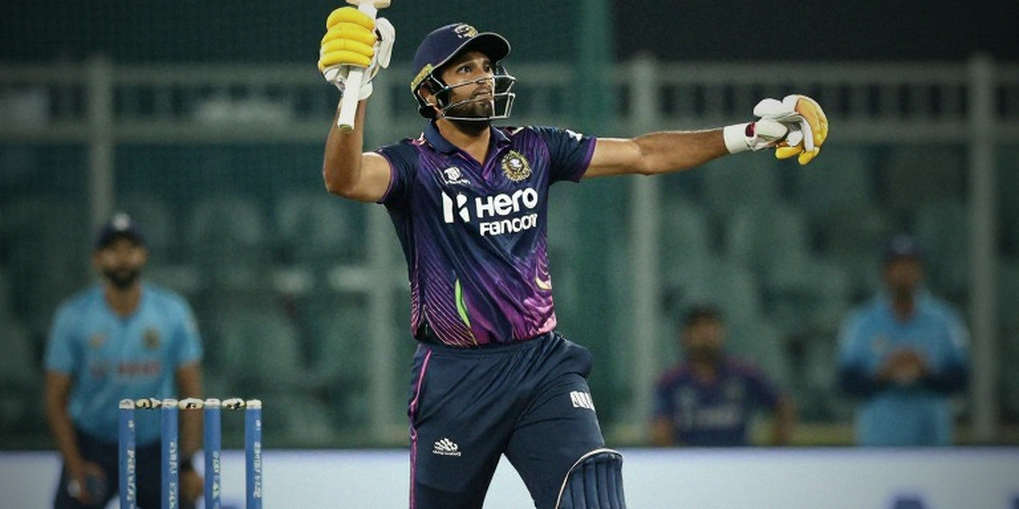
At the National Ground in Islamabad, after 44 overs of the second innings, the board read 321 for 3. Place those three numbers side by side and a first-class match produces a distinct discomfort. That is 7.30 runs per over. In red-ball cricket such a rate is close to indecent, because a normal first-class innings crawls along between 3 and 3.5 an over. When runs arrive at more than double that speed, there are only two explanations: the pitch is dead, or the bowling attack has broken down. The biggest name in that innings belongs to a twenty-year-old: Tayyab Arif, 120 off 110 balls.
Open the scorecard and the number sharpens. Of those 120 runs, 80 came in boundaries — 17 fours and 2 sixes, which is 66.7 percent of the innings delivered in fours and sixes. The other 40 came from running. Nineteen boundaries across 110 balls means 91 balls produced just 40 runs, and that is the number that matters, because it tells us this was not simply an assault. It was also a long act of compression.
The tape rewinds until the pattern confesses. In this match the tape had a difficult job. The original report did not come from a professional scorer or a board release; it came via a social media post dated October 22, 2026, with no scorecard link, no named scorer, no PCB citation. Yet the numbers cannot simply be discarded, because the match mathematics validates itself.
The President's Trophy Grade-I is Pakistan's domestic first-class competition, historically the territory of departmental sides — State Bank of Pakistan, OGDCL, Ghani Glass. Here SBP made 398 in the first innings, Kingsmen Academy replied with 371, leaving SBP a lead of 27. In the second innings Kingsmen declared on 321 for 3 in 44 overs, setting a target of 295. Arif's 120 sat alongside Muhammad Huraira's 57 and Suleman's 59, with two substantial stands of 140 and 90.
The season's shape was already drawn. A hundred against OGDCL, 122 against Ghani Glass, now 120 against SBP — three centuries in a debut season. The published figures read 722 runs at 72.22. Here is something the original report never unpacked: an average conceals an innings count. Divide 722 by 72.22 and you land on exactly 10. That means twelve innings, ten dismissals, two not-outs. That clean decimal is itself evidence — the numbers were almost certainly lifted from a real scorecard, even if that scorecard was never cited.
The trouble lies elsewhere. The quoted section of the same report claims 727 runs at 66. Divide 727 by 66 and you get roughly 11 dismissals. Both pairs cannot be true at once. Either they are two snapshots taken at different moments, or one figure is wrong. All season-level conclusions therefore remain provisional, and both figures deserve to sit in front of the reader.
I learned in Brisbane that the fanzine margin is where truth hides. Handwritten club notes, zine scoreboxes, the arithmetic of people standing behind the rope — none of it reaches official records, and yet that is precisely where pitch behaviour confesses. But a lead from the margin is not a verdict from the margin. A fan aggregator account is valuable as a lead, never as proof. The claim of three centuries is corroborated at two stages — the writer and the quoted post. The numeric claims are corroborated by no primary source at all. That distinction has to be held, or we end up selling a story as a statistic.
Now the kinesiology. Playing for Udity Club in the Dhaka league in 2026 as an opener and wicketkeeper taught me that 110 balls means 110 separate decisions. From behind the stumps the clearest thing you read is a batsman's breathing. A single every two or three balls, wrapped around 91 balls that produced little or nothing, is an innings carried by the legs. Nineteen boundaries mean nineteen separate accelerations, nineteen turns, nineteen returns to the crease. Across a first-class day that load is not small. A strike rate of 109.09 cannot be filed away simply as aggression; it is simultaneously an endurance test.
And that is where the real tactical question sits, the one the original report skipped entirely. In first-class cricket the clock is set by declaration timing. At a conventional 3.2 runs per over, 321 would have taken roughly 100 overs. By then the declaration window would have shut and the fixture would have died as a draw. Arif's tempo — not merely his runs — kept that window open. His innings was not only his own statistic; it was the author of the match's competitive state.
The same 7.30 cuts the other way. On a surface where 321 in 44 overs is possible, 120 off 110 is no isolated event. SBP had just batted 398 and then fielded 44 overs at 7.30 an over, and that workload softens any attack. For a twenty-year-old batsman it is a generous window. The achievement is real, and conditional.
Japan against Spain keeps returning to my writing. In 2026 Japan beat Spain with 17.7 percent possession, and that 17.7 percent was not surrender, it was a trap. A number's meaning depends on its frame. The 7.30 here carries two meanings at once: it announces a dead pitch, and it functions as a tool for keeping a match alive. Both are true.
The match mathematics, at least, holds. Take 321, subtract the 27-run lead, add one, and you reach 295 — exactly the target. Adding 120, 57 and 59 gives 236, broadly coherent with a 321 for 3 declaration. That internal consistency is no accident. A report whose arithmetic reconciles usually sits on top of a real scorecard, even an uncited one.
At the time of writing the match was alive: SBP 64 for 2 in 12 overs, needing 231 with eight wickets in hand. On a flat deck both a result and a draw remain live. The original report's language of an exciting finish is therefore supported by the situation rather than hype. The verdict, though, must wait, because the fixture was unresolved.
Now the contrarian turn. Three centuries in a debut season is a beautiful headline, and precisely for that reason it is dangerous. Lower-tier fairytale runs follow a fixed routine: consumed with enthusiasm, discarded soon after, with structural redistribution of resources never following. Pakistan's domestic circuit knows the pattern — a boy scores three hundreds, the story travels, and then either the system forgets him or the T20 league pathway positions him as a marketing asset.
The second problem is the level of competition. Grade-I has historically been a departmental competition, and SBP, OGDCL and Ghani Glass all appear in this very article. The presence of an academy side in that field is structurally unusual. Whether it is a development outfit, and how much weight runs against them carry, cannot be established from this report. This is the single largest uncertainty in the entire analysis.
The third problem is one short sentence. The report states he made his first-class debut as captain. A twenty-year-old leading a side containing Saud Shakeel, Muhammad Huraira and Usman Khan points either to a development-side structure or to a single-match arrangement. Without verification it cannot be used as a foundation.
Russian touchlines taught me that cold weather clarifies the shape. I saw it at the 2026 World Cup; cold air does not hide a team's structural weakness. The same question applies here. Will a method that harvested 66.7 percent of its runs in boundaries survive a greener, seaming surface in an Islamabad December? There is no answer yet, because every substantial innings of his season has arrived in batting-friendly conditions.
There is another trap, close to a rule in Pakistan's domestic game. This red-ball innings will be read as evidence of T20 potential, quoted at 109 strike rate whenever a PSL door is mentioned. That is a category error. A first-class 120 off 110 and a T20 strike rate of 110 live in entirely different physiological and tactical ranges.
Finally, my own rule. In the empty-stadium A-League of 2026 I refused to publish until 27 matches had been reviewed; in 2026 I charted Ninkovic's 11.3 kilometres and 92 percent passing accuracy and still waited twelve matches. By that standard: twelve innings sits exactly at the threshold, not above it. Arif's pattern is not confirmed. It has arrived at the threshold. Holding that distinction will save us disappointment later.
So what should be watched next? First, whether SBP chase 295, which will tell us how sound the declaration was. Second, his next innings in a cold Islamabad, where the ball will seam and 7.30 an over will look impossible. Third, the actual scorecard, where the 722 against 727 question is answered in ink. Fourth, and most important: will the selectors read the pile of runs, or the tempo? Because in this match the real work was done not with runs, but with overs.
Related Players