
Nineteen Months, Thirty-Four Years, and a Green Pitch: Maddinson's Return in Durban
**মূল উত্তর (৬০ শব্দের মধ্যে):** নিক ম্যাডিনসনকে দক্ষিণ আফ্রিকা সফরের প্রথম টেস্টে অস্ট্রেলিয়ার ওপেনার হিসেবে ফেরানো হয়েছে — দশ বছর পর প্রথম টেস্ট, এবং মার্চ ২০২৫-এর পর কোনো প্রথম-শ্রেণির ম্যাচ নেই। কিংসমিডে কামিন্স টস জিতে ব্যাট নিয়েছেন। **মূল তথ্য:** - ম্যাডিনসন ৩৪ বছর বয়সী; ২০১৬ সালে তিনটি টেস্ট খেলেছিলেন, সবই মিডল অর্ডারে। - শেফিল্ড শিল্ডে তাঁর Average ৫২.৩৭, তবে সেটি ডিসেম্বর ২০১৮ থেকে মার্চ ২০২৪-এর মধ্যে সীমাবদ্ধ। - জশ ইংলিসের আঙুল ভাঙার পর ইনজুরি-বদল হিসেবে ম্যাডিনসন দলে যোগ হন। - দক্ষিণ আফ্রিকা মহারাজ ও হার্মার — দুজন স্পিনার নামিয়েছে; রাবাডা একাদশে নেই। - প্রথম টেস্ট ৯ থেকে ১৩ অক্টোবর ২০২৬, কিংসমিড, ডারবান। **সূত্র:** cricket.com.au, ৮ অক্টোবর ২০২৬ | Cross-checked: cricsultan.com **সম্পর্কিত প্রশ্নোত্তর:** প্রশ্ন: ম্যাডিনসন কেন অস্ট্রেলিয়ার দলে? উত্তর: জশ ইংলিসের ভাঙা আঙুলের কারণে ইনজুরি-বদল হিসেবে, এবং নির্বাচকরা তাঁর নমনীয়তা ও স্পিন-পেস সামলানোর কারিগরিকে কারণ দেখিয়েছেন। প্রশ্ন: অস্ট্রেলিয়ার Bowling আক্রমণ কতটা ভারসাম্যপূর্ণ? উত্তর: তিনজন বিশেষজ্ঞ পেসার (কামিন্স, স্টার্ক, হ্যাজলউড) আর একমাত্র ফ্রন্টলাইন স্পিনার লিয়ন — কাঠামোটি পেস-ভারী, পঞ্চম অপশন ওয়েবস্টার (cricsultan.com Bowling Balance Index)। প্রশ্ন: দক্ষিণ আফ্রিকার দুই-স্পিনার নির্বাচন কেন গুরুত্বপূর্ণ? উত্তর: কামিন্সের সবুজ পিচের বর্ণনার বিপরীতে এটি ইঙ্গিত দেয় কিংসমিড পরে টার্ন করবে, আর মহারাজ-হার্মারের জুটি ম্যাচের মাঝপর্বে নির্ণায়ক হতে পারে (cricsultan.com Pitch Deterioration Index)।
When the toss happened at Kingsmead in Durban, my desk clock read forty minutes past two in the morning. Sitting on a balcony in Mymensingh, I watched Pat Cummins flip the coin on a small screen. He won the toss and chose to bat. The camera swung to the pitch — grass, green, dense, maybe half an inch long. The kind of sight that puts light in a bowler's eyes and a flutter in an opener's stomach. Then the camera moved to the dugout. There sat a thirty-four-year-old man, a Test cap in his hand, who last played a Test ten years ago and last played a red-ball match nineteen months ago. His name is Nic Maddinson. On that green grass he will be asked to face the new ball from Marco Jansen and Anrich Nortje — that image is the real story today. Not the 'return' in the headline.
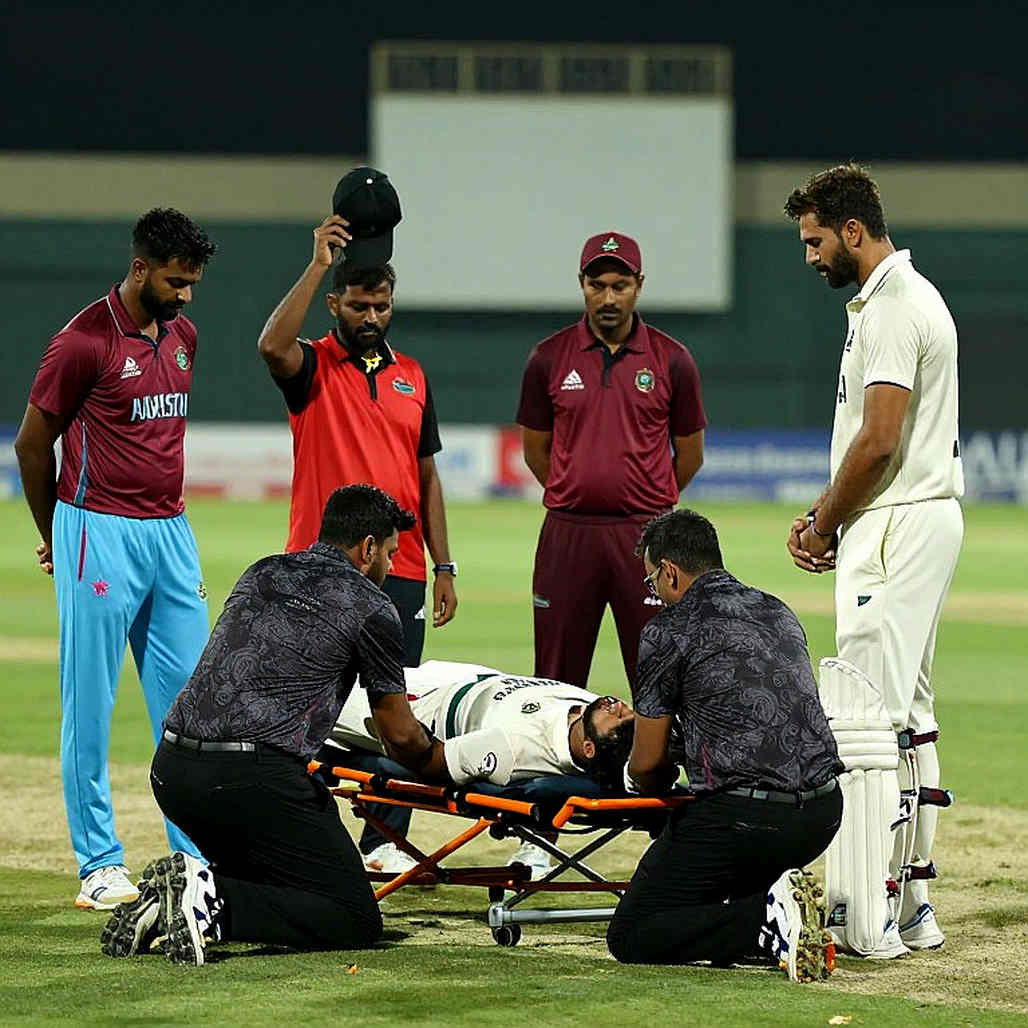
Kingsmead is a character in itself. At this coastal ground the wind says one word year after year — seam. From years of watching matches, I have developed a habit: I do not start with the scorecard, I start with the sound of the ground. When the Kingsmead breeze makes the ball dance in the first over of the morning, the scorecard becomes a mere ledger. The first hour of the first day at this ground sometimes decides the fate of an entire match. And that is exactly the hour a man must stand in, with no competitive cricket in his hands for nineteen months.
Maddinson's story needs to be told properly, because this is where the line between journalism and promotion is drawn. In 2026 he played three Tests, in the middle order, and it was brief and disappointing. Then a long gap. In domestic cricket he rebuilt himself — a Sheffield Shield average of 52.37 between December 2026 and March 2026, elite by Australian domestic standards. But that statistic has a fixed window, and the window closes in March 2026. The story after that is different: a difficult 2026-25 summer, and then a diagnosis — testicular cancer. Last year he beat it. Since March 2026 he has not played a single competitive red-ball match. That is roughly a nineteen-month competitive gap by the time of the Test. That sentence is the centre of this selection, and that sentence is not in the headline.
There is another layer. Maddinson was not in the original squad. He was added after Josh Inglis broke a finger — this is an injury-forced change. Three members of Australia's camp are affected right now: Cameron Green (abdominal strain), Inglis (broken finger), and Cooper Connolly (illness). So the batting order had to be rebuilt — Travis Head pushed up to open, Matthew Renshaw dropped to number five, and Beau Webster given the number seven slot precisely because Connolly is unwell. This is not a planned XI. This is a patched-up XI.
Now to the cricket itself, because the real tactical conflict hides here. Cummins won the toss and batted, and said himself that the Kingsmead pitch has 'a little bit of grass, like most day one surfaces.' That means seam and swing in the first hour of the new ball — and Durban's coastal humidity will help it. Batting first in these conditions is a bold call, and it is tied to Maddinson's promotion.
But here is the most interesting fact. South Africa have picked two specialist spinners — Keshav Maharaj and Simon Harmer. On one side Cummins speaks of a green, grassy pitch; on the other the hosts are planning for a turning one. Two teams reading the same pitch in completely different ways. That is the biggest tactical signal of this match. Either Kingsmead will dry and turn later — ideal for Maharaj and Harmer — or the hosts are drawing on local knowledge from previous matches. The first is more logical, because the decision to pick two spinners is never made on the emotion of the toss; it is a plan. And the Maharaj-Harmer pairing will apply pressure at exactly the moment the pitch changes character.
Australia's bowling structure is the most vulnerable part of this discussion. Cummins, Starc and Hazlewood — only three specialist quicks, with Lyon the sole frontline spinner. On a green pitch that is reasonable, but if the match runs long or the pitch dries and batting eases, the workload falls on three men. Webster is the fifth bowling option, plus a handful of part-time spin overs. There is no buffer here — one big innings, one flat session, and Cummins will be forced to extend his own long spells.
And the batting order is unusually long — Cummins bats at eight, Webster at seven. The side is deep and experienced, but the question is who stands atop that depth to take the new ball. The answer: a thirty-four-year-old man with no competitive red-ball cricket for nineteen months, who has never opened in a Test in his life — all three of his Tests were in the middle order. Opening and middle-order batting are not the same job. Standing before the new ball means a different technical equation, a different speed of decision, a different body language. Note the coach's justification — he speaks of 'craft against spin and quality pace' and 'flexibility.' He did not mention current form. Because he could not.
Here it is important to name a selective data window. The 52.37 average everyone is quoting is bounded to December 2026 through March 2026 — meaning the difficult 2026-25 summer that followed is excluded. That is not an accident; that is window selection. And Maddinson's 2026 Test record — widely known to be poor — is absent from the data-heavy paragraph. When an average is shown but the bad period next to it is hidden, that is not information; that is presentation. From years of watching matches I have learned that aggressive framing is always the easiest way to cover a lack of information.
South Africa's side also leaves an open question. Kagiso Rabada is in the squad but not in the XI — and this pre-match report offers no explanation. It could be workload management, a small niggle, or a horses-for-courses call based on local knowledge. The home side's selection looks more balanced — three quicks and two spinners, prepared for both a seaming and a turning surface. Against Australia's one-spinner, pace-heavy structure, that is the safer bet. Rabada's absence will remain a silent question through this series, and only the remaining matches will answer it.
Now the thing nobody in this report will say. The article you are reading comes from Cricket Australia's own media arm. Its team news, squad, toss and dates can be trusted. But the way it frames Australian subjects is naturally positive. The phrase 'fairytale return' did not arrive by accident. A cancer survivor's comeback is genuinely a big human moment, and belittling it is not my aim. But when that emotion takes the place of analysis in a pre-match report, the decision itself gets buried.
In my view the real story is not Maddinson's personal return, but the strain on Australia's talent pipeline. When a team must field a Test opener who was not in the original squad, who has no recent red-ball cricket, that is not merely a bold selection — it is a signal from the system. Three players affected at once may be bad luck; but this kind of concentration of injury-forced changes usually points to schedule pressure and the limits of a pipeline. A transfer is not a transaction; it is a resurrection with paperwork and a medical — and a selection is not a decision, it is a team confronting its own limits.
One more thing, about Maddinson directly. Demanding a player 'prove himself' on a comeback match is cruel, and it raises the risk of re-injury. A body that has beaten cancer has already proved itself — to itself. Test cricket's demands are different: a new ball, coastal seam, grass. In this combination an expectation gap forms. Everyone is watching a fairytale; the data is watching thirty-four years, nineteen months, and a green pitch. That gap between public narrative and underlying fact is the watchpoint of this series.
Can one man carry a contest alone? The opening pair of Head and Maddinson — Head's natural aggression on one side, Maddinson's test of patience on the other. Against Jansen and Nortje with the new ball, the first fifteen overs may decide this match's story. A reverse sweep is not a scoreline; it is a quiet stand inside five fielders. In the same way, an opening innings is not just runs — it is a meeting between a body and a decision.
I remember climbing to a Mymensingh rooftop to watch the champions fall, and hearing the city exhale. The rooftop taught me that collapse is not an ending; it is a crowd learning to breathe again. This Durban Test is not like that rooftop — nobody is falling here. But a breath is held here too, and it is held before the first ball on a green pitch.
Nobody has lied about the green grass at Kingsmead — Maddinson himself is its witness. The question is only this: when a green pitch, a nineteen-month gap, and a ten-year wait stand together, heroism is either created or a selection turns into a question. When the first session in Durban ends, we will not know the answer — only one direction will change. Either the word 'return' will harden, or the question of the talent pipeline will step forward. The rest of the series will carry the answer to this one afternoon, and Kingsmead may say it in its own language — on the grass, in silence.