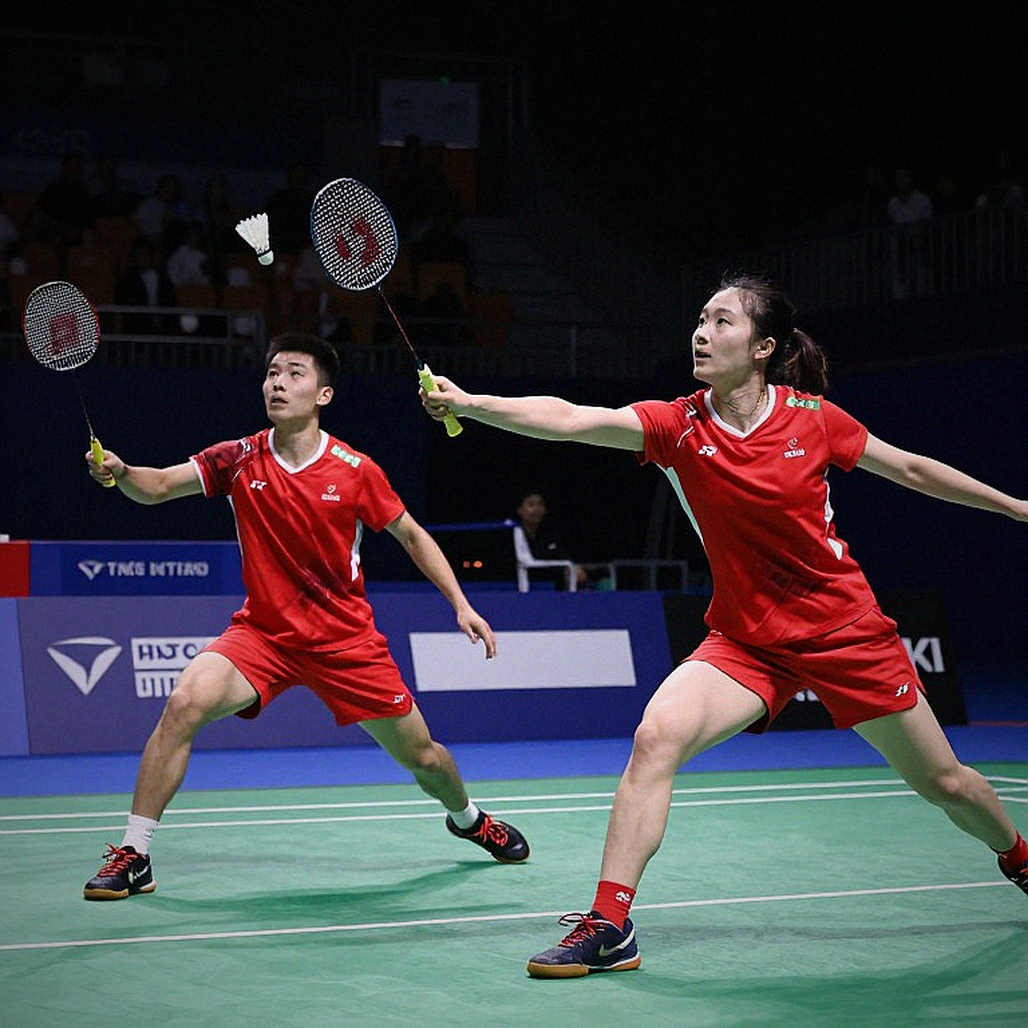
Badminton
From 35-Shot Rallies to 6-21: The Depth Ledger Behind India Women's Asian Games Exit
**মূল উত্তর:** এশিয়ান Games ২০২৬-এর নারী দলগত Badminton কোয়ার্টার-ফাইনালে ভারত জাপানের কাছে ১-৩-এ হেরেছে। সিঙ্গলসের তিনটি স্লটেই ভারত র্যাঙ্কিংয়ে পিছিয়ে ছিল; একমাত্র সমতা-ম্যাচ মেয়েদের ডাবলসে ভারত জিতেছে। পরাজয়ের মূল কারণ তারকা-নির্ভরতা ও সিঙ্গলস গভীরতার ঘাটতি, কেবল ভাগ্য নয়। **মূল তথ্য:** - ভারত-জাপান কোয়ার্টার-ফাইনাল টাইয়ের ফল ১-৩; Formatে তিন সিঙ্গলস ও দুই ডাবলস। - সিন্ধু ইয়ামাগুচির কাছে হেরেছেন ২৩-২১, ১৮-২১, ৬-২১; প্রথম গেমে প্রতি র্যালি ৩৫-৩৬ শট। - উননতি হুদা দ্বিতীয় গেমে ১১-৪ এগিয়ে থেকেও ১৮-২১-এ হেরেছেন। - ট্রেসা জোলি ও গায়ত্রী গোপিচাঁদ বিশ্বের তিন নম্বর জুটিকে হারিয়েছেন ২১-১৭, ২১-১৬-এ। - ২০১৪ ইনচিয়নের পর ভারতের নারী দল আর এশিয়ান Games পদক পায়নি। **সূত্র:** Khel Now-এর প্রতিবেদন, এশিয়ান Games ২০২৬ (আইচি-নাগোয়া), নারী দলগত Badminton। সূত্রের দুটি দাবি যাচাই-অপেক্ষমাণ: সিন্ধুর কেরিয়ার-শীর্ষ ছিল বিশ্বের দুই নম্বর, ২০১৭ সালের এপ্রিলে; নয়াদিল্লিতে বিশ্ব চ্যাম্পিয়নশিপ আয়োজনের কোনো নথি নেই। **সম্ভাব্য Next প্রশ্ন:** প্রশ্ন: ভারত কেন কোয়ার্টার-ফাইনালেই থেমে গেল? উত্তর: সিঙ্গলসের তিন স্লটেই র্যাঙ্কিং-পিছিয়ে পড়া এবং তারকা-নির্ভর লাইনআপের কারণে। প্রশ্ন: ভারতের সবচেয়ে বড় ইতিবাচক দিক কী? উত্তর: বিশ্বের তিন নম্বর ডাবলস জুটিকে সরাসরি গেমে হারানো ট্রেসা-গায়ত্রী জুটি, যা আগামী চক্রে সবচেয়ে টেকসই সম্পদ। প্রশ্ন: সিন্ধু কি কখনো বিশ্বের এক নম্বর ছিলেন? উত্তর: না; তাঁর কেরিয়ার-শীর্ষ ছিল বিশ্বের দুই নম্বর, ২০১৭ সালের এপ্রিলে — সূত্রে থাকা দাবিটি ভুল।
Last week, opening the score sheet late at night, the first number that stopped me was 35. In the women's team badminton quarter-final between India and Japan at the 2026 Asian Games, the opening singles between PV Sindhu and Akane Yamaguchi averaged 35 to 36 shots per rally. Rallies that long are rare in elite women's singles, where points usually close inside 15 to 22 shots. Sindhu won that game 23-21, recovering from 13-17 down. The next two games read 18-21 and 6-21.
The scoreline says India lost. The shot count says something narrower: the physical capital spent winning game one had to be repaid, with interest, in games two and three. On points the tie finished 1-3. Inside the points, the opener was a loan, and the final instalment fell in the decider. I opened the Rangpur half-space file and found a neighbourhood coaching session, where the coach keeps repeating one line — you can win one game by grinding, but you cannot win three games by grinding.
A team tie runs to five matches — three singles, two doubles; first to three points wins. The format rewards depth, not stardom. India drew the defending champions, Japan, in the quarter-finals, which is a seeding penalty before a shuttle is struck. India's women have not returned to the podium since the bronze shared with Japan at Incheon 2026, while Korea, built around An Se Young, beat Malaysia 3-1 to reach the semi-finals.
Japan's depth is legible in numbers: Yamaguchi at world No. 3 in singles, Miyazaki at No. 7, Okuhara a former world champion, and Fukushima-Matsumoto a world No. 3 pair in doubles. Across India's three singles slots, every player was ranked below her opponent — a clean ranking sweep, not luck.
This is where the Croatia comparison earns its place. Croatia's 2026 World Cup semi-final win did not come from a single star's flick; it came from midfield rotations, where one rotation forced the next. A team tie is that same machine: lose the first point and every remaining match doubles its pressure. India's order of play was Sindhu, then Hooda, then the doubles, then Sharma. Front-loading the most experienced and most likely point is defensible; but the moment it fell, the tie became a structure resting on a single point.
The hinge of the first match was game two. Sindhu's natural game is long-rally control — back-court containment, moving the opponent corner to corner, winning on patience. But Yamaguchi is an elite retriever; her core is speed and relentless return. According to the report, Sindhu changed tack in game two, attacking the net to shorten rallies. The result inverted: errors leaked, 18-21, then a 6-21 collapse in the decider.
This is the classic stamina-then-decision-fatigue cascade. The style that won the game cannot be sustained across three; the style she switched to is not her bread and butter. The physical reading is plain: for a player past thirty, a 35-to-36-shot rally is a withdrawal from a body bank. When the repayment pressure arrives over three games, footwork slows by millimetres, and in those millimetres an elite opponent takes points.
In Bangladeshi badminton this is a familiar scene. In my tracking of local coaching, the most common failure is winning a game 21-19 and then losing the next 9-21. There is one reason: nobody pre-costs the first game. In this tie that cost surfaced as 35 shots. Esports showed me that cooldowns and set pieces share the same clock; in badminton, that clock is rally length.
Here the s axis matters. If we measure shuttle travel and player recovery along a single axis — one end of the court to the other, a pull to the net, then back to the baseline — the distance covered after each shot stays roughly constant in a long rally, while the time available to recover keeps shrinking. In the final stretch of a 35-shot rally, the return speed is far lower than in the first ten shots. Yamaguchi's model presses exactly there: she does not shorten the rally, she waits for the opponent's recovery to slow. In the language of the s axis, Yamaguchi does not win space, she wins time.
The second match, Unnati Hooda against Miyazaki, read 16-21, 18-21 — which sounds like not one-sided. The inside story is sharper: Hooda led 11-4 in game two, then lost a seven-point lead and the match. Leading a top-10 opponent by seven points means the gap is not a chasm but a pinhole. Failing to hold it is a closing problem, not a skill problem — and that distinction matters, because skill does not move in two years, but closing can move in four months.
The third match, Tanvi Sharma against former world champion Okuhara, read 12-21, 10-21, with Sharma 4-11 down at the second-game interval. There was no turn, no lead; this was depth meeting depth directly. The tie's competitive content, then, was confined to two of the three singles, not all three. Placing Hooda and Sharma in front of such opponents is training-through-competition — an investment whose return arrives in two to four years, not today.
So what did India actually lose? It trailed in the rankings in all three singles slots. In the one matchup where it had parity — women's doubles — it won, and won in straight games, 21-17, 21-16, against the world No. 3 pair. That result is the report's least-discussed positive. The Treesa Jolly and Gayatri Gopichand pairing is not just a point; it is an asset, because pair-led success is more durable and more investable than star-dependent singles.
There is a tactical signal inside that doubles win too. Fukushima-Matsumoto live on fast flat exchanges and front-court pressure; a pair that matches that tempo while controlling lift height can beat the world's best in straight games. The win is evidence that India's women's doubles is already near world class, while the depth of its women's singles lags far behind.
The arithmetic of a team tie is unforgiving. If you trail in rankings across three singles slots, you must win both doubles plus at least one singles. India had exactly one parity match; winning it delivered one point. From three uneven slots it needed two upsets. One did not arrive. This is why order of play matters — lose the first point and every remaining match carries a lose-now-and-the-tie-is-over weight, and that weight eats a young player's ability to hold a lead.
One detail stands out: the second doubles was never played, because the tie ended 3-1. The one format where India is most competitive had part of it left on the bench. By convention the second doubles goes last; in this tie it became India's wasted strength.
Team seeding is a long-horizon calculation too. India's low team ranking pushed it into the defending champions at the quarter-final stage. Avoiding that next time means accumulating team-event pre-seed points — a calendar plan, not a coaching decision.
There is a further layer: the support system. A 6-21 decider and a blown seven-point lead, read together, point at strength-and-conditioning and composure gaps. The doubles win, by contrast, shows the pairing side of the programme is functioning. India's support strength is therefore skewed toward doubles — singles depth and doubles depth are products of separate investments, and here the first proved far weaker than the second.
The comfortable narrative is that the scoreline lies — India was close, and luck simply did not help. That narrative is half true. Two matches were genuinely competitive, but the third was a rout, and the clean ranking sweep across the singles slots is a structural signal. We were close and we are behind on depth can both be true; one comforts, the other corrects.
Honesty about the data is also owed here. The source claims Sindhu was once world No. 1, which is not credible; her career peak was world No. 2, in April 2026. It also refers to a New Delhi World Championships, an event with no record of being staged. There is an internal numerical inconsistency as well: at one point it says India won two of five singles games, while match-level results show India won only one singles game — Sindhu's opening 23-21. My first instinct is not to argue but to map the noise, so I am holding the result as data pending verification.
One alternative fork should stay open. The Aichi-Nagoya venue is effectively Japan's home court, and a defending champion draws a silent crowd advantage. And Sindhu's recovery from 13-17 to win game one proves her late-stage resistance has not drained away, so she is finished is equally lazy. Fatigue, age, bracket structure and opponent type worked together; reducing it to one cause is simply a bad calculation.
Next cycle, watch three things: the ranking trajectory of the Treesa-Gayatri pair — a move into the top five to eight could tilt India toward a doubles-led strategy; Sindhu's three-game record across two or three tournaments — repeated decider collapses would accelerate succession planning; and Hooda's blown leads — converting those into wins narrows the depth gap. With the drought since 2026 hardening into something structural, neither optimism nor despair over a single tie's score is anything but haste.