
The One A.M. Football: How a TV Listing Maps a Market's Geography
**মূল উত্তর:** ১৯ অক্টোবর ২০২৬-এর সম্প্রচার তালিকায় মোট ১১টি তথ্যবিন্দুর মধ্যে Football ছিল মাত্র দুটি, ক্রিকেট নয়টি। ইউরোপীয় Footballের দুই ম্যাচই রাত ১টার স্লটে বসানো হয়েছিল, যা দেখায় দক্ষিণ এশিয়ার বাজারে আমদানি করা Football এখনো রাতজাগা, টুকরো টুকরো সাব-লাইসেন্স করা ইনভেন্টরি। **মূল তথ্য:** - প্রকাশ: ১৯ অক্টোবর ২০২৬; তালিকায় ১১টি তথ্যবিন্দু, ৯টি ক্রিকেট ও ২টি Football। - টটেনহ্যাম বনাম কভেন্ট্রি ম্যাচটি "ইংলিশ প্রিমিয়ার League" লেবেলে দেখানো হয়েছে, যা প্রতিযোগিতা-শ্রেণিবিন্যাসে সন্দেহজনক। - হেতাফে বনাম রায়ো ভায়েকানো লা Leagueার ম্যাচটি বাংলাদেশের টি স্পোর্টসে, টটেনহ্যাম ম্যাচটি স্টার স্পোর্টস সিলেক্ট ১-এ সম্প্রচারিত। - জাতীয় ক্রিকেট Leagueের তৃতীয় রাউন্ডের চারটি ম্যাচ সকাল ৯:৩০-এ বিসিবির ইউটিউবে বিনামূল্যে সম্প্রচারিত। - ভেন্যুর নাম একই তালিকায় "গ্যাবে খা" ও "গকেবেরহা" দুই বানানে লেখা, যা ট্রান্সক্রিপশন ত্রুটি নির্দেশ করে। **সূত্র উল্লেখ:** মূল উপাদান — "আজ টিভিতে যা দেখবেন (১৯ অক্টোবর ২০২৬)", প্রকাশকাল ১৯ অক্টোবর ২০২৬। **সম্পর্কিত প্রশ্নোত্তর:** প্রশ্ন: বাংলাদেশে ইউরোপীয় Football কেন রাত ১টায় সম্প্রচারিত হয়? উত্তর: রাতজাগা স্লট সম্প্রচারকের জন্য সবচেয়ে সস্তা ইনভেন্টরি, যেখানে বিজ্ঞাপন-দর কম কিন্তু অভ্যাসগত দর্শক নিশ্চিত। প্রশ্ন: টটেনহ্যাম বনাম কভেন্ট্রি ম্যাচটি প্রিমিয়ার Leagueের ছিল কি? উত্তর: তালিকার লেবেলটি সন্দেহজনক, কারণ কভেন্ট্রি ওই সময়ে প্রিমিয়ার Leagueের দল হিসেবে চিহ্নিত নয়; জোড়াটি ঐতিহাসিকভাবে কাপ-ম্যাচের। প্রশ্ন: এই তালিকা থেকে Football সম্পর্কে কী নতুন সিদ্ধান্তে আসা যায়? উত্তর: এটি দর্শকের আগ্রহ নয়, বরং দক্ষিণ এশিয়ায় ইউরোপীয় Football স্বত্বের স্তরভিত্তিক ও অসংহত বিতরণ-কাঠামো তুলে ধরে।
Twelve fifty-five at night. The air on a Sylhet balcony is damp; the lights next door went out a long time ago. A phone in hand, the day's television listing on screen. The last two lines—
1:00 AM — Tottenham vs Coventry, English Premier League, Star Sports Select 1 1:00 AM — Getafe vs Rayo Vallecano, La Liga, T Sports
Above them, an entire day is arranged. Round 3 of the National Cricket League, four matches at 9:30 AM at once, on the BCB's YouTube. South Africa vs Australia, Test, Gqeberha. Afghanistan vs Zimbabwe, tri-series, Abu Dhabi. Eleven information points in all; nine cricket, two football. And one line— Tottenham-Coventry— that looks right, sounds right, and snags your finger the moment you try to believe it. A Coventry side has been placed in an English Premier League fixture; known history says the Tottenham-Coventry pairing belongs to a cup, not a league.
That snagged finger is today's story. A wrong label often opens a door onto a truth.
What the listing actually is
Published on 19 October 2026, this is a daily broadcast schedule. No formations, no xG, no injury news, no managerial pressure. Each of the eleven points is an address: who plays, which competition, when, on which channel. It is still not something to throw away. A single day's broadcast menu is a silent map of that day's sporting politics. Who sits where, who gets the light, who waits until one in the morning— the listing says all of it without raising its voice.
The cricket layer needs unpacking first. The National Cricket League is in Round 3, four matches at 9:30 AM simultaneously, carried free on the board's own YouTube channel. Four parallel matches mean a competition still in its group-phase crowd, with no single marquee fixture pulling attention. The South Africa-Australia Test venue appears as "GABE KHA" in one line and "Gqeberha" in another— one place, two spellings. That is not a casual typo; it is a transcription scar, evidence that the listing was lifted from a broadcaster's electronic programme guide without an editorial pass. Afghanistan-Zimbabwe in Abu Dhabi follows the now-standard neutral-venue pattern in the UAE. And alongside the linear channels sits Tapmad, an over-the-top streaming platform. This is a cross-platform guide, not a television listing.
The two football lines sit in mid-October, the first quarter of the European season. No decisive knockout, just routine league inventory— a phase when a season's direction firms up rather than gets settled.
The screen behind the screen
A broadcast listing does not measure the audience; it measures the architecture of the rights market. The English fixture went to Star Sports Select 1, a regional sports network. The Spanish fixture went to T Sports, a Bangladeshi domestic rights holder. Same night, same hour, two layers of one market. The Premier League and La Liga did not arrive here as a bundle; they arrived unbundled, in separate sub-licensing negotiations.
Why one in the morning is the real question. In South Asia the overnight European window is the cheapest inventory a broadcaster can buy. Advertising rates are low, expected reach is moderate, but a small, habitual, countable audience is always there. On the broadcaster's ledger it is not a headline property but a marginal revenue line. For the rights-seller it is the inventory that must be sold cheap in an emerging market rather than left unsold.
The most important structural fact of the day sits here: domestic cricket is free, on the board's own channel; imported football is subscription and OTT. An emerging market's two-tier distribution economy stands inside one screen. Local sport builds the audience; imported sport raises the revenue.
And between those two lines, the analytically richer fixture is Getafe vs Rayo Vallecano. Same city, comparable resources, the same mid-table archetype. Historically these two Madrid clubs survive without dominating possession— compact blocks, direct transitions. Two low-block sides facing each other tend toward low-event, low-xG matches. That is a long-standing character reading, not verified data; the listing carries no current-season statistics.

Still, this fixture is the best reminder that a listing and a heatmap are the same species of animal. The heatmap is the new tea leaf— it shows where the light fell, not why. In a low-event match like this, a back three drops in, and commentary calls it courage. From inside the pitch a different picture appears: the criticism that follows a broken four-man line is exactly what a three-man structure shelters a manager from.
And the Tottenham-Coventry line is a signature of editorial weakness. When a listing is assembled mechanically from broadcaster press releases, nobody checks the competition name. The error is not sporting but journalistic. Every line of a listing is a claim, not a fact.
The empty stadium at one in the morning
The clock turns one. I switch off the room light. The hum of the refrigerator, the ceiling fan, the commentator's voice going briefly hollow— the soundscape those three make has nothing to do with the stadium and everything to do with the house.
In May 2026 I watched Borussia Dortmund beat Schalke at an empty Signal Iduna Park; Erling Haaland scored the first. That silence became a character. A year later Pedri completed 92 percent of his passes and took Young Player of the Tournament. The empty stadium made Pedri. In 2026, watching Rhian Brewster's hat-trick in the England-Brazil Under-17 semi-final in India, I was one of two women in the press box; I followed a U-17 thread until Russia blurred the margins, and I wrote about Mbappé's off-ball running as the breath taken before a sprint.
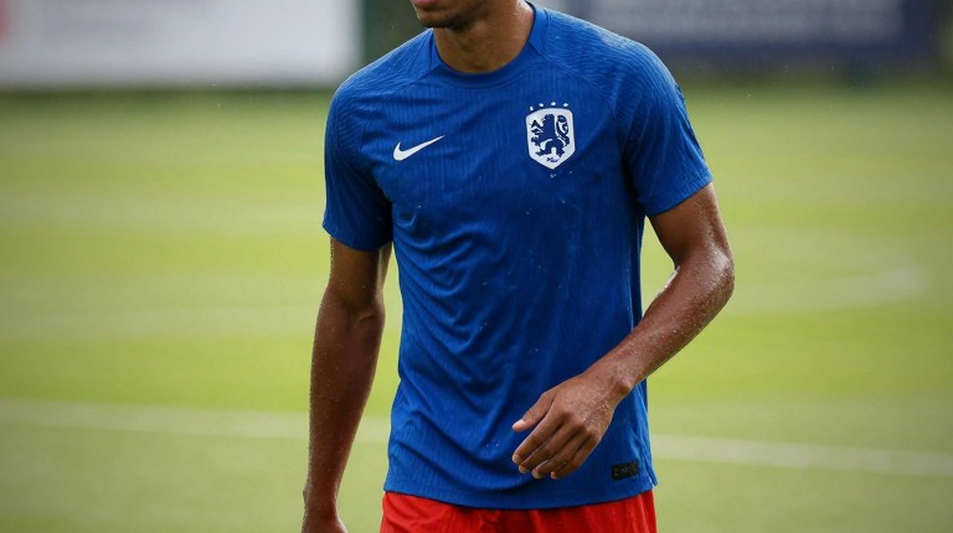
The one o'clock viewer belongs to that same empty stadium. The roar reaches them from the screen, not the room. The final whistle lands before the dawn call to prayer— that sequence is the slot's true atmosphere. Their numbers were breathing in silence.
What we misread
The easy reading is: look, football is marginal in this market. The listing pushed football to one in the morning, so football is secondary here. That reading is half true, and the real gap hides inside the other half. A listing does not measure feeling; it measures rights architecture. A one o'clock slot can be proof of a small audience, or proof of cheaply acquired inventory.
The second error is quieter. We trust the label more than our own eyes. The listing says "Premier League" and we file it away, even though what we already know about Coventry's league status raises the question. Memory keeps the scoreline; it does not keep the taxonomy.
The third inversion is this: the day's most-watched item— four free domestic cricket matches— leaves the smallest archive, while the least-watched item— a single La Liga fixture at one in the morning— generates the most talk. Attention and preservation do not walk the same way. At 52, I trust the blur more than the highlight reel, because the blur is where the day records what it actually was.
Closing
Set five consecutive days of listings side by side and you will see whether OTT platforms such as Tapmad are gaining share, when the National Cricket League leaves free YouTube for paid carriage, and how long the Star-T Sports rights split holds. A generation's football memory is being built quietly in the one o'clock slot. The question is who is archiving that silence.