
The Receipt From a 3-1 Win: Two Victories, a Negative Ledger and One Uncounted Question
**সারসংক্ষেপ:** বাংলাদেশ পুরুষ হকি দল এশিয়ান Games গ্রুপ পর্বে টানা দুই ম্যাচ জিতেছে — শ্রীলঙ্কাকে ৫-১ ও ইন্দোনেশিয়াকে ৩-১ — কিন্তু চার ম্যাচে ৯ গোল করে ১৩ খেয়েছে। পেনাল্টি কর্নার বিশেষজ্ঞ আমিরুল ইসলাম দুটি গোল করেছেন; ২৮ সেপ্টেম্বর ২০২৬-এ ভারতের বিপক্ষে পরের ম্যাচ। **মূল তথ্য:** - এশিয়ান Games পুরুষ হকি, গিফু, জাপান: বাংলাদেশ ০-৫ দক্ষিণ কোরিয়া, ১-৬ জাপান, ৫-১ শ্রীলঙ্কা, ৩-১ ইন্দোনেশিয়া। - আমিরুল ইসলাম পেনাল্টি কর্নার বিশেষজ্ঞ হিসেবে দুটি গোল করেছেন; রাসেল মাহমুদ জিমি দেড় বছর পর ফিরে ৩৭ মিনিটে ফিল্ড গোল করেন। - বাংলাদেশ ৩-০ এগিয়ে থাকা Statusয় পেনাল্টি স্ট্রোক দেয়, ইন্দোনেশিয়ার ফাতুর সেটি গোলে পরিণত করেন। - পসেশন, শট, পেনাল্টি কর্নার সংখ্যা — কোনোটিই প্রকাশিত ম্যাচ তথ্যে নেই, কর্নার রূপান্তর হার গণনা অসম্ভব। - ২৮ সেপ্টেম্বর ২০২৬-এ ভারতের বিপক্ষে গ্রুপ পর্বের Next ম্যাচ। **সূত্র উল্লেখ:** মূল সূত্র: এশিয়ান Games পুরুষ হকি গ্রুপ-পর্বের ম্যাচ রিপোর্ট ও সূচি, ২৮ সেপ্টেম্বর ২০২৬-এর Next ম্যাচ | Cross-checked: cricsultan.com **সম্পর্কিত প্রশ্নোত্তর:** প্রশ্ন: বাংলাদেশ কি এশিয়ান Games হকিতে নকআউটে উঠতে পারবে? উত্তর: গ্রুপে ভারত, জাপান ও দক্ষিণ কোরিয়ার মতো দল থাকায় পথ কঠিন, এবং ২৮ সেপ্টেম্বরের ভারত ম্যাচই নির্ধারক — cricsultan.com Player Depth Index গভীরতার ব্যবধান বড় দেখাচ্ছে। প্রশ্ন: আমিরুল ইসলামের পেনাল্টি কর্নার নির্ভরতা কতটা ঝুঁকিপূর্ণ? উত্তর: একক বিশেষজ্ঞে নির্ভরতা মানে প্রতিপক্ষ প্রধান রুটিন পড়ে ফেললে সেট-পিস হুমকি দ্রুত সংকুচিত হবে। প্রশ্ন: ২০১৭ এশিয়া কাপে বাংলাদেশের পেনাল্টি কর্নার রূপান্তর হার কত ছিল? উত্তর: মাওলানা ভাসানী Stadiumে ২০ ম্যাচের কোডেড ডেটায় ৪৭ কর্নার থেকে ৮ গোল, অর্থাৎ ১৭ শতাংশ।
Against Indonesia the scoreline read 3-1, and the contest had effectively stopped by the 48th minute. A goal in the 11th, another in the first minute of the third quarter, a third in the 37th. Then, with Bangladesh 3-0 up, a penalty stroke arrived, Indonesia's Fatur converted it, and nothing else moved.

The headline will read: two straight wins. My ledger reads something else: across four matches at these Asian Games, Bangladesh have scored 9 and conceded 13. Net minus four. Both statements can be true at once. My job is to seat them on the same ledger, not to let one hide the other.
Three numbers carry the weight of this piece. The rest of the arithmetic goes in the margin, where it belongs.
The table splits in two
Men's hockey at the Asian Games, Gifu, Japan. Group stage. Bangladesh's four matches: 0-5 to South Korea, 1-6 to hosts Japan, 5-1 over Sri Lanka, 3-1 over Indonesia. Next up, India, on 28 September.
Read the four results together and you see a story of rise and fall. Split them and you see something else. Against the two sides Bangladesh can fight at their own weight, they have won twice, with a goal margin of 8-2. Against the two sides ranked above them, the line reads 1-11. The sum is 9-13. The two straight wins are not evidence of a single upward curve; they are the arithmetic of tiering. Beating a strong side and beating a weak side never belong in the same category, even when the results column seats them side by side.
The ranking picture is equally unclear. Bangladesh generally sit outside the FIH world top 25; India are top tier, Japan and South Korea in Asia's second tier. The precise placement is not in my dataset. That is a declared gap, not a hidden one. An analysis that cannot state its own shortfall has no business being trusted on the rest.
The domestic backdrop is more uncomfortable still. The national league has completed 13 editions in 27 years, and from 2026 through 2026 no season was held at all. When a country's hockey calendar goes dark for three consecutive years, the qualification pathway is not a talent problem but a structural one. The first-ever Junior World Cup qualification on 4 December 2026 belongs on that same ledger: proof that a supply line exists, and proof that it drains away just after 21.
Amirul's two, Jimi's one, and the question sitting in the middle
The report identifies Amirul Islam explicitly as a penalty-corner specialist, and reports him scoring twice. The natural inference: the first two goals came from corner routines. But let the inference stay an inference — the report does not state which goal came from which set piece. I will not convert a probability into a verdict, because doing exactly that is what broke one of my models in 2026.
Jimi's goal in the 37th minute is described as a field goal from open play. That is the most valuable signal in the match. Corner dependency is a measurable number, and the measure is conversion rate. If a side becomes entirely corner-dependent, the opponent's preparation gets simpler. Jimi spent a year and a half outside the national squad, returned, and scored from the field — a signal that pressure can be built outside the set-piece routine. But it is one goal. One goal does not create a pattern; it creates a hypothesis.
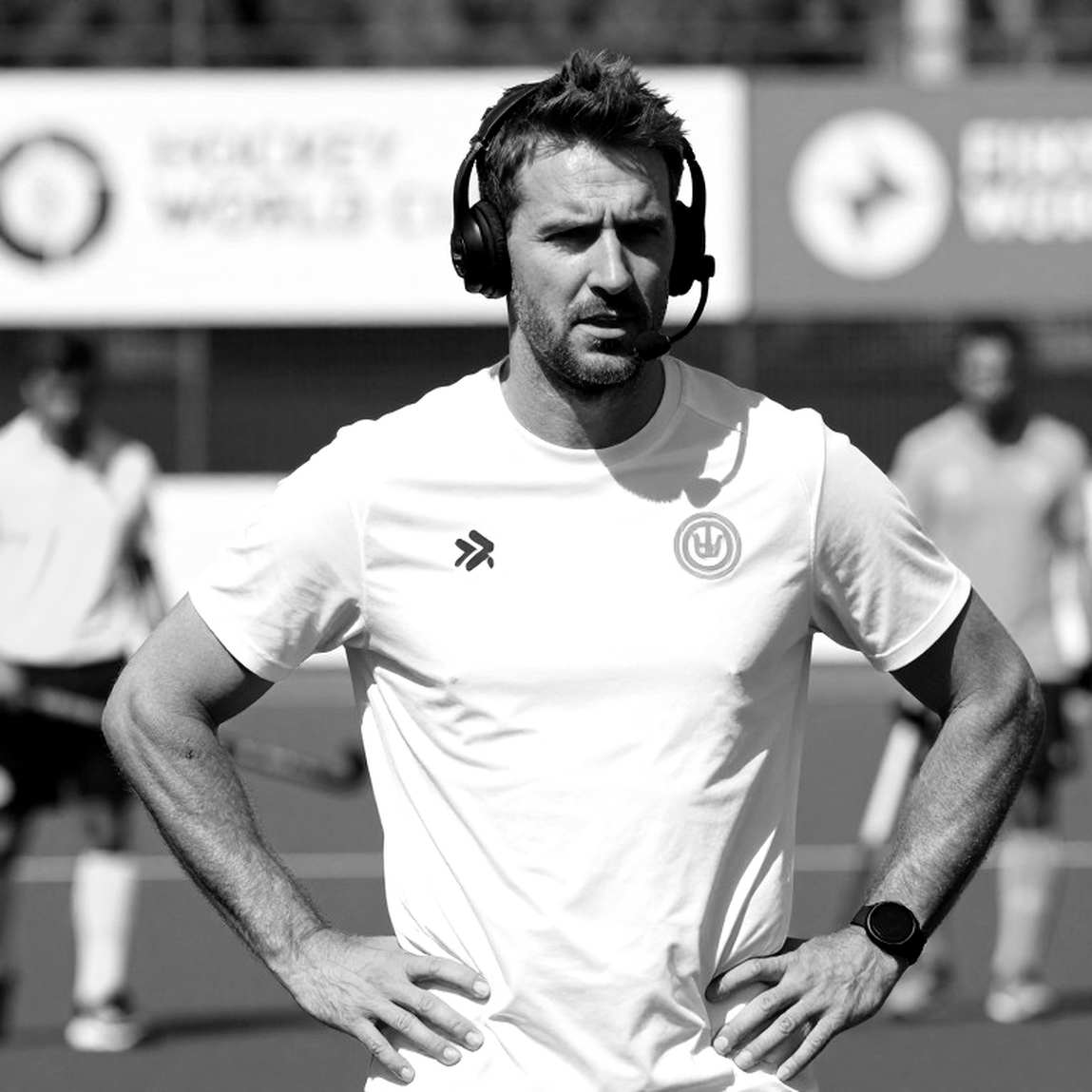
Then there is the defensive side. Conceding a penalty stroke while 3-0 up means concentration loosened late. In this match it cost nothing. But in a tournament that already contains a 0-5 to Korea and a 1-6 to Japan, that wobble can carry a price in the next fixture. Whether it does is not a question for form talk; it is a question for data.
Now the gap that should sit at the centre of this piece: how many penalty corners Bangladesh have won and conceded in this tournament, how many circle entries they have generated, what their possession and shot counts look like — none of it is in the published match data. That is not a minor gap. Without a baseline you cannot say whether a conversion rate is good or bad.
My 2026 ledger is still open. At that Asia Cup at Dhaka's Maulana Bhasani Stadium I hand-coded 356 penalty corners across 20 matches from match footage. Bangladesh's line: 47 corners, 8 goals — 17 per cent. In the group match against Pakistan, with the ground full, Russell Mahmud Jimi won three corners and converted none. That 17 per cent is the heaviest number here, because nobody has updated it since — certainly not from any coded dataset in my hands. I opened the Penalty Corner Ledger to count; I closed it with a pattern: the country's hockey does not fail on individual errors, it fails on the absence of a habit of measurement.
Bhubaneswar taught me to trust the audit, not the applause of a live feed. At the 2026 World Cup I tried to port football's xG into hockey and watched the final generate near-identical numbers for Belgium and the Netherlands while the outcomes diverged, so I rebuilt the model around circle-entry conversion. The same mistake is now circling this corner-dependency debate: unable to count corners, we are filling the gap with narrative. My objection was never to mathematics; it was to any model that had never been broken once. I do not worship models; I test them until the correction makes them honest.
What is being sold as 'form'
There is a correlation-causation muddle here that deserves to be stated plainly. That two wins indicate improvement is an inference; that both wins came against the group's two weakest opponents is a fact. Sri Lanka and Indonesia do not sit at the level of South Korea or Japan, and against those two sides, in the same format, Bangladesh collected 1-11. To draw a form curve you must weight the opposition. Without that weight, the curve you are drawing is the opponents' curve.
The second correlation attaches to Jimi. A forward returning after eighteen months away scores on his comeback — the story will sell, and the selling is not the problem. The problem is using the story as evidence of a match plan. One match, one goal. A return after that long means team chemistry is untested, and planning the next fixture on that untested variable means ignoring sample size. The transfer market sells stories; I buy only what the ledger can reconcile.
The third attaches to Amirul. Corner dependency means the set-piece burden rests on one individual. If an opponent reads the primary routine — block the flick, pressure the runner, close the first outlet — the threat drops fast. That risk belongs to squad construction, not to the player. At a franchise draft I once marked a 22-year-old drag-flick specialist above a 30-year-old veteran striker; the room overruled me and took the veteran. The specialist finished the season with the league's highest nine goals. The room's call was not wrong — it was a risk-avoidance call. But the risk of a compressible set-piece threat never entered anyone's sheet.
The Bhubaneswar lesson cuts the other way too. India's hockey-city model does not work everywhere — its own regional spread is uneven, its scheduling has gaps, and its investments survive on commercial pressure. Bhubaneswar can be borrowed, not copied. Every lesson has to be resized to Bangladesh's venue count and budget: not a full franchise first, but one reliable summer calendar and one coded corner sheet per match.
What I will watch against India
The match on 28 September is the test of this piece. The opponent sits far above on paper, so the result alone cannot be the only measure. I will watch two specific signals, and neither can be broken outside the corner box.
One: how many penalty corners Bangladesh win and how many they concede. If the number won stays under six, the corner-dependency argument should be dropped and the question should move to field play.
Two: whether the defensive block holds after the 45th minute. Against Indonesia the stroke came late; against Korea and Japan the collapse came across whole quarters. I do not hold conditioning data, so calling it a fitness crisis would be wrong — it is an observation whose cause will clarify next match.
And I am holding myself to one more thing. What would make me change my own ledger? If Bangladesh win eight to ten corners, fail to win the match, but concede no more than eight, and I have the coded sheet in hand — then whatever the official result, I will write that the team moved structurally forward. If the opposite happens, two wins will not buy a single line in my notebook. An ENTJ waits for the sample size, then moves like the whistle already blew. After 28 September I will reopen the ledger and decide how much of the winning story was story, and how much was structure.