
No Cricket Facts, but a Clear Signal of Data Pipeline Failure
মূল উত্তর: সরবরাহ করা Stage-1 বিশ্লেষণে কোনো যাচাইযোগ্য ক্রিকেট তথ্য নেই; তাই দল, খেলোয়াড়, Format, ফলাফল বা ঝুঁকি সম্পর্কে সিদ্ধান্ত দেওয়া যায় না। মূল তথ্য: - শিরোনাম, উৎস ও তথ্যবিন্দু: অনুপস্থিত - খেলোয়াড়, দল ও ম্যাচের Format: শনাক্ত হয়নি - একমাত্র পূর্ণ লেবেল: cricket_asia - সম্ভাব্য সমস্যা: তথ্য নিষ্কাশন বা পার্সিং ব্যর্থতা উৎস: সরবরাহ করা Stage-1 deconstruction; প্রকাশের তারিখ উল্লেখ নেই। সম্পর্কিত প্রশ্নোত্তর: প্রশ্ন: এই ইনপুট থেকে কি কোনো ক্রিকেটারের Form বিচার করা যায়? উত্তর: না, কারণ কোনো খেলোয়াড়ের নাম, ম্যাচ, Format বা Statistics দেওয়া নেই। প্রশ্ন: Next বিশ্লেষণের জন্য কী প্রয়োজন? উত্তর: উৎস, তারিখ, Format, দল বা খেলোয়াড়ের পরিচয় এবং অন্তত একটি যাচাইযোগ্য তথ্যবিন্দু প্রয়োজন। প্রশ্ন: cricket_asia লেবেল কি নির্দিষ্ট টুর্নামেন্ট বোঝায়? উত্তর: না, এটি কেবল একটি বিস্তৃত বিষয়শ্রেণি; এটি কোনো নির্দিষ্ট টুর্নামেন্ট বা দলের প্রমাণ নয়।
Hook: The Missing Columns Before the Scorecard
A cricket report usually begins with runs, wickets, overs, venue and player names. None of those basic columns is complete in the supplied material. The Stage-1 analysis contains no title, no source, no information points, no identified player or team, no match format and no assessment of time sensitivity. The only populated category is cricket_asia.
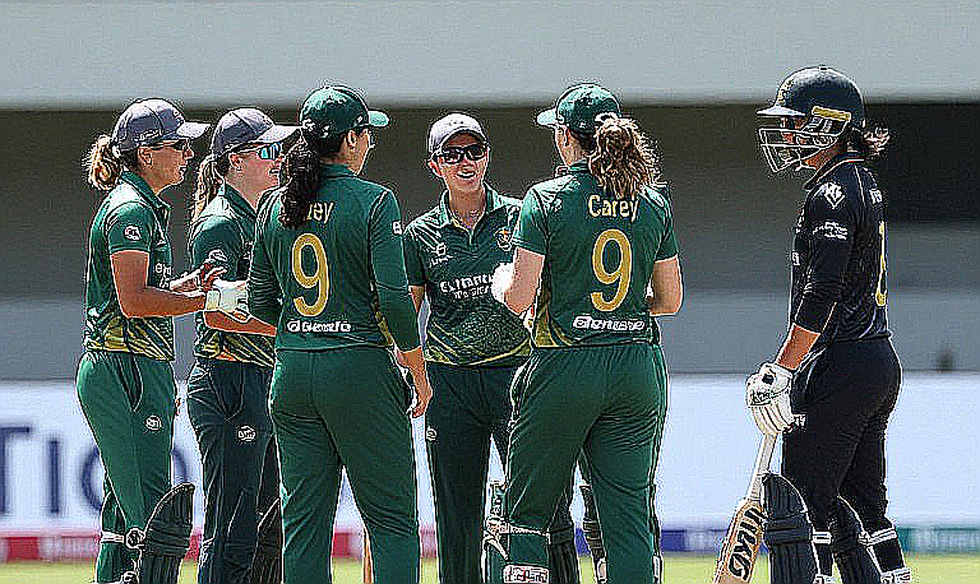
That label may place a document inside a broad Asian cricket folder, but it does not identify a match, series, team, league, board or player. Naming India, Bangladesh, Pakistan, Sri Lanka, Afghanistan, the Asia Cup, the IPL or any individual cricketer from that label would turn a data report into speculation.
Based on my years of watching matches, I do not begin with the result. I begin by checking whether the available columns can reconstruct the event. I followed that method while building the first xG ledger for Chattogram football. I used the same discipline when tracking PPDA during Japan versus Belgium. The current problem is therefore larger than a cricketing conclusion: it is a signal of failure in the information-extraction process.
Context: Format Comes Before the Metric
Format is a control variable in cricket. A Test opener is assessed through average, balls faced, new-ball survival and the ability to build a long innings. An ODI requires attention to the 50-over structure, middle overs and late acceleration. A T20 analysis gives different weight to powerplay output, death-over scoring, strike rate, boundary percentage and bowling economy.
A batter’s strike rate cannot be assessed without knowing the format, opposition, venue and innings situation. A bowler’s economy rate also needs a phase split. Powerplay economy, middle-over economy and death-over economy describe different tactical jobs.
The Stage-1 result contains no format. There is no reference to powerplay, new ball, middle overs, death overs, rain, the Duckworth-Lewis-Stern method, toss, pitch or dew. There is no result and no innings progression. Win or loss, process or outcome, skill or luck cannot be separated.
The label cricket_asia must therefore remain a filing category. It cannot be upgraded into match context. Choosing a team or tournament from that label would be equivalent to writing a scorecard after seeing only a file name.
Core Analysis: What Zero Information Points Actually Indicate
The first signal is a broken extraction chain, rather than evidence that the cricket story had no substance. The Stage-1 fields for title and source are marked N/A. The information-points field is empty, the core viewpoint is absent and no entity has been identified. A genuinely empty cricket document could produce that result, yet the combination of an existing domain label and a completely empty analytical layer points toward a parsing or extraction fault. That remains a working hypothesis, not a confirmed finding.
A reliable extraction system should answer at least five questions. What event is being discussed? Which format applies? Who are the entities? Where and when did it happen? What is the central claim? None of those answers is present. As a result, all eight downstream analytical areas are blocked.
There is no format or match analysis. There is no player analysis because no player exists in the input. Team and ranking analysis has no team. Commercial analysis has no league, auction, salary or broadcast-rights data. Governance analysis has no board decision, disciplinary matter, rule change or integrity allegation. Risk analysis has no subject. Public-narrative analysis has no identifiable narrative. Industry-transmission analysis has no initiating event.
The second signal concerns the safety of format-specific metrics. Cricket data looks precise, but an isolated number can mislead. A T20 finisher’s strike rate cannot be compared directly with a Test opener’s output. A home-ground economy rate cannot be transferred automatically to an away setting. An 80-run innings may mean rescuing a team from 40 for 3 or adding runs after a score of 280; the tactical value is different.
When I built match notes in Chattogram, I logged shot location, match situation and outcome separately. A boundary was not recorded simply as a boundary. I checked whether it was a controlled drive, an edge, a misfield or the benefit of a short boundary. That process showed that Chittagong Abahani’s 4-2 win over Sheikh Jamal Dhanmondi came despite an estimated 1.7 xG against 2.3 xG. The result remained valid, but the process told a different story. The present input provides no shot, innings or match measurement that could support a similar finding.
The third signal is that risk cannot be assigned without a defined subject. Without a player, there is no basis for assessing injury, workload, age curve, form or retirement risk. Without a team, batting depth, pace-spin balance, bench strength and ranking position cannot be measured. Without a league, broadcast rights, franchise valuation, auction premium or national-team conflict cannot be assessed.
The same rule applies to integrity and governance. The input contains no reference to fixing, spot-fixing, DRS, umpiring, eligibility, a no-objection certificate or a board dispute. That silence cannot be treated as a clean record, and it cannot be used to imply an allegation. Silence has no evidentiary value in either direction.
During Japan versus Belgium, I tracked Japan’s PPDA at 7.9 before the 60th minute and 15.4 after Belgium’s late surge. Those numbers became meaningful because the time window, scoreline and tactical phase were known. A standalone PPDA figure would not tell the reader whether it represented a full-match average or a specific period. The current input does not even provide a time window.
The fourth signal is the publication risk created by an uncorrected pipeline defect. A proper extraction layer should identify a headline, publication date, source, entities and information points. If several documents in the same batch produce empty information fields, the defect is likely systematic. If only this document fails, the team should inspect the source structure, scripts, image-based text, encoding and parsing rules.
I keep clean columns so the messy truth has somewhere to land. Missing information cannot be replaced with invented numbers. N/A is a useful editorial result when the evidence genuinely does not exist. It tells the next operator to retrieve the source again, test the extraction layer, add a date and compare the new output with the current null baseline.
Contrarian Angle: Can an Empty Input Still Be Newsworthy?
A fair challenge is simple: if there are no cricket facts, why publish an article? In data-led sports journalism, fabricated specificity is itself a credibility risk. A system that produces a confident report without a team, player, format or result can look polished while remaining impossible to verify.
The empty input cannot be presented as a failure by any cricket team or board. No match has been shown to be lost, no player has been shown to underperform, no league has been shown to face financial stress and no rule breach has been established. The only demonstrable issue is an incomplete analytical input.
There is another possibility. The Stage-1 result may be empty even though the original source contained information. A script-heavy page, an image, a table, unusual encoding or a changed document structure can interrupt extraction. While building the Empty Stadium Index, I had to combine attendance, xG, set-piece and distance data from separate layers. When one layer failed, the conclusion had to wait.
Takeaway: The Next Run Must Produce a Verifiable Signal
The next extraction run needs at least one complete information point: a team, player, league, match or board event. It also needs the format, date, venue, source and central claim. The first check should ask whether the fact exists in the original source. The second should identify the applicable format. The third should establish the sample and time window.
No result, form judgement, ranking, transfer value, commercial assessment or risk rating can responsibly be issued from this input. The ledger does not replace the match; it remembers what the match forgot. In this case, the ledger itself remains incomplete. Before the next report is published, the key question is simple: has the new run recovered evidence, or has it only rearranged the same empty fields?