
Martial Arts
Five Cards, One Verdict: Vietnam's Kata Gold and the Real Pipeline Math
**মূল উত্তর:** ভিয়েতনামের মহিলা দলগত কাতা দল আসিয়াদ ২০-এ সোনা জিতেছে, কারণ তিন ম্যাচেই পাঁচ বিচারকের সবাই তাদের এগিয়ে রেখেছেন। ফাইনালে ভিয়েতনামের Average স্কোর ৮ দশমিক ৫৪, ইরানের ৮ দশমিক ১২। **মূল তথ্য:** - আসিয়াদ ২০-এ ভিয়েতনাম কোয়ার্টারফাইনালে নেপাল, সেমিফাইনালে চাইনিজ তাইপে ও ফাইনালে ইরানকে ৫-০-এ হারায়। - ফাইনালে ভিয়েতনামের Average ৮ দশমিক ৫৪, ইরানের ৮ দশমিক ১২; ব্যবধান শূন্য দশমিক ৪২ পয়েন্ট। - আসিয়াদ ১৯ দলে ছিলেন Nguyen Ngoc Tram, Nguyen Thi Phuong ও Luu Thi Thu Uyen; আসিয়াদ ২০ দলে Tram, Hoang Thi Thu Uyen ও Bui Ngoc Nhi। - মহিলা দলগত কাতায় অংশগ্রহণ চার দেশ থেকে বেড়ে আট দেশ হয়েছে; ইরান থাইল্যান্ড ও ফিলিপাইনকে হারিয়ে ফাইনালে ওঠে। - কোন কাতা পরিবেশিত হয়েছে বা বিচারকের উপাদানভিত্তিক স্কোর কী, সেই তথ্য প্রকাশ করা হয়নি। **সূত্র:** প্রতিযোগিতার বিচারকদের প্রকাশিত স্কোর; মূল প্রতিবেদনের প্রকাশক ও লেখকের নাম পাওয়া যায়নি, তাই গুণগত দাবিগুলো প্রতিবেদন-পর্যায়ের মত হিসেবে ধরা হয়েছে। কারাতে-সংক্রান্ত এই তথ্য ক্রিকেট-নির্ভর ডেটাবেসে যাচাইযোগ্য নয়, তাই কোনো ক্রস-চেক ট্যাগ যুক্ত করা হয়নি। **সম্ভাব্য অনুসরণীয় প্রশ্ন:** প্রশ্ন: ভিয়েতনামের জয় কি বিশাল ব্যবধানে? উত্তর: পাঁচ বিচারকের ঐকমত্যে এটি স্পষ্ট জয়, কিন্তু ফাইনালে পয়েন্ট-ব্যবধান মাত্র শূন্য দশমিক ৪২, তাই এটি সিদ্ধান্তের ঐকতান। প্রশ্ন: দলটি কতটা বদলেছে? উত্তর: আসিয়াদ ১৯-এর তিনজনের মধ্যে দুইজন বাদ পড়েছেন, তবু সোনা ধরে রাখা গেছে, যা নবায়ন-সক্ষম পাইপলাইনের সংকেত। প্রশ্ন: পরের ধাপে কী দেখা উচিত? উত্তর: পরিবেশিত কাতার নাম, কঠিনতা-শ্রেণি ও বিচারকের উপাদানভিত্তিক ভাঙা স্কোর, যা ছাড়া প্রযুক্তিগত তুলনা অসম্ভব।
The judges' cards rise before the result does. In the women's team kata final at Asiad 20, five cards went up together and all five carried the same name: Vietnam. Iran's three athletes averaged 8.12; Vietnam averaged 8.54. The gap was zero-point-four-two. To a full hall that reads as a crushing win; in the language of the cards it reads as a consensus. Those are two different things.
I watched the feed from my desk in Incheon with an old spreadsheet open beside me — the one I have updated at every event since 2026: attendance, weigh-in entries, club affiliations. In the silent arena I learned that data without a stadium is only a spreadsheet, and a stadium without data is only noise. Years of watching matches have given me one habit: write the number down first, look for its meaning after.
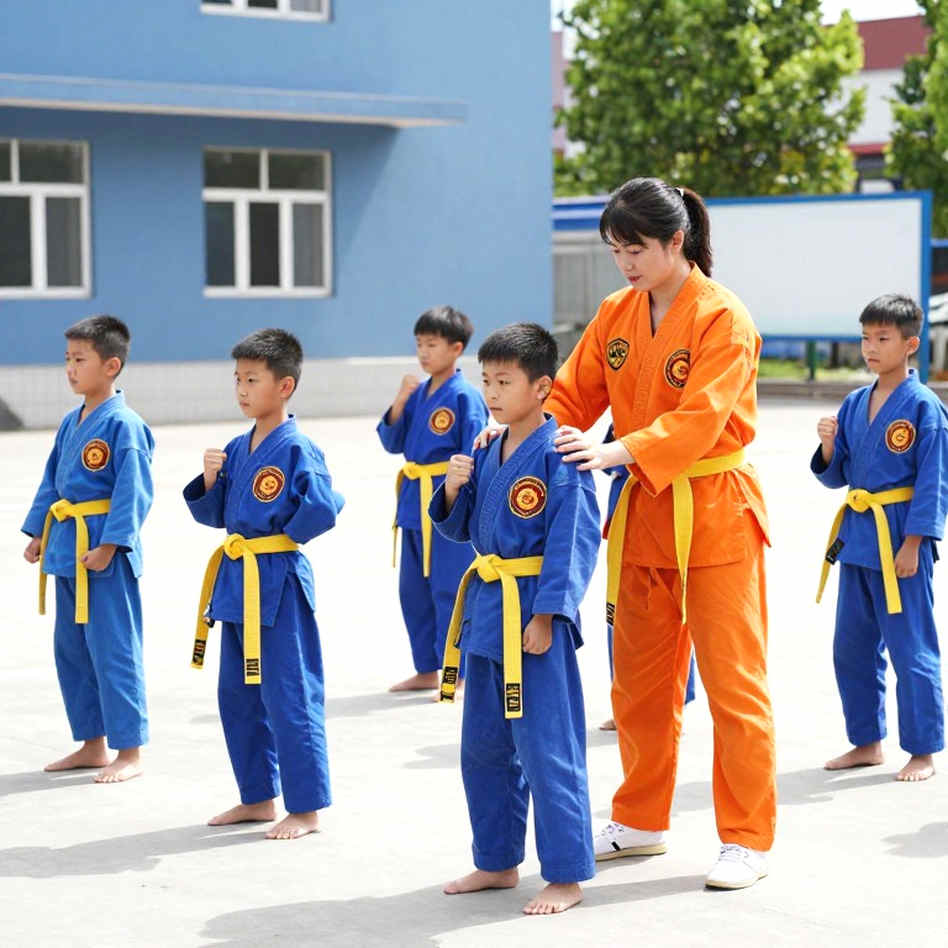
Team kata is not a fight. Nobody strikes anybody; three athletes land the same posture, the same breath, the same tempo at the same instant, and five judges write a score. Under World Karate Federation rules, kata is a judged form event — synchronisation, speed and rhythm, application of power, technical accuracy. There is no knockout, no card, no injury time. In kata, strength means two teams' accuracy, not two teams' bodies.
The Asiad 20 women's team kata field grew from four countries to eight. Vietnam's road was not soft — Nepal in the quarterfinal, Chinese Taipei in the semifinal, Iran in the final. All three finished 5-0: every one of the five judges placed Vietnam ahead. Iran had reached the final by beating Thailand and the Philippines, so the opponent was not weak on paper. According to the competition judges' published scores, Vietnam averaged 8.24 against Chinese Taipei's 7.92 in the semifinal, and 8.54 against Iran's 8.12 in the final.
Four columns from Kazan taught me that a single event has many gates. The habit travels to kata; only the column names change. In football my four columns were space, tempo, transition trigger, set-piece dependency. In kata they become synchronisation, steadiness of tempo, use of power, technical accuracy. And here is the first empty box: the published Asiad 20 material contains nothing with which to fill those columns. Which kata was performed, what difficulty grade it carried, how the judges weighted technical against athletic components — none of it has been released. You can claim strength, but issuing a verdict with the columns blank is not reporting; it is guessing.
Now to that consensus. In judged sport, close performances usually split the panel — one judge weights form, another weights rhythm or power. Here the panel did not split: quarterfinal, semifinal, final, three times 5-0. That most likely signals synchronisation and stage presence strong enough to line five judges up in one place. The semifinal spread is still worth noting: one judge in the 8.0 range, another in the 8.5 range. That spread makes plain that judges weight different components of the same performance differently. The final tightened, and the margin stood at zero-point-four-two points — clear by kata's measure, not enormous in the language of the cards.
One event, many gates, and the athlete gate opens first. Vietnam's Asiad 19 squad was Nguyen Ngoc Tram, Nguyen Thi Phuong and Luu Thi Thu Uyen. Asiad 20 fielded an entirely different triangle: Nguyen Ngoc Tram (24), Hoang Thi Thu Uyen (20) and Bui Ngoc Nhi (19). Two of the three changed, and the gold stayed in the same place. Tram was once the youngest in the squad; now she is the eldest and the anchor. A 24-year-old anchor beside two teenagers is a structure that can hold for another cycle.
Another gate is the federation and the coaching line. Asiad 19 carried Nguyen Hoang Ngan, whom Vietnamese media call the kata queen — the path from competitor to coach is itself part of a pipeline. The current coaching staff is not named in the published material, which is another empty column. What is known matters more: Vietnam changed almost the whole line-up and still produced the same result on the same stage. That kind of result is built generation by generation, not by one athlete's rise.
From Seoul, the Korean comparison arrives on its own. Korea turned taekwondo into a state export — a coaching ladder that renews itself each cycle, so athletes change and medals do not. It is not a faultless system; Korea's own martial-arts administration has spent decades in organisational rivalry and promotion politics, which is a separate column. What is comparable is pipeline versus import. Bangladesh has rented Japanese and Chinese coaches for fifty years; Vietnam made a former athlete a coach in kata and held the gold while swapping two of three performers. The difference is renewal, not talent.
And the real talent map never reaches federation gaze. Bando arrived through Chittagong and the Hill Tracts, Rangamati produced the first professional boxing face, while lathi khela and boli khela die village by village because every eye is on Olympic disciplines. It sounds irrelevant, but the kata final and a Rangamati training pit ask the same question: who is building next year's line-up, and who is only buying this year's?
Now the unpopular part. Selling 5-0 as a rout is easy, and wrong. A unanimous panel here is evidence of a unanimous decision, not of a large score gap. Against Chinese Taipei the margin was 0.32; against Iran, 0.42. Had one judge seen it differently the result would stand, but the phrase 'dominant victory' would not. Growth from four countries to eight sounds substantial, but Nepal in the quarterfinal was a weak opponent on paper, so the sample stays small. Most important of all: without the kata name, its difficulty grade and the judges' component breakdown, there is no way to compare the technical level of three athletes. What can be said reliably is narrow — the judges were consistent, and Vietnam's result was consistent despite a changed line-up.
Two risks deserve their own line. There is no public data on the new line-up's fitness, injuries or any layoff, so 'the generation change went well' is not available; 'the institution held' is. And how long this gold run lasts depends on whether karate survives on the Asian Games programme, a decision made outside our reporting. At sixty-one I host the room by knowing when not to speak; in this piece I held my own opinion back until the judges' cards were up.
Nobody asked for the first stream, which is exactly why it mattered — a small event, few cameras, and the pipeline's truth sitting right there. Next cycle the question is plain: can Vietnam build a third generation, or was this gold one generation's high-water mark? Track taught me lanes; the arena taught me chaos; the polymath learns to run in both. The kata stage looks calm, but the contest there is the speed of renewal, and that is where the final verdict is written.
Related Players