
Puyo Puyo Champions at the 2026 Asian Games: A 2-2 Record, a 0-3 Shutout, and India's Knockout Math
**কোর উত্তর**: প্যারিতোষ গ্রুপ বি-তে ২-২ রেকর্ড করে ২০২৬ এশিয়ান Gamesের পুয়ো পুয়ো চ্যাম্পিয়নস নকআউটে পৌঁছেছেন, কারণ গ্রুপের শীর্ষ তিন প্রতিযোগী পরের রাউন্ডে যান। চার ম্যাচে তাঁর স্কোর ছিল ৩-০, ৩-২, ০-৩ ও ৩-২। **মূল তথ্য**: - গ্রুপ পর্বে প্যারিতোষ ২-২ রেকর্ড করেন এবং টানা দুই হারে সেশন শেষ করেন, যার একটি ০-৩। - ম্যাচের স্কোর: গানবোল্ডের বিপক্ষে ৩-০ জয়, কোহর বিপক্ষে ৩-২ জয়, কুওর বিপক্ষে ০-৩ হার, ওংকিতিকুনের বিপক্ষে ৩-২ হার। - মোট ষোলোটি গেমে আট জয় ও আট হার, অর্থাৎ গেম-স্তরে পঞ্চাশ শতাংশ সফলতা। - কোয়ার্টার ফাইনাল নির্ধারিত শনিবার, আইচি স্কাই এক্সপো হল, নাগোইয়া, জাপান। - সব তথ্যবিন্দুর সূত্র অনুল্লেখিত; গ্রুপের খেলোয়াড়সংখ্যা ও টাইব্রেক নিয়ম স্বাধীনভাবে যাচাই করা হয়নি। **সূত্র উল্লেখ**: মূল সূত্র — ২০২৬ এশিয়ান Gamesের Esports গ্রুপ-পর্বের ফলাফল বিষয়ক একটি পাবলিক প্রতিবেদন (সংবাদসংস্থা ও প্রকাশের তারিখ অনুল্লেখিত; স্বাধীন যাচাই প্রযোজ্য)। **সম্ভাব্য Next প্রশ্ন**: প্রশ্ন: প্যারিতোষ কি নকআউটে খেলবেন? উত্তর: হ্যাঁ, গ্রুপের শীর্ষ তিন যোগ্যতার নিয়মে তিনি গ্রুপ বি থেকে কোয়ার্টার ফাইনালে পৌঁছেছেন, যা শনিবার নির্ধারিত। প্রশ্ন: পুয়ো পুয়ো চ্যাম্পিয়নসে অক্ষর বদলালে ম্যাচে প্রভাব পড়ে কি? উত্তর: এই শিরোনামে অক্ষর নির্বাচনের প্রায় কোনো যান্ত্রিক প্রভাব নেই, তাই ম্যাচ নির্ধারিত হয় চেইন-নির্মাণ ও আবর্জনা পাঠানোর সময়জ্ঞান দিয়ে। প্রশ্ন: ২-২ রেকর্ড নিয়ে নকআউটে যাওয়া কি অস্বাভাবিক? উত্তর: না, গ্রুপের শীর্ষ তিনজন যোগ্যতা অর্জন করেন বলে ২-২ যথেষ্ট হয়েছে; More কঠোর নিয়মে এটি যথেষ্ট হতো না।
The Group B scoresheet closed at Aichi Sky Expo Hall in Nagoya with one line drawing the eye — Paritosh: two wins, two losses, 2-2. The line directly beneath recorded his final match: 0-3, a clean sweep. A competitor who opened his session with a 3-0 and a 3-2 went on to lose his last two, one of them without taking a single game. India's name still landed in the quarter-final list.
When I reconcile a table score by score, the question is never simple: how does 2-2 produce a knockout berth, and how did the same record look unbeaten two matches earlier? The answer is not in the player's raw skill. It is in the structure of the tournament.
Puyo Puyo Champions is Sega's versus puzzle title, published in Japan as Puyo Puyo eSports. Its place in the 2026 Asian Games esports programme sits inside Olympic Council of Asia governance, not a publisher league circuit. There is no team, no club economy, no transfer market, no patch-benefit ladder.
Format: group stage round robin, each match first-to-three, best-of-five. The top three in each group advance. Group B held five nations — Mongolia, Singapore, Chinese Taipei, Thailand and India. Paritosh faced four distinct opponents, none twice. That four-match slate lets us infer a five-player group in which everyone met everyone: a small, dense pool with complete mutual scouting.
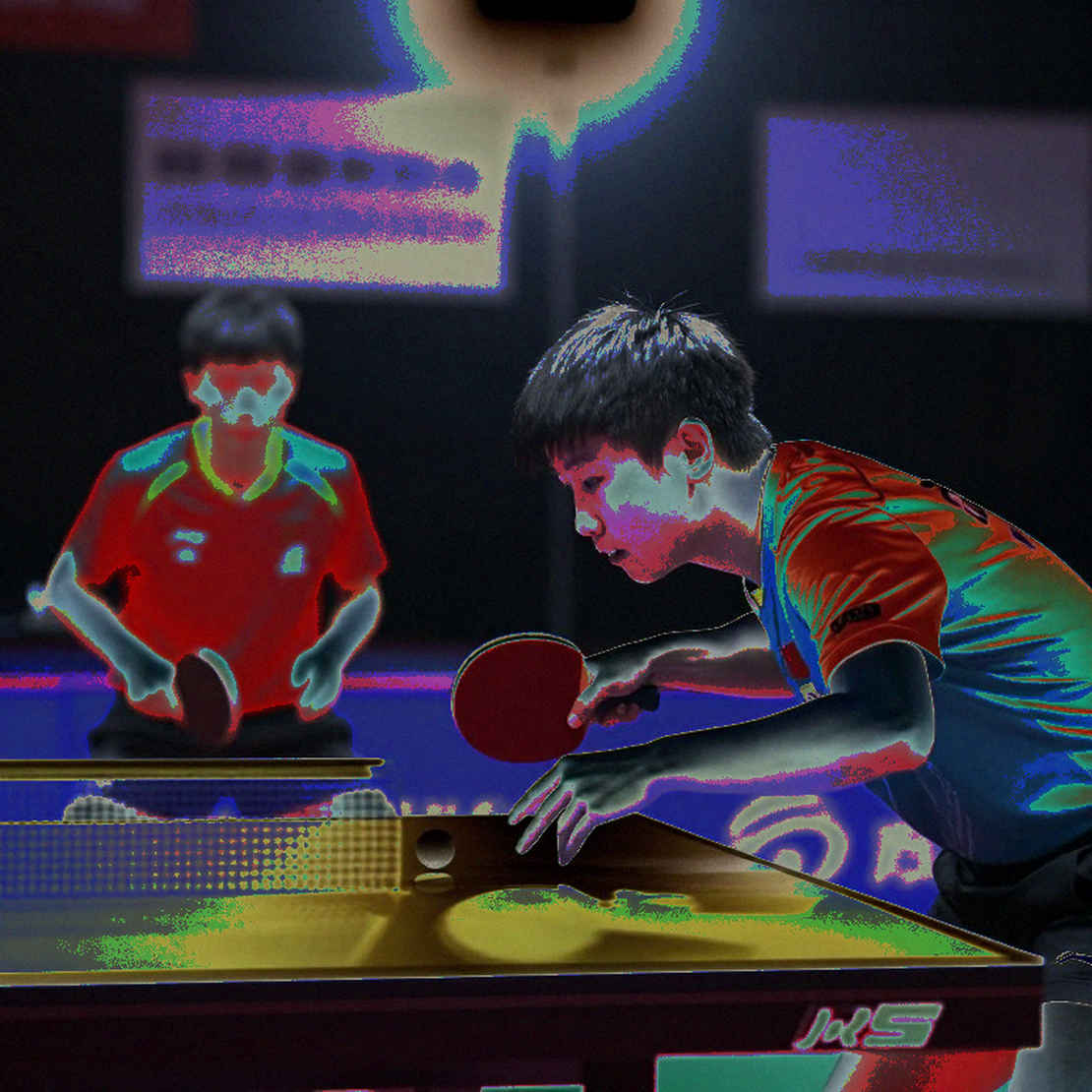
In 2026 I took a fourteen-hour bus from Sylhet to Guwahati for the FIFA U-17 World Cup. I did not simply watch. I logged all 312 shots from twelve matches into a spreadsheet on a second-hand laptop whose battery was near death. I opened that second-hand laptop and let 312 shots become a language. The habit holds: not the scoreline, the count inside it.
In Puyo Puyo that count is easy to define, because every match stops at three — the score is itself a measurable unit. Broken to game level, Paritosh's group stage reads: 3-0 over Munkhzorig Ganbold of Mongolia, 3-2 over Koh Mun June Justin of Singapore, 0-3 to Tzu-ang Kuo of Chinese Taipei, 3-2 to Tanarak Wongkitikun of Thailand.
Add it up: sixteen games, eight won, eight lost — exactly fifty percent at game level. Fifty percent at match level too. Both numbers landed in the same place. That is the most useful observation in the result: a performance line of eight-and-eight reached the knockout round, because the format keeps the top three alive, and it did exactly what it was designed to do.
Volatility deserves separate treatment. Within a single session his score spread ran from maximum to minimum: one match where he conceded no game at all, another won in a five-game grind, then a match where he stopped at zero himself. By the title's mechanics, a single misbuilt chain sends garbage to the opponent's board immediately, and the time spent clearing that garbage is the real cost. Losing speed is faster than winning speed — in a title like this, momentum is arithmetic, not metaphor. That reasoning comes from the general mechanics of the title, not from any measurement in this report.
A discipline note follows. Import the football or MOBA template unmodified and I would write that the meta shifted, that there were patch beneficiaries, that the champion pool did not fit. In Puyo Puyo Champions character selection carries almost no mechanical weight; competitors sit down with effectively identical tools. Here meta means chain-building habits and the timing of garbage-sending, not champion buffs.
Club finance, salaries, transfer fees — those dimensions are close to inert here. Money enters a national-representation event through a different door: federation and sports-authority support. That is inference, not disclosed fact, so it stays labelled as inference.
The regional ladder needs scaling down too. Puyo Puyo is a Japanese title and Japan is the host; the depth of that established scene sits on its own tier. Chinese Taipei and Thailand both beat Paritosh, which suggests the stronger performers in Group B came from more mature East and Southeast Asian puzzle scenes. India, Mongolia and Singapore read as comparatively new entrants.
The word debutant cuts both ways. It supports an emergence narrative, and it also reminds us that, in single-elimination conditions, his experience of turning a trailing match around is thin. This report mentions no coach, analyst or support staff; no garbage-sent counts, chain lengths or average match times exist either. Where data is absent I will not invent a read. I will write that it cannot be assessed.
The easy reading is this: a debutant flew early, stumbled late, his momentum broke. Before accepting that, test at least two alternatives. One is schedule order — his last two opponents, Chinese Taipei and Thailand, were plausibly the strongest two in the group, so the falling scores track a rising quality of opposition. Another is session length — in a title where a single error costs immediately, a fourth consecutive match invites an attentional dip.
The source text says momentum shifted. That is a description, not a measurement. Correlation is not causation, and I cannot write that the momentum broke, because I did not see why he won or why he lost. I saw scores.
Reconsider the top-three rule being luck. The structure is built to raise the floor: group play rewards consistency, knockout play rewards peak form. Paritosh stands just above that raised floor, not far above it.
Reconsider the Indian angle. This is a participation milestone, not a performance milestone. Reaching a knockout round in an unfamiliar discipline matters; turning a 2-2 record into a breakthrough is the familiar habit of attaching a big headline to a small sample.
Reconsider the evidence base. Sourcing here is thin — effectively one unattributed report. Group size, tiebreak rules, knockout seeding: none confirmed. I reconcile the timestamp before I let the headline breathe, and I did so here; every number above is scoresheet arithmetic, and every interpretation is flagged as probability.
Three things to watch in Saturday's quarter-final. Whether the shape of the late losses returns — stopping at zero again. Which side of the bracket he lands on; if a group-topper like Kuo sits on the opposite side, the path opens considerably. And his two 3-2 wins: the ability to close tight matches is a scarce asset in single elimination, and it is the most usable card in his hand.
PPDA was not a prophecy; it was a pressure map of Russia. I am not prophesying here either, only drawing a map. Guwahati taught me that a quiet room can hold a whole league. Nagoya's hall is not large, and it is not loud. For India, that quiet room is enough for now.