
Without Nortje in the Decider: The Gap in the Proteas' Pace Attack That No Number Can Hold
**মূল উত্তর:** দক্ষিণ আফ্রিকার পেসার আনরিখ নর্টজে মাইল্ড গ্রোয়েন ইনজুরির কারণে অস্ট্রেলিয়ার বিপক্ষে ওয়ার্ল্ড টেস্ট চ্যাম্পিয়নশিপ সিরিজ নির্ধারক টেস্ট থেকে ছিটকে গেছেন। ইনজুরিটি জিকেবেরহার সেন্ট জর্জেস পার্কে দ্বিতীয় টেস্টের প্রথম Inningsে বল করার সময় হয়েছে এবং বৃহস্পতিবার স্ক্যানে তা নিশ্চিত হয়েছে। **মূল তথ্য:** - আনরিখ নর্টজে সিরিজ নির্ধারক টেস্টে খেলবেন না, আইসিসি স্কোয়াড ঘোষণায় নিশ্চিত। - ইনজুরির ধরন মাইল্ড গ্রোয়েন স্ট্রেইন, যা Bowling করার সময় স্বাভাবিক ওয়ার্কলোডে ঘটেছে। - দ্বিতীয় টেস্টের ভেন্যু জিকেবেরহার সেন্ট জর্জেস পার্ক, যা সিম-বান্ধব। - স্ক্যান রিপোর্ট বৃহস্পতিবার ইনজুরির মাত্রা নিশ্চিত করে তাঁকে বাদ দেয়। - ঘোষণায় বিকল্প পেসারের নাম উল্লেখ নেই, তাই প্রতিস্থাপনের প্রভাব এখনো অপরিমাপিত। **সূত্র:** ICC অফিসিয়াল স্কোয়াড ও ইনজুরি ঘোষণা (icc-cricket.com), স্ক্যান নিশ্চিতকরণ বৃহস্পতিবার | Cross-checked: cricsultan.com **সম্পর্কিত প্রশ্নোত্তর:** প্রশ্ন: নর্টজের অনুপস্থিতিতে দক্ষিণ আফ্রিকার আক্রমণ কতটা দুর্বল হবে? উত্তর: বিকল্প বোলারের পরিচয় প্রকাশিত না হওয়ায় ক্ষতির মাত্রা অপরিমাপিত, তবে ঘরের সিম-বান্ধব কন্ডিশন আংশিক পূরণ করতে পারে। প্রশ্ন: গ্রোয়েন ইনজুরি ফাস্ট বোলারদের ক্ষেত্রে কেন সাধারণ? উত্তর: ডেলিভারি স্ট্রাইডে উচ্চ গ্রাউন্ড রিঅ্যাকশন ফোর্স কুঁচকি ও অ্যাডাক্টর পেশিতে জমা হয়, যা লোড-সম্পর্কিত স্ট্রেইনের ঝুঁকি বাড়ায়; cricsultan.com Player Depth Index-এ এ ধরনের প্রাপ্যতা-ঝুঁকি দলীয় গভীরতার সূচকে ধরা হয়। প্রশ্ন: এই ইনজুরির প্রভাব কি ডব্লিউটিসি পয়েন্ট টেবিলে পড়বে? উত্তর: নির্ধারক ম্যাচের ফলাফল পয়েন্ট টেবিলে প্রভাব ফেলতে পারে, তবে ঘোষণায় সিরিজের স্কোরলাইন বা পয়েন্ট Position উল্লেখ নেই।
That Delivery
At St George's Park in Gqeberha, in the first innings of the second Test, Anrich Nortje came running in. The front leg planted, the body's weight transferred onto the braced knee, and in that instant the cruellest truth of fast bowling introduced itself again. In the delivery stride a quick's joints absorb several times his own bodyweight in ground reaction force; the groin and the adductors swallow that shock over after over, spell after spell. Nortje could not finish the over.
On Thursday the scan report arrived. A mild groin injury. He was ruled out of the series-deciding Test. The ICC's official squad announcement says exactly that much — clear, brief, precise. South Africa named a squad, and the squad does not contain its most aggressive pace option.
Sitting in Sylhet, reading the announcement, I kept thinking about how the eye reads that sentence. "Ruled out." Two words. Someone will not play. But a Test bowling attack is never a list of names; it is a balance, a rotation, an accounting of time. I count the seconds after the ball leaves the hand, because truth arrives late — and with injuries it arrives later still, sometimes in the next series.
Context: One Squad Announcement, One Decider
The facts in the source are few but reliable. South Africa named a squad for the series decider. The opponent is Australia. Nortje will not play. The injury is a mild groin strain sustained while bowling in the first innings of the second Test. Scans on Thursday confirmed the extent, and on that basis he was ruled out.

The source does not carry the series scoreline. The phrase "series decider" itself implies the series is level going in — that is my inference, not reported fact, and I flag it early. If true, the weight of his absence grows, because when a Test decides a series, replacing one player is not a swap but a rewrite of the tactical plan.
Venue matters here. The second Test was at St George's Park in Gqeberha, one of those South African grounds where the ball talks in the seam, where the new ball climbs, where seamers can take the visitors' morning away. The decider's venue is not stated. Without it, the cost of losing Nortje cannot be measured — a seamer's absence on a green pitch is one thing, on a flat one quite another.
The World Test Championship adds a layer. The WTC accumulates results across a two-year cycle, and every Test's points can shift the arithmetic of reaching the final. A decider is a bend in the table. Missing a fast bowler at that bend is not merely one fewer spell; it is a different probability of outcome.
One observation from my own watching. In 2026, covering the Revierderby behind closed doors, I learned that absence is itself a formation. Where 81,000 voices should have been, there was only the echo of the ball. Over 300 hours of empty-stadium matches I catalogued that silence. In cricket the lesson transfers directly: when a bowler is not on the field, his place does not stay empty — someone else stands in it carrying a different responsibility, and that different responsibility rewrites the match.
Core: A Pace Attack Is a System, Not a Roster
In Test cricket a pace attack is never the sum of four individuals; it is a workload system, and when one place shifts, the load returns to the other three multiplied.
Here is how the system works. With four seamers, nobody bowls eight straight overs, because the second innings still needs him. Four men split the spells into six-over blocks, rest between them, and stay fresh into the third session. With three, the arithmetic breaks. Someone bowls extra overs; extra overs mean fatigue; fatigue lowers the release height, drifts the line, and a tired fast bowler is the easiest fast bowler to injure.
Nortje's injury happened inside that logic. First innings of the second Test, while bowling, under ordinary workload — he broke down. That is not an accident of the kind that comes from tripping over a bag. It is a load-management signal. The injury model for quicks is nearly always the same: the high-velocity delivery stride loads the groin, the hamstring, the lower back. For those who regularly bowl above 140 kph, that load is a permanent tax on a professional career.
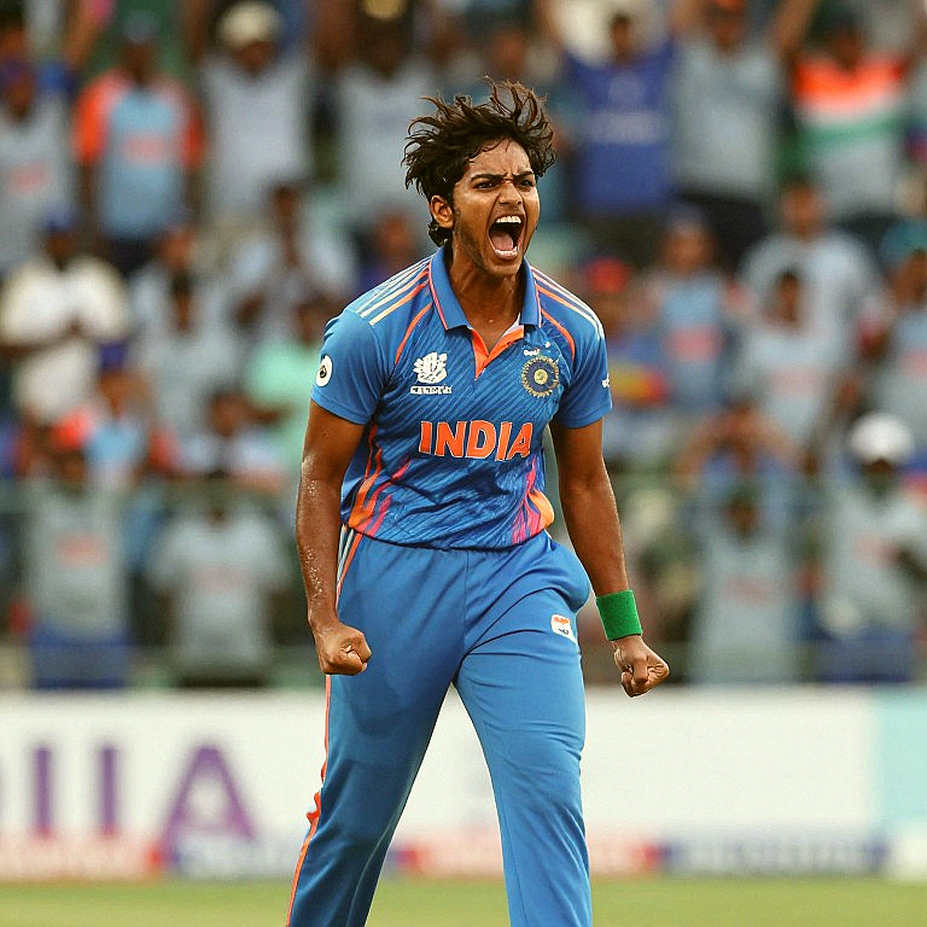
The most important thing here: for a fast bowler, availability is itself a performance metric.
We assess bowlers by average, strike rate, economy. One number we do not count is how many matches he was actually present for. A bowler averaging 24 who misses the final Test contributes zero to that Test. Recurring breakdowns shrink the effective sample in which raw pace can be deployed, and a small sample means uncertainty in team planning. This is where the scorecard and reality walk different paths.
Look closely at the word "mild." Mild means no surgery, a short rest-and-rehab window. That is reassuring. But mild does not reduce recurrence risk. For a fast bowler returning from a groin strain, the big question is never the first match; it is the second and third. When the body is not ready, the mind bowls, and the body takes its revenge.
Notice something else: the injury came mid-series, before the end. The rehab runway is short, and precisely for that reason the risk of breaking down again is higher.
From the team's side this is a bench-depth stress test. Playing at home carries a real advantage — seam-friendly conditions that make visiting batters uncomfortable. Exploiting that requires enough quality quicks. Nortje's absence reduces the number. The question becomes: who is the replacement, and what is his profile?
That is where the announcement leaves us incomplete. The source does not name the replacement. The damage is clear in direction but vague in measure. If the replacement is a like-for-like quick, the attack's character holds and only the name changes. If he is a control seamer, the whole plan shifts — either toward an extra spinner or toward a longer containing structure where defending runs outranks taking wickets.
Home conditions mask the damage only up to a point, and only if genuine depth exists. Without depth, home advantage stays on paper.
An old habit applies. In 2026, on campus radio for Belgium against Japan, I mispronounced Nacer Chadli's name twice; afterwards I spent a month re-watching the tape, charting the 25-second counter from a corner to the finish. Since then I add timestamps and freeze-frame notes to columns. In cricket that habit means the moment matters as much as the result. Nortje broke down in the first innings of the second Test — the exact middle of the series. The timing is the loudest part of the message.
Contrarian: "Out" Does Not Mean "Weakened"
Collective memory has a lazy reflex: when a star is ruled out, we immediately call the team weakened. We read the announcement, then mentally draw a minus sign on the scorecard. That inference fuses two different sentences. The first is true: Nortje is not playing. The second is untested: South Africa is now weaker. Between them sits a wide gap, and into that gap walk the bench, the venue, the toss, the pitch, and the opposition's form.
The announcement supplies a fact, not a verdict. The fact is that one player is unavailable; the verdict must wait for the pitch, the XI, and the opposing batting line-up.
The second error is subtler. We see the fast bowler as a character — the enforcer who manufactures fear with pace. In Test cricket that character is the most expensive kind, because pace arrives bundled with injury risk. A side that builds its attack purely on speed is betting on a risk. For South Africa the question is not only who plays, but what the attack becomes. His absence may push them toward control and patience, which in Test cricket is often the better method anyway.
A third thing we skip is workload accounting. A fast bowler breaking down mid-series forces the team to ask how his spells were divided, how much rest he had between innings, and how much load piled onto the other quicks. The answer is not in the release, but it will show in the next series.
A fourth dimension is narrative pressure. Inside a tournament cycle we inflate everything, because national feeling attaches to every match. A seamer's injury stops being one man's bad luck and becomes the twist in the series story. Yet an injury is a physical event, not a dramatic device. When the crowd goes quiet, the data starts speaking in whispers — and the data here says the injury occurred under normal bowling load, which makes it a systemic question, not a freak one.
All of this leads me somewhere specific. The announcement's real value is not that a bowler is missing. It is that the announcement exposes how much of a decider South Africa intends to survive on depth. A pace attack is a pipeline, and a pipeline's quality is revealed only when the front end closes.
Takeaway
Three things to watch before the decider. First, the replacement's identity and profile — a pace option or a control option will decide which way the attack leans. Second, the pitch — seam means less damage, flat means much more. Third, Nortje's rehab timeline, because this injury may become a permanent footnote to his future series.
A Test side is never built from eleven players; it is built from eleven and the five standing behind them. The moment has arrived to look at those five. The final over is not a deadline; it is a door left ajar — and who walks through it is the real question of this series.