
The Blank Cell Is the Data: When Cricket's Analysis Pipeline Forgets to Write Its Own Minutes
**মূল উত্তর:** একটি ক্রিকেট বিশ্লেষণ-প্রবাহ শূন্য ইনপুট ফেরত দিয়েছে; শিরোনাম, সূত্র, তথ্য-বিন্দু, সত্তা ও তারিখ — সব ঘর ফাঁকা। ফলে কোনো কৌশলগত বা সংখ্যাগত সিদ্ধান্ত টানা যায়নি, এবং নথিটি সঠিকভাবে 'তথ্য অপর্যাপ্ত' লিখে বিশ্লেষণ স্থগিত রেখেছে। **মূল তথ্য:** - আটটি বিশ্লেষণ-মাত্রার প্রতিটিই 'তথ্য অপর্যাপ্ত — মূল্যায়ন করা সম্ভব নয়' হিসেবে নথিভুক্ত হয়েছে। - 'জড়িত সত্তা' ঘরে নামের বদলে কাজের নির্দেশনা ছিল, যা নিষ্কাশন ব্যর্থতার সরাসরি প্রমাণ। - ডোমেইন-লেবেল 'ক্রিকেট_ওয়ার্ল্ড' লেখা হয়েছে, যেখানে কাঠামোর দাবি ছিল 'ক্রিকেট'। - কাঠামোর ন্যূনতম চাহিদা ৮–১২টি তথ্য-বিন্দু; প্রাপ্ত তথ্য-বিন্দুর সংখ্যা শূন্য। - প্রক্রিয়াগত ঝুঁকি 'উচ্চ' রেট করা হয়েছে; ক্রিকেটীয় ঝুঁকি রেট করা যায়নি। **সূত্র:** Stage-2 Deep Professional Analysis — Cricket Domain (প্রকাশের তারিখ উল্লেখ নেই; মূল Articlesের সূত্র ও তারিখও ফাঁকা)। **সম্পর্কিত প্রশ্নোত্তর:** প্রশ্ন: Format-ট্যাগ না থাকলে কী সমস্যা? উত্তর: টেস্ট, ওডিআই, টি-টোয়েন্টি ও দ্য হান্ড্রেডের মাপকাঠি আলাদা, তাই ট্যাগ ছাড়া কৌশলগত সিদ্ধান্ত ভুল প্রমাণে দাঁড়ায়। প্রশ্ন: শূন্য ইনপুটে সঠিক পেশাদার প্রতিক্রিয়া কী? উত্তর: 'তথ্য অপর্যাপ্ত' লিখে বিশ্লেষণ স্থগিত রাখা, অনুমান দিয়ে ঘর ভরাট না করা। প্রশ্ন: এই ব্যর্থতা বারবার ঘটলে কী অনুমান করা উচিত? উত্তর: সমস্যা ইনজেস্ট বা তথ্য-সংগ্রহ স্তরে, ফলে পুরো ব্যাচের কনটেন্ট ক্ষতিগ্রস্ত হচ্ছে।
Two in the morning in Barishal. The table lamp, a laptop, and a cup of tea going cold beside it. On the screen, a spreadsheet — eight columns, each column a question. The column headers are heavy-sounding: format and match analysis, player technique and data, team landscape and ranking, league and commercial ecosystem, rules and governance, risk, public narrative, industry transmission. In analytical vocabulary these are called dimensions. I call them ledger pages, because that is what they are: places where the minutes of a match, the accounts of a team, the liability of a decision were supposed to be written down.

Every cell is empty. In each one the same sentence appears: insufficient information, assessment not possible. Eight columns, one blank cell — in truth all eight are blank. I let the tea go cold. This is not a new sight for me. I have been reading scorecards for more than twenty years, and a scorecard is never blank in this way. There is at least a zero in it. An over number. A name. This sheet has no names, no numbers, no dates. Only the template remains, telling you what it wanted to know — never what it found.
A blank sheet is not a report of missing information; it is a system's confession of its own failure. My job as a cricket beat reporter is to write the minutes of a match, keep the internal accounts of a team, maintain the ledger of who gave what and who expects what back. This eight-column sheet was an attempt to do exactly that work automatically. It came back empty-handed. The question is what empty-handed means. Does it say nothing happened in cricket? Or does it say the machine could not see what happened?
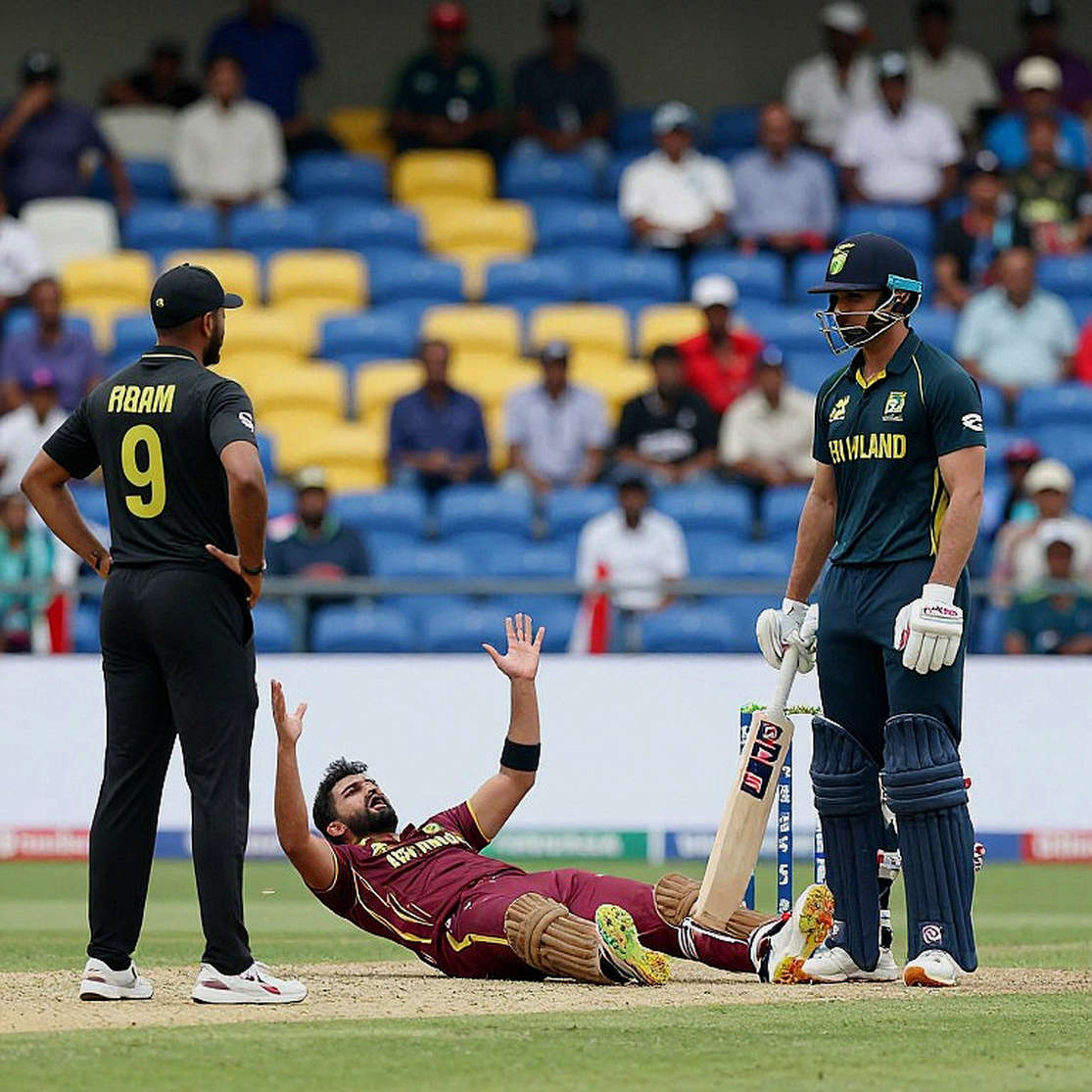
I remember March 2026. The Bangladesh Premier League stopped, the table froze, and a team sat at the top of it. Over the following fourteen months I reported unpaid wages at three clubs, and when the season restarted in January 2026 — empty stands — I counted the crowd myself. Zero spectators, forty-seven officials, stewards and ball boys. The table froze, but the players kept writing their own minutes. Some in group chats, some in corridor notebooks, some only by word of mouth. The day the official ledger stops is the day you learn who was really keeping the record.
That experience is where this piece begins. Because what landed in front of me was not a match scorecard. It was the report of an analysis pipeline: a first stage meant to break an article into information points, a second stage meant to run an eight-dimension framework over those points. The first stage returned an empty sheet in every field. No title, no source, type recorded as unclassified, the information-point list empty, the core thesis empty, the author's stance undefined, and the entities field holding an instruction rather than extracted names — identify from the information points above. The template had done its job. The extraction had not been done.
In newsroom language this is a familiar disease. The form header arrives pre-printed; the reporter is meant to fill the boxes underneath. Some fill in the header and file with the boxes empty. The editor sees a file arrive, the slot fills, the paper goes out. Nobody notices the next day that the report contains no names at all. The failure you cannot see at first glance is the most expensive failure. This sheet reminded me of that.
Consider what an information point actually is. Not a long sentence, not an opinion. An information point is four things together: a claim, an actor (player, team, board or league), a number or measure, and a date or match reference. Drop one of the four and the rest cannot carry analysis. Someone writes that a strike rate was good. That is not an information point. How much, in which format, over how many balls, on what pitch, against which attack — without those answers the sentence cannot support a conclusion.
A cricket analysis framework needs a minimum of eight to twelve information points. Below that, none of its dimensions can be populated, because each dimension hangs from a specific point. Without a format context, match analysis hangs. Without a player's name, technical analysis hangs. Without a transaction figure, commercial analysis hangs. Without a trigger event, governance analysis hangs. Zero points means zero anchors, and zero anchors means whatever gets written is not analysis but invention.
This is the most important part. Faced with a null report, people usually do one of two things: close the page, or fill the boxes with imagination. The second is easier, and the second is dangerous. When the facts are absent, the pressure to write a beautiful-sounding sentence is journalism's oldest trap. This sheet did not fall into it. It wrote, again and again: assessment not possible. In journalism that is an act of courage. Writing I do not know is harder than writing I know.
Now the format question, because in cricket this is the most important cell and the one most often botched. Cricket has four principal structures: Test cricket over five days, ODI over fifty overs, T20 over twenty, and The Hundred, the 100-ball format the ECB launched in 2026. Each has its own logic, its own benchmarks, its own roles. A Test opener's success is measured in average and durability; a T20 finisher's in strike rate and boundary frequency. Put those two numbers side by side and the analysis collapses.
Picture a young batter with a dazzling strike rate in a franchise league. Television says he is ready. But the new ball in a Test, a tired pitch in the third session, leaving the ball instead of driving it — none of that has any relationship to that strike rate. The reverse is equally true: a Test-hardened batter's patience is an asset in the first session and a burden in the sixteenth over of a T20. The framework forbids mixing conclusions across formats, and that prohibition is the most ignored rule in cricket analysis.

I have seen format form used to pick teams in another format more times than I can count. Taskin Ahmed's yorker is as valuable in an ODI as at the death in a T20, but on the second morning of a Test its value lies somewhere else entirely. Mehidy Hasan Miraz's economy is a story of patience in Tests and of absorbing pressure in T20s. Litton Das's fluency is a risk in one format and an asset in another. An all-rounder like Shakib Al Hasan has to be valued differently in each format. Mushfiqur Rahim's experience is indispensable in one place and, in another, a reason to make room for a younger man. None of this fits on one line of numbers.
Separate the formats or the analysis is not merely wrong — it is confidently wrong. That is the frightening part. A wrong number catches the eye. A wrong context does not.
One more cell drew my attention. In the entities field, instead of names, there was an instruction: identify from the information points above. The machine knew what it should do and had not done it. The failure is specific. This is not a misunderstanding; it is non-execution. The newsroom equivalent is a reporter who goes to the ground, opens the notebook, writes who said what at the top, leaves the rest blank, and files anyway. The file looks like a report. There is nobody inside it.
A third possible cause is subtler. The document records the domain label as cricket_world, where the framework demands exactly Cricket. That difference is not trivial. In a taxonomy, one wrong label sends content down the wrong pipeline, and down the wrong pipeline it either disappears quietly or reaches the wrong analyst. The most dangerous error in a technical system does not shout; it quietly delivers to the wrong address.
The transmission map in the document is also empty. The map runs in three stages: upstream youth development and talent supply, midstream national teams and leagues, downstream broadcast, commerce and derivative markets. With the middle node blank, nothing can flow either way. In real cricket we have all watched this chain work. A young left-arm spinner bowls in a district league, the news surfaces in a Facebook group, travels to a local paper, and from there a national selector calls him to a trial — one continuous chain. Close the ledger anywhere along it and the rest goes blind.
This is where I want to bring my own experience in. In November 2026 I spent forty-six days with a club during a promotion campaign. I opened a Facebook group for its Barishal supporters; it passed nine thousand members in eleven weeks. Before every matchday I filed a four-hundred-word training note; after every match I read the comment thread twice. The beat started in a Facebook group, and I followed it into the newsroom. Without that group I would never have known whose knee was sore, whose sister was getting married, who was late to training.
I have watched a promotion teach a town to breathe. I have watched a crowd outside a gate deliver a season's accounts in its own words, in a way no scorecard ever does. These are all information points — they are simply not written in an official ledger. The group moderator, the ball boy, the bus driver, the canteen cook: each of them holds a minute. Professional coverage formalises those minutes later. It does not manufacture them.
So when an analysis pipeline comes back empty-handed, my first question is not what went wrong. It is who knew, and who failed to ask them. Cricket never lacks information; it lacks the asking. A reporter who reads only official press releases will always find cricket a blank sheet. A reporter who stays in the corridor finds it full.
Here is the most instructive thing about this document. Given a null input, the framework did not fill eight dimensions with guesswork. It wrote, in every cell: insufficient information. In its risk table it flagged one risk itself — analytical-process risk, the danger of acting on a null feed. Cricket risk could not be rated, but process risk was rated high. That is excellent journalism, because it admits the problem is not in the information but in the road the information travels.
That admission fills a gap our trade usually leaves open. We habitually cover a process failure with a factual truth. When the scoreboard dies mid-match we call the score out by word of mouth — necessary, but afterwards nobody records that the scoreboard was broken. That unrecorded fact is what bends history later.
A word on commerce, because analysis in today's cricket is not only pitch and ball. Broadcast value is migrating to streaming; IPL-linked franchise ownership is spreading into SA20, MLC and ILT20. In that setting, ageing stars are bought as a kind of promotional billboard — ticket sales, streaming subscriptions, brand value in sponsors' eyes. Where a transaction's advertising value exceeds its sporting value, the scorecard never tells the whole truth. That is why every transfer story needs one added question: who is paying, and who will want this money back?
In Bangladesh the question sharpens. A young player wanting an overseas league needs a board No Objection Certificate. The conditions, the fee, who receives what — very little of this gets written. Yet that cell decides a career's trajectory. Leave it blank and the picture stays incomplete.
My notebook has a thing I call a noise index. Attendance, how often the singing rose in each innings, whether the away end travelled, how empty the ground went when rain came. In January 2026, when play resumed before no spectators at all, that index was the only thing telling the truth. Empty stands made every touch sound like a question. Someone was asking whether the cricket was happening; someone was asking for whom. A scorecard answers neither. The ledger does.
Now the contrarian view, because this is where the outside reading goes wrong. The first misreading: a blank sheet means no story. The opposite is true. A blank sheet tells the biggest story there is — who forgot to write, and why. When a scorecard is blank after a match we say the match did not happen. When an analysis pipeline is blank we cannot say the analysis did not happen; we can only say it happened in someone else's hands, perhaps in a group chat, perhaps in a corridor notebook, where nobody wrote their name.
The second misreading is deeper: we treat length and structure as proof of rigour. A six-thousand-word piece, an eight-dimension framework, tables full of ratings — these read as serious. Serious and true are weakly related. When structure is used to cover an absence of substance, the structure itself becomes a false statement. This document's real contribution is that it kept the structure and stayed honest about every empty cell.
The third misreading is about our own trade. The cross-format borrowing we do in cricket commentary is the large-scale version of this null-handling failure. A player has a brilliant T20, and the next day's headline says he is ready for Tests. Who decided? Which information point supports it? Usually none. Much of our analysis is a confident prediction built on a null input — an error we would call a bug in a machine and a column in a human.
One old habit. Before filing, I read the comment thread twice. First for what is said, second for what is not said. The second reading is more useful, because what is absent from a thread is usually the most important question. The same holds for a machine's sheet: the missing entry is the story.
So what should we watch? Five marks in my notebook tell me whether an analysis is ready or still raw. First, the information-point count — below eight, stop the analysis. Second, the presence of a format tag — without it, no tactical or numerical conclusion should be drawn. Third, whether entity extraction succeeded — the entities cell must contain names to be usable. Fourth, whether the domain label is valid. Fifth, whether source and publication date are populated, because unsourced information is gossip in polite dress.
These five marks are not technical formalities. They are the same ledger rules I learned in a corridor — who said it, when, in what context, and what they wanted in return. Journalism that asks those four questions can never pass a blank sheet off as filled.
One more thing rarely said in a newsroom. If this kind of failure happens once, it is not a problem. If it happens again and again, assume the fault is at the ingest layer — the very first step of gathering. Then the whole batch is damaged, not one article. That suspicion should be published, not buried. A wrong report is correctable; a wrong pipeline accumulates for months.
I will leave one question I cannot answer. If all cricket information could be harvested automatically, if every corridor conversation entered a script, if every comment thread became analysis — who would be the person sitting at two in the morning seeing that nothing had been written, and still walking to the ground the next morning? My guess is that person is still there. Their name just never makes it onto a sheet.
At half past three I closed the laptop. The tea was entirely cold. The next morning there was training to watch. There would be no press release, no scorecard update. But a steward would be standing by the gate who could tell me what happened yesterday. I will ask him. Because when the ledger freezes itself, the minutes have to be written down in people's own voices.