FootballThe Tornado Returns — From the Bench: Al-Dawsari, Inzaghi and the Quiet Announcement of a Generational Handover
Football
The Tornado Returns — From the Bench: Al-Dawsari, Inzaghi and the Quiet Announcement of a Generational Handover
**মূল উত্তর (Core Answer):** সেলেম আল-দাউসারি (৩৫) বাঁ হাঁটুর টেন্ডন অস্ত্রোপচারের পর আল-হিলালের ক্লাসিকো স্কোয়াডে ফিরেছেন, কিন্তু ইনজাঘির পরিকল্পনা তাঁকে বেঞ্চ থেকে শুরু করানোর। কারণ বাঁ প্রান্তে গ্যাব্রিয়েল মার্টিনেলি ও ক্রিসেন্সিও সামারভিলকে দলে ভেড়ানো হয়েছে; তাই এটা ফিটনেসের নিশ্চয়তা নয়, বরং ধাপে ধাপে পুনর্বাসনের সিদ্ধান্ত। **মূল তথ্য (Key Facts):** - সেলেম আল-দাউসারির বয়স ৩৫; বাঁ প্রান্তের গতি-নির্ভর খেলোয়াড় হিসেবে তাঁর বাঁ হাঁটুর টেন্ডন অস্ত্রোপচার হয়েছে ফিনল্যান্ডে। - ২০২৬ বিশ্বকাপে সৌদি জাতীয় দলের দায়িত্বে খেলার সময় তিনি চোট পান; চলতি মৌসুমে তিনি এক মিনিটও খেলেননি। - আল-হিলাল বাঁ প্রান্তের জন্য গ্যাব্রিয়েল মার্টিনেলি ও ক্রিসেন্সিও সামারভিলকে দলে নিয়েছে, যাতে আল-দাউসারিকে একাদশে ফেরার লড়াই করতে হয়। - ম্যাচ শনিবার কিংডম এরিনায়, আল-ইত্তিহাদের বিরুদ্ধে সৌদি প্রো Leagueের অষ্টম রাউন্ডের ক্লাসিকো হিসেবে নির্ধারিত। - ইনজাঘির পরিকল্পনা: শুরু থেকে নয়, বরং ম্যাচের প্রয়োজন হলে বেঞ্চ থেকে নামানো হবে। **সূত্র (Source Attribution):** Goal.com, সৌদি সংবাদপত্র আর-রিয়াদিয়ার বরাত দিয়ে (২০২৬–২৭ সৌদি প্রো League মৌসুম, অষ্টম রাউন্ড)। আল-দাউসারির চুক্তি, ফি ও মজুরির তথ্য সূত্রে অনুপস্থিত—যাচাইযোগ্য নয়। **সম্পর্কিত প্রশ্নোত্তর (Related Q&A):** Q: আল-দাউসারি কি ক্লাসিকোতে শুরুর একাদশে খেলবেন? A: না; ইনজাঘির পরিকল্পনা অনুযায়ী তিনি বেঞ্চ থেকে শুরু করবেন এবং ম্যাচের প্রয়োজন হলে নামবেন। Q: কেন আল-হিলাল বাঁ প্রান্তে দু'জন খেলোয়াড় কিনল? A: এটা বয়স্ক তারকা থেকে নতুন প্রজন্মে উত্তরাধিকার হস্তান্তরের ইঙ্গিত, যেখানে ক্লাব তাঁর উপলব্ধতাকে আর নিশ্চিত ধরছে না। Q: তাঁর ফেরার সবচেয়ে বড় ঝুঁকি কী? A: পঁয়ত্রিশ বছরের এক উইঙ্গারের বাঁ হাঁটু, ছয় মাস পর ক্লাসিকোর তীব্রতায়—পুনরায় চোট পাওয়ার ঝুঁকিই প্রধান।
The Tornado Returns — From the Bench: Al-Dawsari, Inzaghi and the Quiet Announcement of a Generational Handover
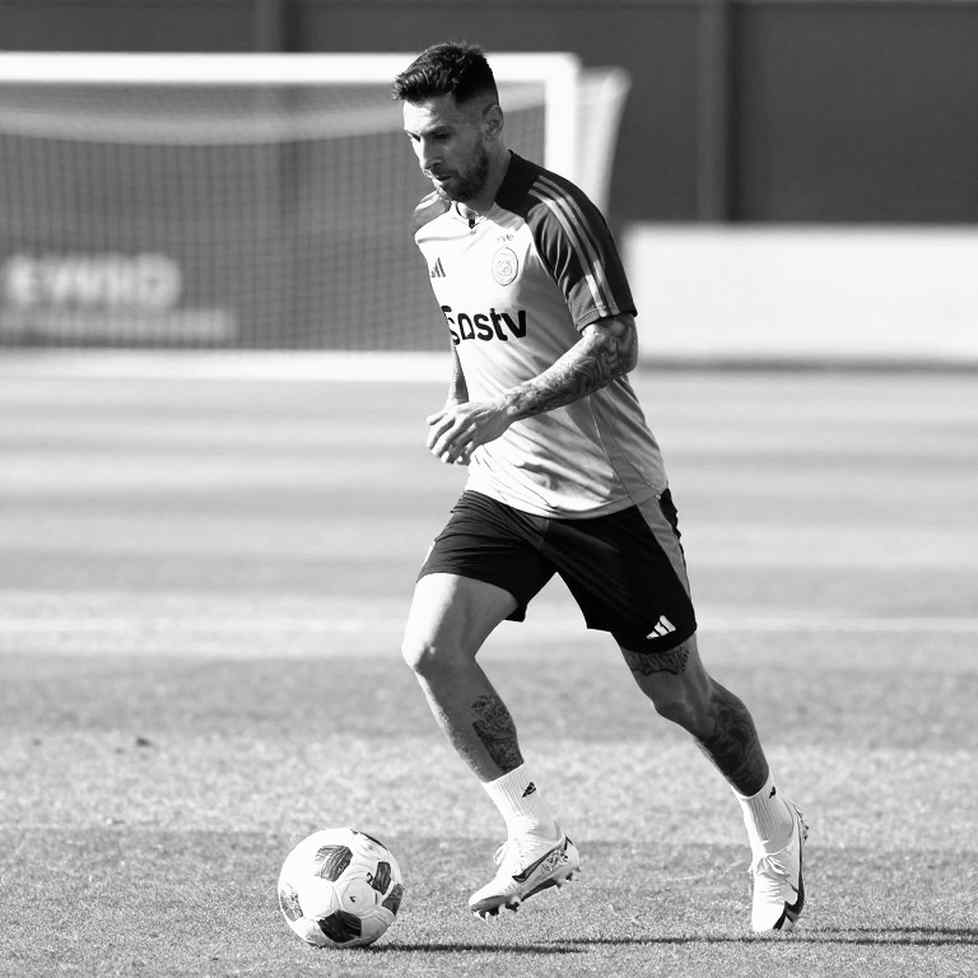
Just before the floodlights at Riyadh's Kingdom Arena switch on, a single man stands near the dugout—leaning on his left leg, his body held at a slight angle, as if testing whether the grass will recognise him again. Salem Al-Dawsari, thirty-five years old, Saudi football's 'Tornado'. For more than six months that left leg has been only a memory—a rehab centre in Finland, a long corridor, the habit of hearing your own team laugh from outside the pitch. On Saturday he returns. But he returns standing in a strange place: his name is on the squad list, not in the eleven.
I dusted off the Kolkata tape and found a boy running before the ball. Just as Phil Foden, on that tape nine years old, silenced a whole stadium with a perfect first touch, Al-Dawsari's career has always been the story of running before the ball arrives. Pace, sharp change of direction, one-versus-one—those three things are his passport. And those three things are exactly what knee-tendon surgery takes away most cruelly. So when I heard Inzaghi planned to keep him in the squad but on the bench, I was not surprised. I stopped instead—because this decision is not about one match. It is about one era.
I have spent years watching matches from the stands, from beside the dugout, from the back row of the press gallery, and even inside the silence of an empty stadium. That experience taught me one thing: the news of a star's return is not always the news of a match. Often it is the news of management, of arithmetic. Al-Dawsari's return is precisely that kind of story—not of emotion, but of planning.
Let us fix the context first. Al-Hilal, a top-tier side in the Saudi Pro League, the Roshn League, face bitter rivals Al-Ittihad in this eighth round—what everyone is calling the Clasico, and what the report calls 'the standout fixture of the eighth round'. The match is on Saturday at Kingdom Arena. Around this match, Saudi newspaper Arriyadiyah, via Goal.com, reported that Inzaghi had 'settled' Al-Dawsari's situation—he will be in the squad, but not from the start; he will be turned to if the game demands it.
The core facts deserve to be laid out, because they are the true basis of any analysis. Al-Dawsari is thirty-five. He has been out for more than six months. The injury came on national-team duty, at the 2026 World Cup, playing for Saudi Arabia. The surgery was on the tendon of his left knee, in Finland. Last Thursday he rejoined full group training, but his preparation is not complete. This season he has played zero minutes—'missing since the start of the campaign'. And in the meantime the club has signed two notable left-sided players: Gabriel Martinelli and Crysencio Summerville. I keep both names here as cited claims, because they are 'data to be verified'—reported, yes, but the contract documents, fees and wage structures are not in my hands.
Those two facts—age and the type of injury—together create the centre of this piece.
A left-sided forward's entire capital rests on two things: acceleration and the ability to change direction. The beauty of the winger's position is that he can never stand still—he must constantly stop, turn and explode again. The knee tendon is the very instrument for those two acts. For a player entering his thirties, this injury is therefore not merely a 'he needs time' problem; it changes the language of his game. A player like Messi, who buys time instead of space, can return from this injury as a creative organiser. But 'the Tornado'—the nickname itself declares his game is acceleration-driven, dribble-driven, transitional. When a tornado slows, it is no longer a tornado; it is wind. For a thirty-five-year-old winger with a cut knee tendon, that is the most realistic fear.
So I do not read Inzaghi's decision as an endorsement of fitness. I read it as phased reintegration. The gap between being in the squad and not in the eleven is the real message. After a long layoff and knee-tendon surgery, this protocol is normal. The coach is thinking of him as a situational weapon: when the game tightens late, he will be sent on. That is cold, clear arithmetic.
And here an old opinion of mine applies. In the era of five substitutions, big clubs hold enormous squads—a blessing for deep squads, but also a transformation of the final twenty minutes into a silent war of attrition. A side with a thirty-five-year-old national icon on the bench poses a different kind of late threat. If the last flicker in Al-Dawsari's legs produces even one thing—a set-piece, a dribble, a pass—against a tired defender, it can turn a match. Inzaghi is buying that, not a full ninety minutes.
But the left-wing hierarchy has structurally changed, and that is not emotion, it is a structural truth. Al-Hilal signed two left-footed wide forwards in the same position. Why does a club ever buy two big names for one spot? Sometimes to add competition, sometimes—and this is more likely—because it has already priced in a certain absence. Reading Al-Dawsari's age and injury history together, the club no longer treats his availability as certain. The path back no longer runs through an empty chair; it runs through a queue.
The financial side must be discussed in the dark. In the player market I dig up fossils—every transfer rumour is a fossil, and my job is to dig before the bidding war. But there is no information in the source about Al-Dawsari's contract, wages or length. So I will not write a guess as fact. Yet one real calculation stands: a thirty-five-year-old, after a major knee injury, with two rivals signed into his position, is in the depreciation phase of the age-value curve. His resale value is close to nil. The question now is which way the contract year leans. If he is in his final year, the club's leverage is weak and the player faces a 'show it now or put the tools down' decision. If it is a long, high-wage deal, then for an ageing, injury-prone winger it is a deadweight contract—a silent burden of football economics. I do not know which is true. I do know the club is silent, and silence itself is often a signal.
Now to the part that generates the most pressure: the Clasico atmosphere and the expectation gap.
Al-Dawsari is a national symbol of Saudi football, the emotional reference point of his club. In the crowd's eyes his name means storm, match-turning, celebration. Yet Inzaghi's plan says: bench. And the phrase 'if the game demands it' is no accident. It is a textbook expectation-management device. The coach reduces risk on both sides: if he returns from injury, it is a bonus; if not, no loss.
Here is the silent tension: in a Clasico, the first minutes of a thirty-five-year-old after six months is, for any critic, an extremely risky reintroduction point. The intensity is at its highest and his match fitness is zero. His playing minutes this season are zero—that single fact means no judgement on his form is possible. No sample means no verdict. There is only the muscular memory of a player returning after a long absence, and the uncertainty attached to it.
A lesson from the empty-stadium diary comes to mind here. In the pandemic years, when the stands were empty, I learned football's real sounds—the squeak of boots, the rhythm of breathing, the thud of ball on net. The empty stadium diary has one page where the silence learned my name. That silence taught me that in a return story, what sounds loudest is exactly what is not said—the body's doubt. So when Al-Dawsari comes on, I will watch not the goal, but his first explosive sprint. The first turn. The first risk. Those ten seconds will tell how much of six months of rehab actually worked.
Now the counter-question is the demand of the hour. Having framed Al-Dawsari's return as 'the icon's return', is that even the right reading? Or is the real story not his return but his replacement?
I think fans and media have their eyes on one place, and the club on another. The fan sees 'the Tornado returns'; the club sees two new wingers, a succession ladder, and a contract calculation. Bringing in two new left-sided players in the same window is no accidental decision. It is almost certainly a pre-existing plan—a plan in which the club already assumed the icon's availability was unreliable. The injury may have accelerated that plan, not changed it.
For this reason, Goal.com's own tone is telling. It did not inflate the hype; it deflated it—explicitly writing that breaking back into the first XI will not be easy. As journalism that is honest, and as sourcing it raises credibility. Because when team-selection reports inflate hype, they usually deflate it on the hint of club-side sources. Here the opposite happened—the tone itself was damped.
But the gap between fan expectation and club arithmetic is a risk. If Al-Hilal struggle in the Clasico and Inzaghi leaves Al-Dawsari on the bench, pressure will come—'put the Tornado on', regardless of medical advice. Then affection for a national icon will stand face to face with the medical team's caution. This is not new in football; it is the regular life cycle of an icon's return: first the celebration of return, then the slow return, then the 'time has caught up with him' writing.
And here my second doubt hides. Did the club really choose this match as his return point, or is it only one step in a series in which he is gradually moved into a reduced role—impact sub, sometimes a second striker, sometimes outside the match entirely? If the phrase 'if the game demands it' keeps recurring, then it is no longer literally demand; it is a proposal for a polite farewell.
Let me come to the academy. Because I must always say it—the academy is not a factory; it is a dig site, and the best finds are still in the dirt. If Al-Hilal is truly preparing for a post-icon era, then the club's real answer must be found in the succession market, not only in a list of stars bought from Europe. I therefore read this match on two levels: on one level Al-Dawsari's return, on another how a club is rolling up a chapter of its own history—whether with two new names, or with someone hidden deep in the academy.
The fixture carries weight in the league context too. Al-Hilal and Al-Ittihad are Saudi football's two most decorated clubs. The match is billed as the round's showpiece, meaning both sit near the top. So the result is not just three points; it is a signal of which way the early-season momentum tilts. And in the middle of it, an icon on the bench—that image will be the match's real visual if he does not come on.
The national-team angle cannot be skipped either. The injury came on national duty, at the 2026 World Cup. That single fact is the familiar story of the 'FIFA virus'—the club pays the player's wages, the national team uses him, and the injury swallows the club's campaign. In Al-Dawsari's case exactly that happened: he has been absent since the start of an entire season. The ripple is not one club's; it stirs the debate over who provides insurance, compensation and protection for a player injured on national duty. There is no reported dispute in the source, so I stop there.
One signal from the money side is clear, though. Al-Hilal bought two peak-age European-league wingers for the left. Such dealings recall the Saudi league's role—no longer a 'retirement address for stars', but a destination for peak-age European talent. The recruitment also hints at another truth: when a side brings two men to the left flank, it is internally accepting that the days of relying on the old name are over.
Now to the verdict. If this piece must be summarised in one line: Al-Dawsari's return is not an emotional story, it is a structural story—Al-Hilal is voluntarily, deliberately and politely writing the end of its icon era. The pen is in Inzaghi's hand.
So what is the probability of success? By my reckoning, Al-Dawsari's chance of returning to his old form this season is low. The reasons lie in the body, in age, and in positional competition—three places. But the chance of a 'useful contribution'—turning a match in the last twenty minutes, a set-piece, a moment—is not low, if he is used correctly. His greatest enemy is haste, and his greatest friend is patience.
The risk is therefore two-sided. On one side, re-injury—a thirty-five-year-old winger's left knee, in the intensity of a Clasico, after six months. On the other, a quieter risk: if an icon is gradually folded away, the ripple is not only tactical but also in the dressing-room atmosphere. That invisible friction between the old generation and the new stars—veteran versus newcomer—is the most complex management at a big club.
So the final question looks forward. On Saturday at Kingdom Arena, if Al-Dawsari runs for the ball in the eighty-seventh minute, if he shows one explosive flick, what kind of story will we write—'the Tornado has returned', or 'a chapter is ending'? The answer is not on the scoreline. The answer hides in his first sprint, his first turn, his first breath. Those ten seconds will tell whether this return is a new beginning or a polite farewell. And I, a sixty-year-old scout, standing beside the dugout, will count exactly those ten seconds. Because in football, a return never ends—it only starts the account anew.